
DIY Car Maintenance vs. Taking It to a Shop: How to Decide
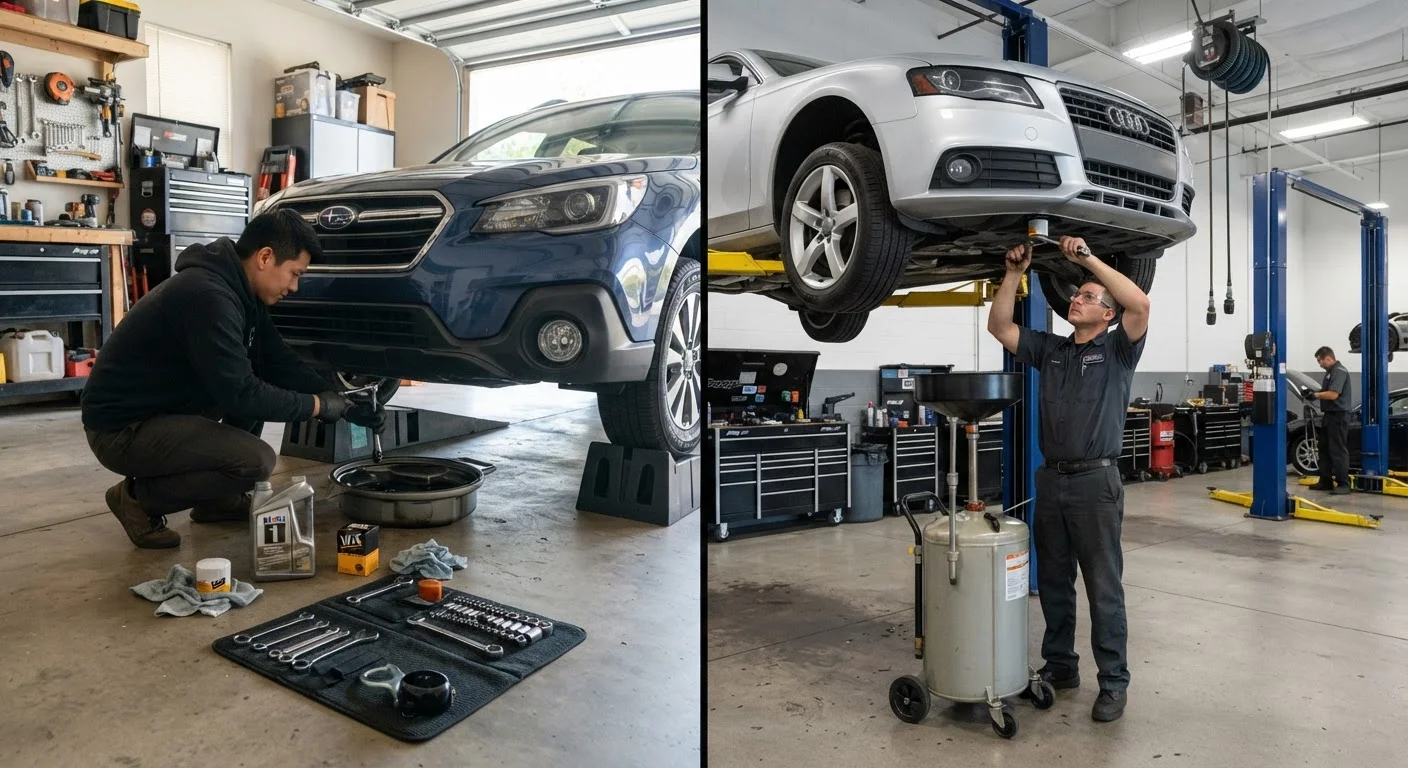
Photo credit: TrendingExperts.net
In this article
Some maintenance tasks are genuinely accessible to careful home mechanics. Others carry real risks if done incorrectly. Here's a framework for knowing the difference.
Key Takeaways
- Simple tasks like checking fluids and replacing air filters are genuinely manageable for most careful home mechanics.
- Jobs involving brakes, suspension, or electrical systems carry real safety risk if done incorrectly and are best left to professionals.
- The right choice depends on your skill level, available tools, and the consequences of a mistake.
- DIY can reduce cost on simple jobs, but professional shops offer accountability and specialized equipment.
- Always consult your owner's manual and, when in doubt, have a qualified mechanic inspect your vehicle.
The Core Question: What Are You Actually Risking?
Every maintenance decision carries two kinds of cost: the cost of doing it, and the cost of getting it wrong. For straightforward tasks with low consequences of error - checking tire pressure, topping off washer fluid, swapping a cabin air filter - the barrier to doing it yourself is genuinely low. For jobs where a mistake could compromise braking, steering, or engine integrity, the calculus shifts dramatically.
Before deciding, ask yourself three questions: Do I understand what this task involves? Do I have the right tools? And if I make an error, how serious could the outcome be? That last question is the one most DIYers underestimate. See our guide for new drivers for a grounded look at building maintenance habits safely.
| DIY Maintenance | Professional Shop | |
|---|---|---|
| Typical cost | Lower on simple tasks | Higher, but includes labor warranty |
| Tools required | Basic hand tools for simple jobs | Specialized equipment on hand |
| Diagnostic capability | Limited without scan tools | Full diagnostic equipment available |
| Safety risk | Higher if task is misjudged | Lower - trained technicians |
| Service documentation | Self-recorded only | Printed receipt and history |
| Best suited for | Simple, low-stakes tasks | Complex, safety-critical repairs |
Tasks That Are Genuinely DIY-Friendly
A meaningful number of routine maintenance items fall within reach of a careful, patient home mechanic who follows instructions closely. These include:
- Checking and topping off fluids - coolant, washer fluid, power steering fluid, and brake fluid reservoirs are labeled under the hood and require no tools to inspect.
- Replacing wiper blades - most wiper arms use a simple tab-release mechanism; replacement takes under five minutes.
- Swapping cabin and engine air filters - both are typically accessible without special tools. Learn how the two filters differ and when each needs replacement before purchasing a replacement.
- Checking tire pressure - a quality gauge costs a few dollars and should be used monthly.
- Replacing a battery - feasible for many vehicles, though some modern cars have battery management systems that require a shop reset after replacement.
What unites these tasks: they're reversible or easy to inspect, require minimal specialized tools, and don't directly affect vehicle control systems.
Start With Your Owner's Manual
Before attempting any maintenance task, look it up in your vehicle's owner's manual. It specifies the correct fluids, capacities, torque specs, and service intervals for your exact make and model. Generic online instructions may not account for your vehicle's specific requirements, and following incorrect specs - especially on fluid types or filter part numbers - can cause damage.
Where DIY Gets Genuinely Dangerous
Certain jobs look approachable on a how-to video but carry real risk if performed without proper equipment, training, or workspace. Brake system work is the clearest example - improperly torqued brake caliper bolts or a hydraulic line with air in it can cause brake failure. Suspension work involves components under significant tension. Fuel system repairs introduce fire risk. Airbag-related work involves explosive charges that require professional handling.
Transmission service, timing belt or chain replacement, and any repair requiring a vehicle to be safely supported at height all demand more than a basic floor jack. Falling vehicles injure people every year. If a repair requires your vehicle to be lifted off the ground, consider whether your equipment and experience are truly adequate - not just theoretically sufficient.
Deferred maintenance compounds over time, but so do botched repairs. A professional shop carries liability for their work; a DIY mistake is entirely your own.
What a Professional Shop Offers Beyond Labor
Cost is the most cited reason drivers attempt DIY, and on simple jobs the savings can be real. But a shop provides things money alone can't replicate at home: diagnostic scan tools that read live sensor data, alignment racks, brake lathes, and trained technicians who have seen the same failure modes hundreds of times.
Shops also create a paper trail. A documented service history supports warranty claims and adds credibility when selling a vehicle. Keeping a thorough maintenance log matters regardless of who does the work, but a shop receipt is already formatted as a record.
For complex diagnostics - an illuminated check engine light, an intermittent electrical fault, a noise you can't locate - a professional's tools and experience will almost always outperform guesswork, no matter how many videos you watch. Understanding what your vehicle actually needs and when helps you have better conversations with your mechanic and avoid unnecessary upsells.
Making the Call: A Practical Framework
Use this thinking process before starting any job yourself:
- Look it up in your owner's manual first. Some manufacturers specify that certain services must be performed by authorized technicians to maintain warranty coverage.
- Identify the exact tools required. If the job needs specialty tools you don't own and can't safely improvise, factor in the cost of obtaining them.
- Honestly assess your skill level. Watching a repair video is not the same as having done it. First attempts take longer and carry more risk of error.
- Consider the failure mode. If you do this wrong, what breaks - and could it create a safety hazard?
- Price the shop option realistically. On jobs involving several hours of labor or specialized equipment, the shop rate may be more reasonable than it initially appears.
For guidance on what your vehicle's maintenance milestones actually mean, see our breakdown of maintenance schedules. And if you're considering oil type, understanding conventional vs. synthetic motor oil is a good starting point before your next change.

Author
Automotive Editorial Team
Automotive Editorial Team is the collective byline for our editorial team and contributor network. Articles published under this byline or an editorial pen name are researched, written, and reviewed according to our editorial standards for clarity, consistency, and independence before publication.
View all articles →