
Conventional vs. Synthetic Motor Oil: What Everyday Drivers Should Know
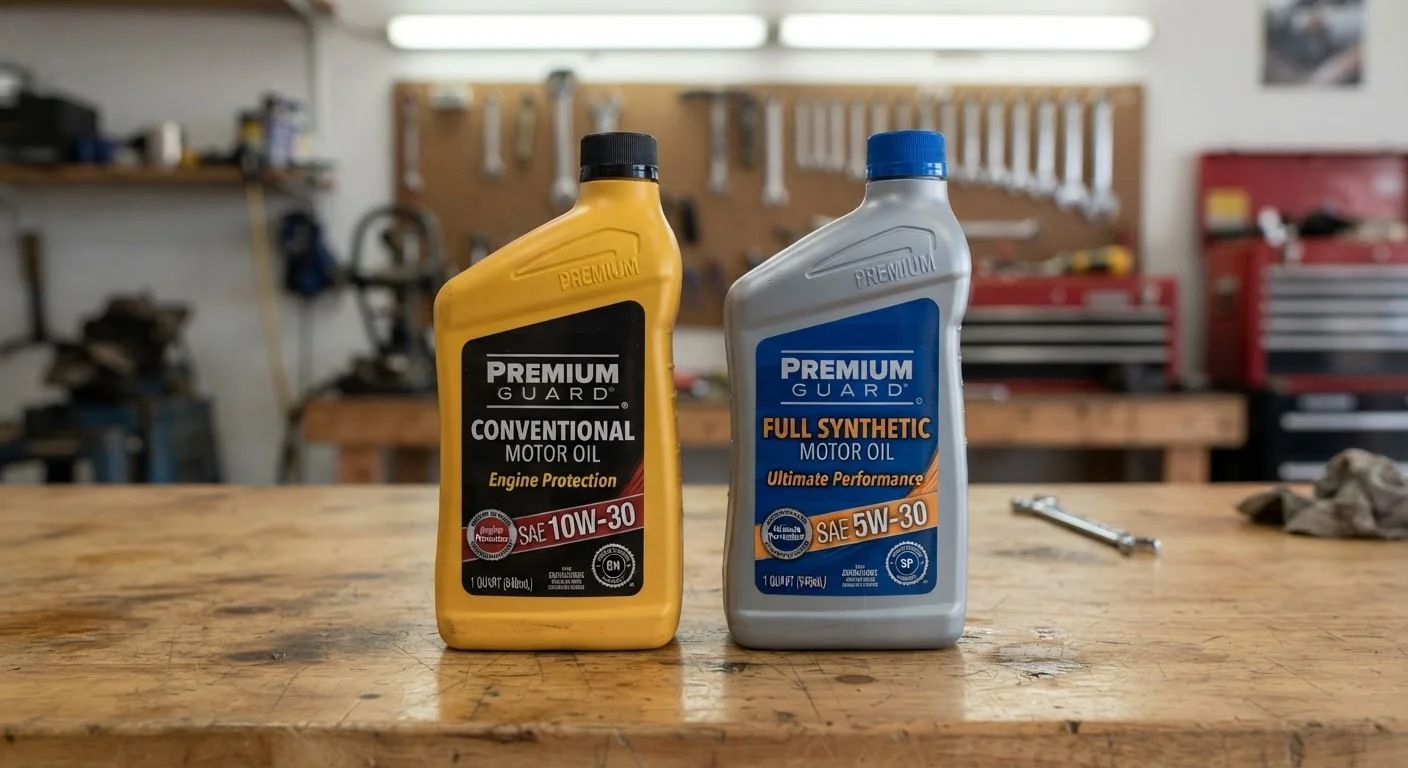
Photo credit: TrendingExperts.net
In this article
A straightforward comparison of conventional and synthetic motor oils — what sets them apart, when each is appropriate, and what your vehicle likely needs.
Key Takeaways
- Synthetic oil is chemically engineered for more consistent molecular structure than conventional oil refined from crude.
- Most new vehicles manufactured after 2010 are factory-filled with and designed for full synthetic oil.
- Your owner's manual - not marketing claims - is the authoritative source for what your engine requires.
- Switching from conventional to synthetic is generally safe but should follow manufacturer guidance.
- Synthetic oil typically costs more per quart but often allows longer intervals between changes.
- Neither oil type eliminates the need for regular oil changes; both degrade over time and use.
What Makes These Two Oils Different
Both conventional and synthetic motor oils serve the same fundamental purpose: lubricating your engine's moving parts, reducing friction, carrying away heat, and helping flush out contaminants. What separates them is their origin and molecular consistency.
Conventional motor oil is refined from crude petroleum. It contains a natural mix of hydrocarbon molecules of varying sizes and shapes, along with trace impurities. Additive packages are blended in to improve performance, but the base oil's molecular variability is inherent to the refining process.
Synthetic motor oil is either fully synthesized from chemical compounds or built from a highly refined base stock (sometimes called a semi-synthetic blend). The result is a far more uniform molecular structure - engineered to perform consistently across a wider range of temperatures and operating conditions.
That molecular consistency is why synthetics generally outperform conventional oils in cold-start protection, high-temperature stability, and resistance to oxidation and sludge buildup. It's also why they cost more.
| Criterion | Conventional Motor Oil | Synthetic Motor Oil |
|---|---|---|
| Base stock origin | Refined from crude petroleum | Chemically engineered or highly refined |
| Molecular consistency | Variable, naturally occurring | Uniform, by design |
| Cold-weather flow | Adequate for moderate climates | Better cold-start protection |
| High-temperature stability | More prone to thinning under heat | Resists thermal breakdown better |
| Typical drain interval | 3,000-5,000 miles (varies) | 7,500-10,000+ miles (varies) |
| Cost per quart | Lower | Higher |
| Required by most new vehicles | Less common in post-2010 models | Standard for many modern engines |
| Sludge resistance | Moderate | Generally superior |
What Your Vehicle Actually Requires
The most important thing any driver can do is read their owner's manual. The manufacturer specifies which oil viscosity (such as 5W-30 or 0W-20) and which oil type your engine was designed for. Many vehicles produced from roughly 2010 onward are factory-filled with full synthetic and require it for warranty compliance.
If your manual says synthetic is required, conventional oil is not an acceptable substitute - even temporarily. If it says conventional is acceptable, switching to synthetic is generally fine and may offer modest benefits, but it won't dramatically change how the engine performs if it was already designed for conventional.
See our guide to oil change intervals for a detailed explanation of how to read the manual's service recommendations correctly. And for a broader look at scheduled maintenance, routine maintenance schedules covers the full picture of what your car needs and when.
Synthetic Blends: A Middle Option
Synthetic blend motor oils mix a conventional base stock with a portion of synthetic base oil. They typically offer better performance than straight conventional oil - especially in temperature extremes - at a lower price than full synthetic. Some manufacturers approve synthetic blends as an alternative to full synthetic; others do not. Check your owner's manual before substituting a blend for a full synthetic specification.
Cost, Intervals, and the Real-World Trade-Off
Synthetic oil typically costs two to four times more per quart than conventional oil. However, many manufacturers rate full synthetic formulations for longer drain intervals - often 7,500 miles, 10,000 miles, or more, depending on the vehicle and driving conditions. Conventional oil is more commonly associated with 3,000- to 5,000-mile change intervals, though modern engines and formulations have pushed some conventional recommendations higher.
Whether the longer interval offsets the higher per-quart cost depends on your driving habits, your vehicle's specifications, and how often you'd be changing oil regardless. The math is rarely dramatic either way - what matters most is that changes happen on schedule, whichever oil type your engine uses.
For drivers who want to stay on top of this between service visits, fluid checks you can do yourself walks through how to monitor oil level and condition without needing mechanical training.
~70%
Share of new U.S. cars requiring synthetic oil
Industry estimates suggest the majority of new passenger vehicles sold in the U.S. are factory-filled with and require full synthetic motor oil.
2-4×
Typical cost difference per quart
Full synthetic motor oil generally costs between two and four times more per quart than conventional oil, though prices vary by grade and formulation.
10,000 mi
Common synthetic drain interval ceiling
Many manufacturers specify up to 10,000 miles between oil changes for vehicles using full synthetic, though the exact interval depends on the engine and driving conditions.
Common Misconceptions Worth Clearing Up
"Once you switch to synthetic, you can't go back." This is a persistent myth. Modern synthetic and conventional oils are compatible, and switching between them - in either direction - does not harm a healthy engine. That said, always follow your manufacturer's recommendation rather than switching arbitrarily.
"Synthetic oil causes leaks in older engines." Older formulations of synthetic oil had detergent properties that could dislodge sludge in high-mileage engines, occasionally revealing pre-existing seal wear. Modern synthetics are formulated to be compatible with engine seals, but if your vehicle has known leaks or very high mileage, it's worth discussing the switch with a qualified mechanic first.
"Darker oil means it needs to be changed immediately." Oil darkens as it picks up combustion byproducts - that's part of how it works. Color alone isn't a reliable indicator of whether oil needs changing. Follow your interval schedule and consult your manual. If you're unsure whether a maintenance task is worth doing yourself or better left to a shop, this framework for DIY vs. professional service can help you decide.

Author
Automotive Editorial Team
Automotive Editorial Team is the collective byline for our editorial team and contributor network. Articles published under this byline or an editorial pen name are researched, written, and reviewed according to our editorial standards for clarity, consistency, and independence before publication.
View all articles →