
Your Car's Maintenance Schedule, Explained
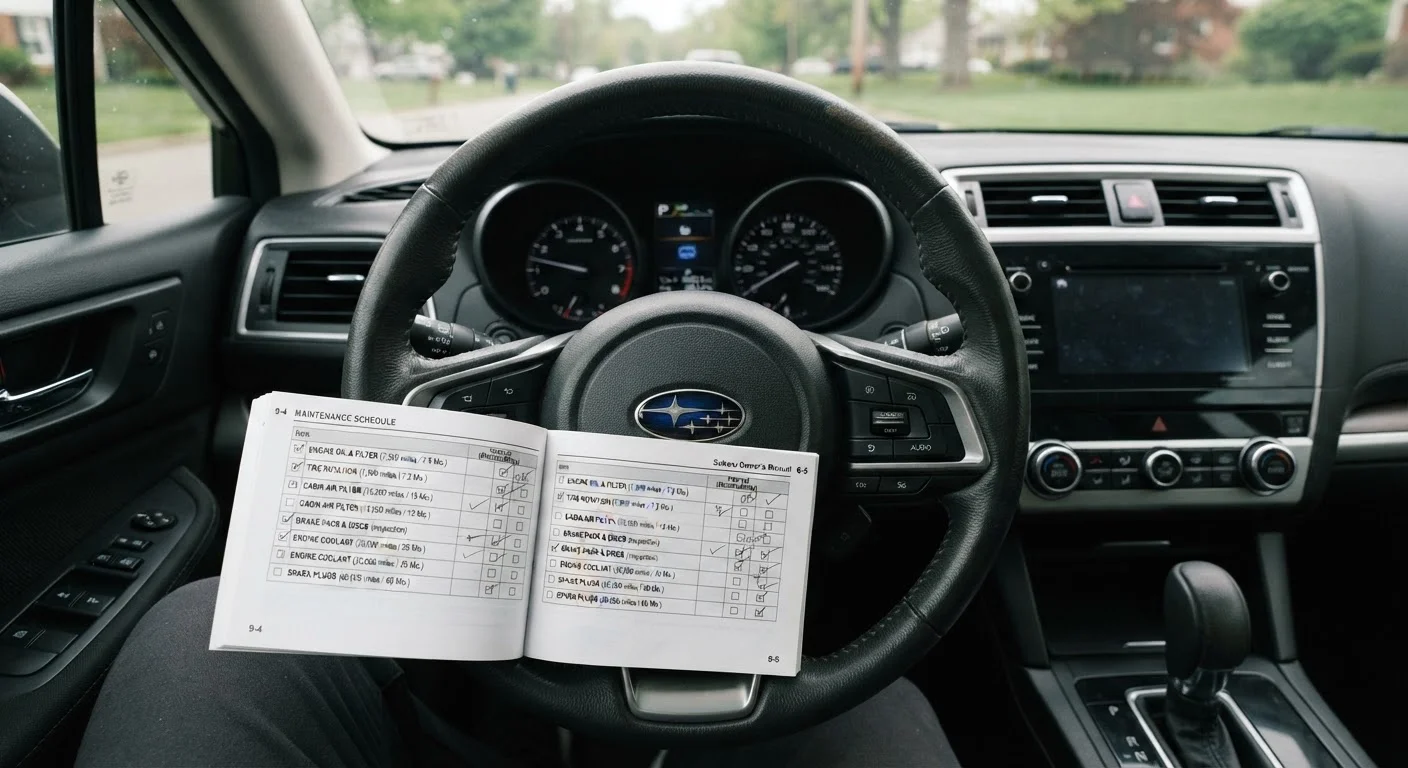
Photo credit: TrendingExperts.net
In this article
Confused by your owner's manual maintenance intervals? Here's what each service milestone actually means and why it matters for your vehicle's longevity.
Key Takeaways
- Your owner's manual contains the definitive maintenance schedule for your specific vehicle - always consult it first.
- Maintenance intervals are based on both mileage and time - whichever comes first applies.
- Severe driving conditions may require more frequent service than the standard schedule suggests.
- Skipping scheduled maintenance can void warranty coverage and lead to costly mechanical failures.
- Keeping a service log protects your car's resale value and helps track what's been done.
What a Maintenance Schedule Actually Is
Every vehicle rolls off the assembly line with a built-in blueprint for keeping it running well - the factory maintenance schedule. This isn't marketing material or a dealership upsell tool. It's a set of engineering-based intervals specifying when particular components need to be inspected, serviced, or replaced to keep the vehicle operating as designed.
The schedule lives in your owner's manual, and it accounts for your specific engine, drivetrain, and manufacturer tolerances - details that generic maintenance advice can't replicate. Think of it as the difference between following a recipe for your exact oven versus guessing based on someone else's experience.
Intervals are typically expressed two ways: by mileage (e.g., every 7,500 miles) and by time (e.g., every 12 months). The rule is simple - whichever threshold you hit first applies. A driver who puts on very few miles can still degrade their engine oil through time and condensation, making the time-based trigger just as important as the odometer reading.
Your Manual Overrides Generic Advice
General maintenance guidance - including commonly cited intervals like '3,000 miles for an oil change' - may not apply to your specific vehicle. Engine design, oil type, and driving conditions all influence the correct interval. Your owner's manual is the authoritative source for your car, not a one-size-fits-all recommendation. When in doubt, consult the manual first, then a qualified mechanic.
Key Milestones and What They Cover
Maintenance schedules aren't a single recurring task - they're a layered set of services that stack over time. Some items appear frequently; others only come up every several years. Understanding the logic behind each milestone makes the schedule feel less arbitrary.
- Every oil change interval: This is the most frequent touchpoint. Modern vehicles vary widely - some call for service every 5,000 miles, others every 10,000 or more depending on oil type and engine design. See our guide to oil change intervals for help interpreting what your manual actually recommends.
- Tire rotation (typically every 5,000-7,500 miles): Tires wear unevenly based on their position. Rotating them extends overall tire life and helps maintain predictable handling.
- Cabin and engine air filters (often every 15,000-30,000 miles): These protect air quality inside the car and airflow into the engine, respectively. Clogged filters affect performance and fuel efficiency.
- Brake inspection (typically every 20,000-25,000 miles or annually): Brake pad thickness and rotor condition are checked. Worn brakes are a direct safety concern - this service isn't optional.
- Spark plugs (every 30,000-100,000 miles depending on type): Conventional plugs wear faster than iridium or platinum versions. The manual specifies the correct interval for your engine.
- Transmission fluid, coolant, and other fluids: These are often overlooked because they're not visible in daily driving. Degraded fluid can cause significant - and expensive - component damage over time.
~$100
Average cost of a routine oil change service
Routine maintenance costs vary by vehicle and region, but staying current with scheduled services is widely considered far less expensive than addressing the mechanical failures that neglect can cause.
2x-4x
Cost multiplier for deferred vs. proactive maintenance
Industry estimates suggest that deferred maintenance - skipping or delaying scheduled services - can result in repair costs significantly higher than the original service would have cost.
30%
Of drivers who follow their owner's manual schedule consistently
Surveys by automotive research organizations suggest that a minority of drivers consistently follow manufacturer-recommended maintenance intervals, leaving many vehicles underserviced relative to their design requirements.
Normal vs. Severe Driving Conditions
One of the most commonly misunderstood aspects of maintenance schedules is the distinction between Normal and Severe driving. Many drivers assume Normal applies to them by default - but the reality is more nuanced.
Severe conditions include frequent short trips (under five miles, which don't allow the engine to fully warm up), heavy stop-and-go traffic, towing or hauling, extreme temperatures, or driving on unpaved roads. If any of these describe a significant portion of your driving, the Severe schedule - which calls for more frequent service - likely applies to you.
Ignoring this distinction doesn't just risk mechanical wear. It can also affect warranty claims if a manufacturer determines that a vehicle wasn't serviced appropriately for its actual operating conditions.
Staying on Track: Practical Habits That Help
Knowing what the schedule says is only half the equation - staying consistent with it is where most drivers fall short. A few straightforward habits make a real difference.
Keep a service log. Every time you have maintenance performed, document the date, mileage, and work completed. This record is valuable when diagnosing future issues, supports warranty claims, and adds transparency if you eventually sell the vehicle. Our guide to maintaining a service log explains exactly what to track.
Set calendar reminders. Don't rely on memory. A simple recurring reminder tied to your typical mileage accumulation takes the guesswork out of timing.
Use seasonal checkpoints. Seasonal transitions are a natural time to assess your vehicle's condition. The seasonal car maintenance checklist can help you align routine checks with the calendar.
Know when to defer to a professional. Some scheduled tasks - like brake inspections, timing belt replacement, or suspension checks - involve safety-critical systems where errors carry real risk. If you're uncertain about a task, a qualified mechanic is the right call. Our article on DIY vs. shop maintenance offers a framework for making that call confidently.
Check Your Dashboard Warning Lights
Modern vehicles often display a maintenance reminder light when a scheduled service interval approaches. However, these reminders are not a substitute for the full schedule - they typically track oil life and may not alert you to other due services. Familiarize yourself with your dashboard indicators using our plain-English dashboard warning light guide so you know which alerts require prompt attention.
This article is for general informational and educational purposes. Always consult your vehicle's owner's manual and a qualified mechanic for guidance specific to your car's make, model, and condition.
Frequently Asked Questions

Author
Automotive Editorial Team
Automotive Editorial Team is the collective byline for our editorial team and contributor network. Articles published under this byline or an editorial pen name are researched, written, and reviewed according to our editorial standards for clarity, consistency, and independence before publication.
View all articles →