
Understanding Your Vehicle's Air Filters: Cabin vs. Engine
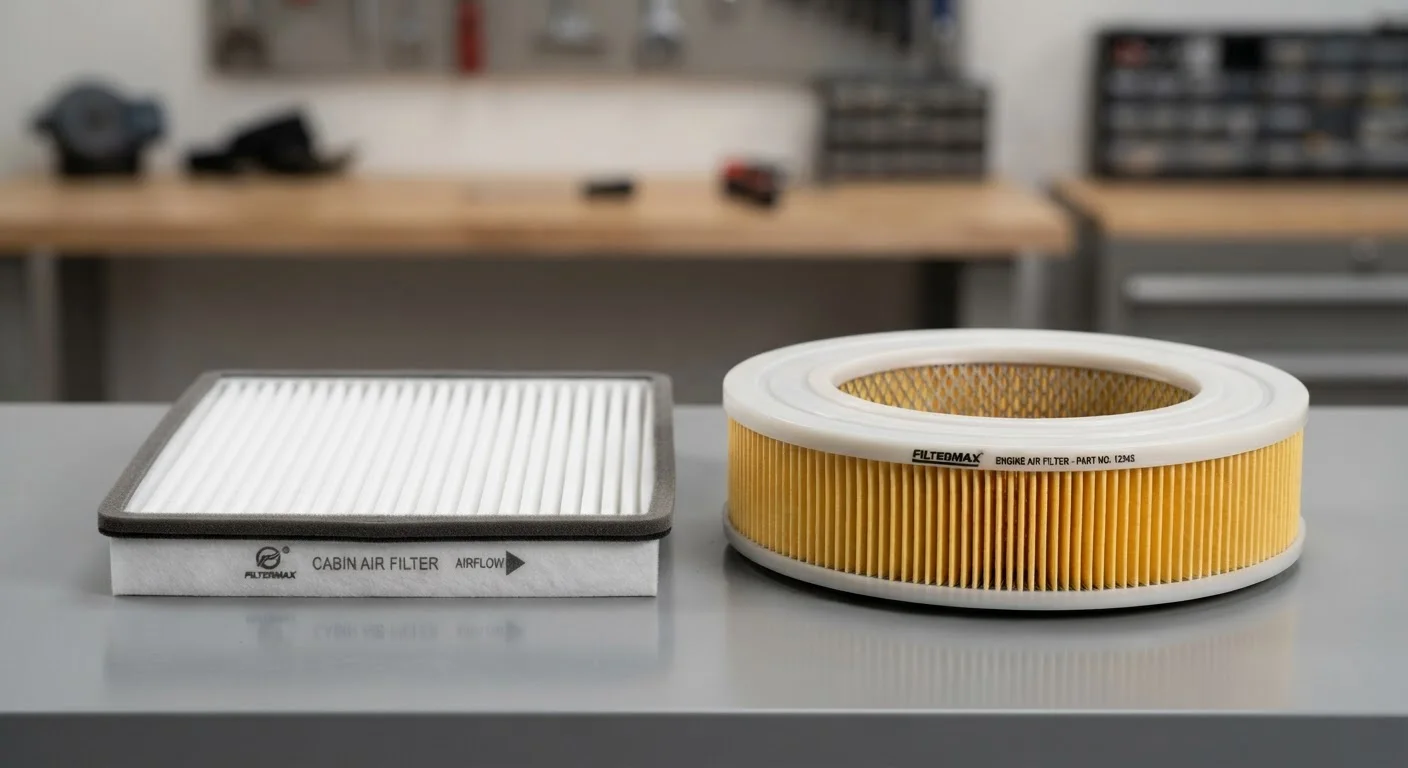
Photo credit: TrendingExperts.net
In this article
Your car has two separate air filters with very different jobs. Learn what each one does, how to know when it's due for replacement, and what happens if you wait.
Key Takeaways
- Cabin and engine air filters serve completely different purposes and are not interchangeable.
- A clogged cabin filter affects air quality and HVAC performance; a dirty engine filter can reduce fuel economy and engine power.
- Most cabin filters are recommended for replacement every 15,000-25,000 miles; engine filters typically every 15,000-30,000 miles.
- Driving in dusty, rural, or heavily polluted areas may require more frequent replacements for both filters.
- Both filters are among the more accessible maintenance tasks, though consulting your owner's manual is always the right first step.
Two Filters, Two Completely Different Jobs
Most drivers know their car has an air filter - but many don't realize there are actually two, each doing a very different job. Understanding the distinction helps you prioritize maintenance and recognize warning signs before small issues become costly ones.
The cabin air filter cleans the air that flows through your vehicle's heating, ventilation, and air conditioning (HVAC) system - the air you and your passengers breathe. It traps pollen, dust, mold spores, exhaust particulates, and other airborne contaminants before they enter the passenger compartment.
The engine air filter, by contrast, sits in the engine bay and filters the air drawn into the engine for combustion. Engines require a precise mixture of air and fuel to run efficiently. If that incoming air carries dirt or debris, it can damage internal engine components over time and disrupt combustion efficiency.
Neither filter does the other's job. They're separate components located in different parts of the vehicle, and they follow different service intervals. Thinking of them together - as a pair - is a useful habit for any driver building a maintenance routine. See our maintenance schedule guide for a broader look at how service intervals are structured.
| Criterion | Cabin Air Filter | Engine Air Filter |
|---|---|---|
| What it filters | Air entering the passenger cabin | Air entering the engine for combustion |
| Primary purpose | Protects occupant health and comfort | Protects engine performance and longevity |
| Location | Behind glove box or under dashboard | In the engine bay, near the intake |
| Typical replacement interval | 15,000-25,000 miles | 15,000-30,000 miles |
| Key warning signs | Weak airflow, musty odors, more dust | Poor fuel economy, sluggish acceleration |
| Impact of neglect | Reduced air quality, HVAC strain | Engine inefficiency, potential sensor damage |
How to Tell When Each Filter Needs Replacing
Neither filter announces its own decline, so knowing the signs matters.
Cabin Air Filter Warning Signs
- Reduced airflow from HVAC vents even at high fan settings
- Musty or stale odors when running the heat or air conditioning
- Increased dust accumulation on the dashboard
- Worsening allergy symptoms for occupants inside the vehicle
Engine Air Filter Warning Signs
- Noticeable drop in fuel economy over several fill-ups
- Sluggish acceleration or a slight hesitation when pressing the gas
- Engine idling roughly or inconsistently
- Check engine light illuminated (a dirty filter can trigger this in some vehicles)
General guidance suggests replacing cabin filters every 15,000-25,000 miles and engine air filters every 15,000-30,000 miles, though your owner's manual will specify the intervals for your particular vehicle. Driving conditions matter significantly - dusty roads, construction zones, and heavy traffic can shorten both intervals considerably.
25%
Potential fuel economy reduction from a clogged engine filter
The U.S. Department of Energy has noted that a severely restricted engine air filter can meaningfully reduce fuel economy on older carbureted engines, with effects varying on modern fuel-injected vehicles.
15,000-30,000 mi
Typical engine air filter replacement interval
Manufacturer recommendations vary by vehicle and driving conditions; always defer to your owner's manual for the most accurate interval.
If you're unsure whether either filter is due, a qualified mechanic can inspect both during a routine service visit. For drivers who want to understand which tasks are reasonable to handle independently, our guide on DIY vs. shop maintenance lays out a practical framework.
What Happens If You Delay Replacement
Skipping filter replacements doesn't lead to immediate failure - but the cumulative effects are real.
A severely clogged cabin filter can strain the HVAC blower motor as it works harder to push air through restricted media. Beyond equipment wear, occupants are simply breathing dirtier air. For anyone with asthma, seasonal allergies, or respiratory conditions, this is more than a comfort issue.
A neglected engine air filter forces the engine to work with a compromised air-fuel mixture. Over time, this can contribute to carbon buildup on engine components, reduced fuel economy, and - in extreme cases - damage to the mass airflow sensor, which is a more expensive repair than a filter swap.
The good news: both filters are among the more straightforward maintenance items on most vehicles. Many drivers find them easy to locate and inspect with basic guidance from their owner's manual. Whether you handle it yourself or bring it to a shop, keeping both filters in good condition is a low-cost, high-return habit. For a full picture of which routine tasks matter most and when, visit our routine maintenance schedules overview.
New to vehicle ownership and not sure where to start? Our guide for new drivers covers the foundational habits that help any car last longer.

Author
Automotive Editorial Team
Automotive Editorial Team is the collective byline for our editorial team and contributor network. Articles published under this byline or an editorial pen name are researched, written, and reviewed according to our editorial standards for clarity, consistency, and independence before publication.
View all articles →