
Documentary vs. Docuseries: Same Subject, Very Different Experience
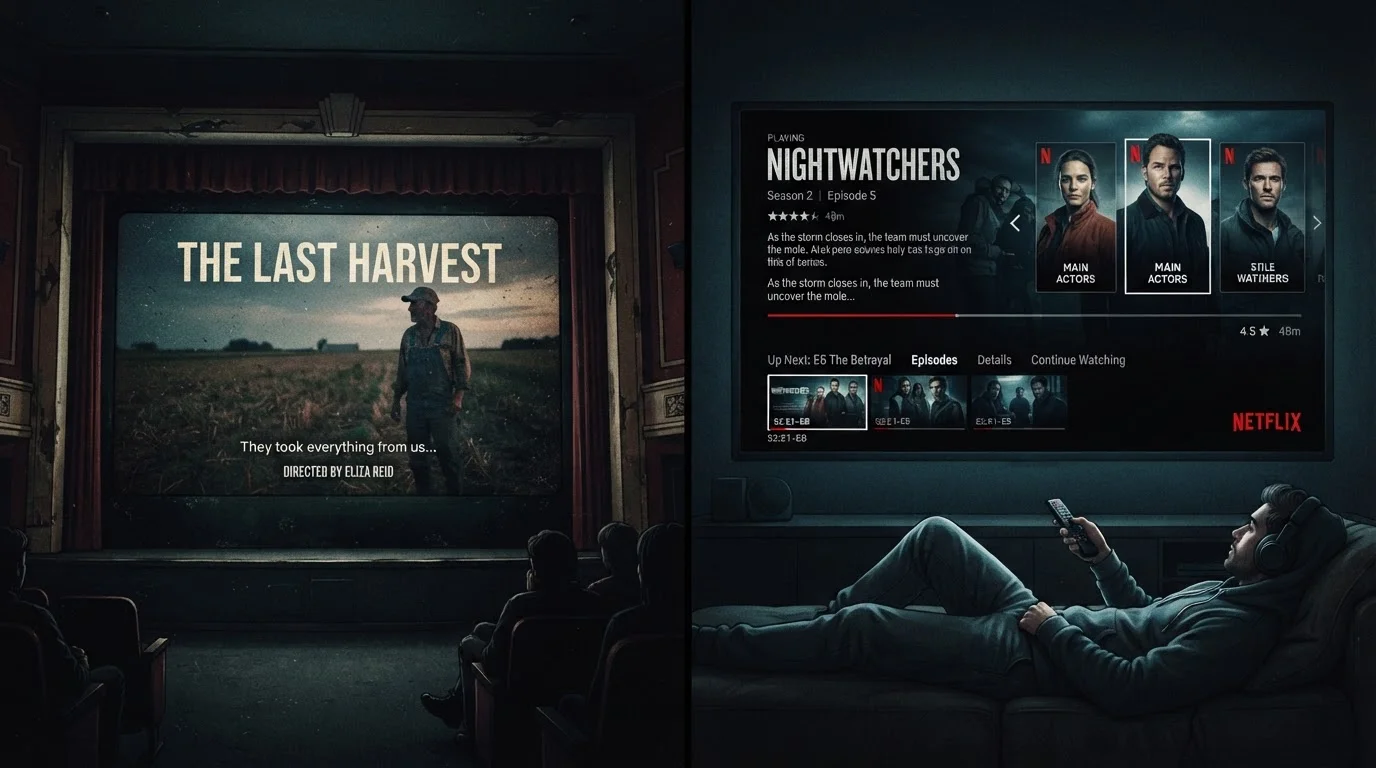
Photo credit: TrendingExperts.net
In this article
A feature documentary condenses; a docuseries expands. Understand how each format handles truth, pacing, and audience engagement differently.
Key Takeaways
- Feature documentaries compress complex subjects into a single, tightly edited viewing experience of 90-120 minutes.
- Docuseries spread the same subject across multiple episodes, allowing deeper character development and narrative complexity.
- Each format influences not just length, but tone, pacing, editorial choices, and emotional impact.
- Streaming platforms have significantly accelerated docuseries production due to binge-friendly viewing habits.
- Neither format is objectively superior - the right choice depends on the subject's depth and the story being told.
The Core Difference: Compression vs. Expansion
At their heart, both the feature documentary and the docuseries are doing the same job - presenting real-world subjects through curated footage, interviews, and narrative framing. But the way each format handles time changes everything about the viewer's experience.
A feature documentary typically runs between 80 and 120 minutes. Every second is accounted for. Editors make ruthless decisions about what stays and what gets cut, which means the format rewards subjects with a single, propulsive story - think an election night, a heist, a championship season. The compression creates urgency and emotional punch.
A docuseries, by contrast, can run anywhere from three to ten or more episodes. That space allows filmmakers to introduce subplots, revisit contradictions, and let audiences sit with complexity. When a subject has multiple stakeholders, years of history, or genuinely contested interpretations, the extra runtime is not padding - it's necessary architecture. For more on how format shapes storytelling in non-fiction and fiction alike, see our piece on how limited series vs. ongoing TV shows handle story structure.
How Each Format Handles Truth and Editorial Voice
Documentary filmmaking has always wrestled with a fundamental tension: the camera is always selective. Both formats face this challenge, but they navigate it differently.
In a feature documentary, the editorial voice is usually stronger and more singular. The filmmaker has a thesis, and the film's structure argues it. This can produce powerful, persuasive work - but it also means the audience receives a more pre-digested version of events. There's less room for ambiguity when you have 90 minutes to make a case.
Docuseries, with their episode count, can afford to be more genuinely exploratory. A series might spend an entire episode on a perspective that complicates the central narrative, then another episode challenging that complication. Critics argue this can create manufactured suspense or false equivalence, but at its best, the format mirrors how people actually process complicated real-world stories - iteratively and with revision.
Watch Both Formats on the Same Subject
When a subject gets both a documentary film and a docuseries treatment, watching both is one of the best media literacy exercises available. Compare what each includes, what each cuts, and how each structures its argument. The differences are rarely neutral - they reflect editorial choices that shape how you understand the story.
Both formats also differ in how they reach audiences. Streaming platforms have made docuseries a dominant content category partly because episodic releases encourage return visits and subscriber retention - a business logic that shapes what gets greenlit. Understanding this is part of understanding what you're watching. Our explainer on how streaming content licensing actually works sheds light on why certain projects land where they do.
Pacing, Engagement, and the Cliffhanger Problem
One of the most talked-about criticisms of the docuseries format is the cliffhanger - the artificial episode ending designed to keep viewers watching. When a real person's story is edited to end on a dramatic revelation that resolves in the first five minutes of the next episode, it can feel manipulative. The emotional stakes of real events are being used like genre fiction devices.
Feature documentaries are not immune to pacing manipulation - they use music, interview cuts, and structure just as deliberately. But the single-sitting format means filmmakers can't lean on artificial interruptions. They have to earn sustained attention through internal momentum.
| Feature Documentary | Docuseries | |
|---|---|---|
| Typical runtime | 80-120 minutes total | 3-10+ episodes (30-60 min each) |
| Narrative structure | Single, compressed arc | Multi-episode, layered arcs |
| Editorial voice | Strong, singular thesis | Often exploratory, multi-perspective |
| Pacing | Tight, urgency-driven | Expansive, allows reflection |
| Subject complexity handling | Best for focused, defined stories | Suited for sprawling, contested subjects |
| Audience commitment required | One sitting | Multiple sessions over days or weeks |
| Common platform home | Theatrical, festival, streaming libraries | Streaming originals, episodic releases |
Still, the episodic structure can serve audiences in meaningful ways. Complex institutional stories - examining a justice system, a corporation, or a cultural movement over decades - genuinely benefit from the space a series provides. Viewers can pause, reflect, and return informed. That's a different but equally valid kind of engagement than the visceral, absorbed experience of a great single documentary.
For readers interested in how genre conventions shape viewer expectations in adjacent ways, our feature on genre blending in modern TV explores how boundary-crossing formats affect how audiences engage with screen content.
Choosing What to Watch - and Why It Matters
Understanding format helps you choose what to watch and how to watch it critically. When you sit down with a feature documentary, bring the same skepticism you'd bring to a well-argued essay - it has a point of view, and it's making its case efficiently. When you commit to a docuseries, think of it more like reading a reported book: the payoff is cumulative, and the contradictions are part of the value.
The best documentaries in either format are ultimately honest about their own limits. They signal what they know, what they're inferring, and what remains contested. Whether in 90 minutes or nine episodes, that intellectual honesty is what separates genuinely illuminating non-fiction from content that merely feels informative.
So the next time a subject you care about gets both a documentary film and a docuseries treatment - which happens more often than you'd think - consider watching both. The differences in what each chooses to include, exclude, and emphasize can tell you as much about storytelling as the subject itself.

Author
Entertainment Editorial Team
Entertainment Editorial Team is the collective byline for our editorial team and contributor network. Articles published under this byline or an editorial pen name are researched, written, and reviewed according to our editorial standards for clarity, consistency, and independence before publication.
View all articles →