
Certifications and Safety Labels Worth Trusting-and Ones That Aren't
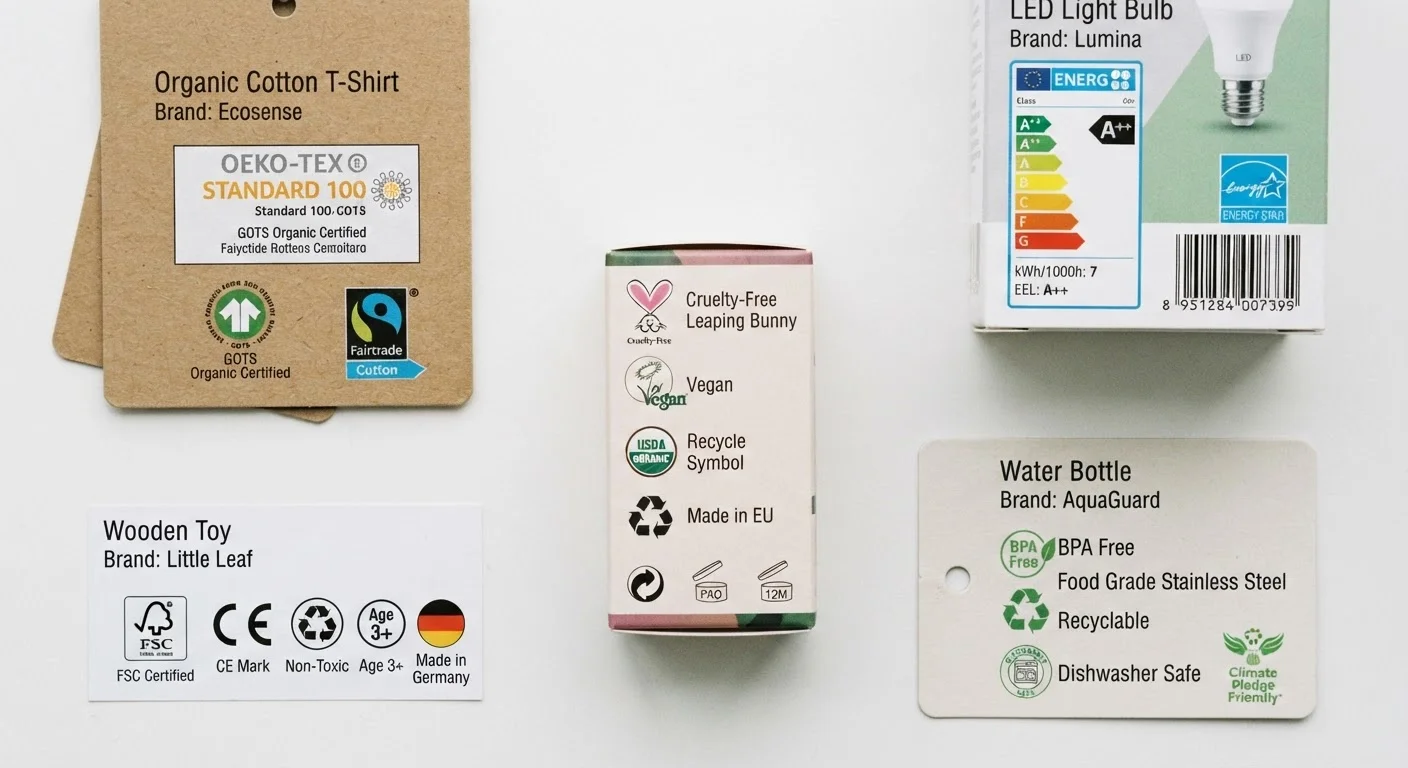
Photo credit: TrendingExperts.net
In this article
UL, Energy Star, OEKO-TEX, and more. Learn which third-party certifications carry real testing requirements and which are largely self-declared.
Why the Seal on a Product Isn't Always What It Seems
Walk through any store and you'll see dozens of badges, seals, and checkmarks on product packaging. Some represent rigorous independent testing with mandatory audits. Others are self-declared marketing claims dressed up to look official. The difference matters - and it's rarely explained on the label itself.
Understanding which certifications involve genuine third-party oversight helps you use them as a meaningful filter, rather than treating every seal the same. As a general principle: the more a certification requires ongoing factory audits, published testing standards, and accredited laboratories, the more trust it has earned. See our guide to first-party vs. third-party testing for a deeper look at how testing incentives shape results.
| UL founding year | 1894 (Underwriters Laboratories organizational history) |
| Energy Star program launch | 1992 (U.S. Environmental Protection Agency) |
| OEKO-TEX substances tested | 100+ (OEKO-TEX STANDARD 100 published criteria) |
| NSF areas of coverage | Water, food, supplements, plumbing, and more (NSF International program catalog) |
| "All Natural" regulatory status (non-food) | No federal standard in the U.S. (FTC and FDA guidance documents) |
Certifications with Established Third-Party Requirements
These labels are backed by published standards, independent testing, and structured oversight - not just a company's own claims.
- UL (Underwriters Laboratories): One of the oldest and most recognized safety testing organizations in the U.S. Products bearing a UL Mark have been tested by UL's own engineers against defined safety standards, and manufacturers must maintain production controls to keep authorization. UL is an accredited, OSHA-recognized Nationally Recognized Testing Laboratory (NRTL).
- Energy Star: Administered by the U.S. Environmental Protection Agency, Energy Star requires products to meet energy efficiency specifications and in many categories requires testing by EPA-recognized third-party labs. The program includes post-market verification testing to catch non-compliant products.
- OEKO-TEX STANDARD 100: A textile certification that tests for over 100 harmful substances, including pesticides, heavy metals, and formaldehyde. Testing is conducted by accredited OEKO-TEX member institutes, and authorization must be renewed annually.
- NSF International: Covers food equipment, water filters, dietary supplements, and more. NSF conducts its own laboratory testing, facility audits, and ongoing surveillance. It is widely used in public health contexts.
- GREENGUARD: Administered by UL, this certification tests products - particularly building materials and furniture - for chemical emissions into indoor air. It uses defined chamber testing protocols and requires annual retesting.
Third-party certification
A certification issued by an organization that is independent of both the manufacturer and the buyer. The certifying body applies its own published standards and testing protocols.
NRTL (Nationally Recognized Testing Laboratory)
A designation granted by OSHA to laboratories that test products for workplace safety requirements. NRTLs must meet defined competency and independence standards.
Self-declared claim
A label or statement applied by a manufacturer based on its own criteria, without independent verification from a recognized third-party body.
Post-market surveillance
Ongoing monitoring of products already on the market to confirm they continue to meet certification standards. It distinguishes active programs from one-time approvals.
Accreditation body
An organization that formally evaluates and recognizes testing laboratories or certification bodies as meeting defined competency standards. Examples include ILAC member bodies and OSHA for NRTLs.
Labels That Carry Less Independent Weight
Some labels are self-administered or self-declared, meaning the brand defines its own criteria and decides whether its products meet them. That's not inherently dishonest, but it removes the independence that makes third-party certification meaningful.
- "Clinically Tested" or "Dermatologist Approved": These phrases have no standardized definition under U.S. law. A brand may conduct its own small consumer study and apply either label. For more context on this pattern in personal care, see our breakdown of skincare claims that sound scientific but rarely are.
- "All Natural" on non-food products: Outside of USDA-regulated food and some personal care contexts, this phrase is largely unregulated. There is no third-party body verifying the claim.
- Brand-owned eco badges: Proprietary sustainability badges - where the company creates and applies its own seal without external auditing - are common in apparel and cleaning products. The criteria may be legitimate, but you cannot verify them through a public standard.
Check the Certifier's Public Registry First
Most credible certification programs maintain a public, searchable database of certified products or manufacturers. Before trusting a seal, spend 60 seconds searching the certifier's website for the brand or product name. If the database doesn't exist or the product doesn't appear, the seal on the packaging may be outdated or misapplied. This single step catches a surprisingly large share of misleading claims.
When a label doesn't name a specific certifying body, search the product or brand name plus the seal name to find whether a recognizable independent organization administers it. If you can't identify a third party, treat the claim as marketing rather than certification.
How to Quickly Evaluate Any Certification
A few quick checks help you sort credible certifications from decorative badges:
- Who issues it? Look for a named organization with a public website and published testing standards - not just a logo with a tagline.
- Is testing done by accredited labs? Accreditation bodies like ILAC or OSHA's NRTL program validate that a laboratory meets defined competency standards.
- Is there a public database? Many credible certifications - UL, NSF, OEKO-TEX - maintain searchable online registries where you can verify that a specific product or manufacturer is actually certified.
- Are audits ongoing? A one-time self-assessment has far less value than recurring factory inspections or retesting requirements.
For a broader framework on evaluating product quality end-to-end, see evaluating any product with confidence. Similar critical thinking also applies to how food packaging language works - see what nutrition labels are actually telling you.

Author
Shopping Editorial Team
Shopping Editorial Team is the collective byline for our editorial team and contributor network. Articles published under this byline or an editorial pen name are researched, written, and reviewed according to our editorial standards for clarity, consistency, and independence before publication.
View all articles →