
Why Skipping Routine Maintenance Costs More Than It Saves
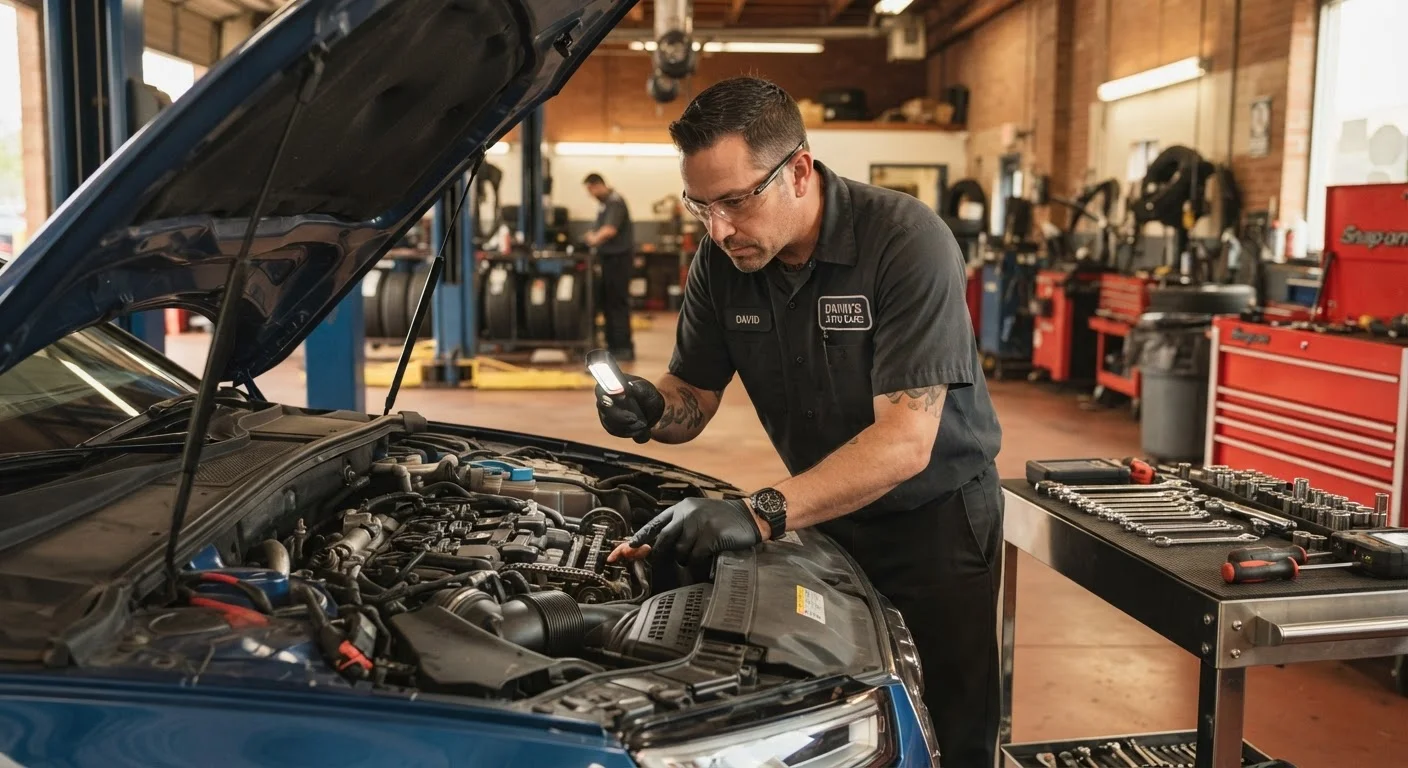
Photo credit: TrendingExperts.net
In this article
Delaying oil changes, ignoring worn brakes, or skipping tire rotations can turn minor services into major repairs. Here's how deferred maintenance compounds over time.
Key Takeaways
- Skipping oil changes accelerates engine wear and can lead to complete engine failure.
- Ignoring brake service warning signs puts both safety and your wallet at serious risk.
- Deferred maintenance costs compound - a $30 service skipped today can become a $1,000+ repair.
- Your owner's manual maintenance schedule is the single most reliable guide for your vehicle.
- Many maintenance tasks are easy to track with simple reminders or a maintenance log.
The Real Cost of Putting Maintenance Off
Routine maintenance can feel like an inconvenience - time away from your schedule and money leaving your account for something that seems optional when the car is running fine. But that perception is exactly what makes deferred maintenance so costly. Problems that are cheap to prevent are expensive to fix once they've progressed.
A worn serpentine belt costs relatively little to replace proactively; if it snaps on the highway, it can disable your power steering, charging system, and cooling pump simultaneously. A neglected cabin air filter is a minor swap; a clogged one quietly strains your HVAC blower motor until it burns out. These aren't worst-case scenarios - they're the predictable result of maintenance that wasn't done on time.
Understanding your vehicle's service schedule is the first step. See our maintenance schedule guide for a plain-language breakdown of what each service milestone actually means.
$1,200+
Average engine repair cost from oil neglect
Industry repair data consistently shows that sludge-related engine damage from skipped oil changes frequently results in repair bills exceeding $1,200, and sometimes far more depending on severity.
3-4x
Cost multiplier when rotors need replacing vs. pads alone
Brake rotor replacement alongside pad replacement can cost three to four times more than a pad-only service, underscoring why catching wear early matters.
25%
Fuel efficiency loss from under-inflated tires
According to the U.S. Department of Energy, tires that are significantly under-inflated can reduce fuel economy by up to roughly 0.2% per PSI drop - adding up to a meaningful efficiency loss over time.
Common Maintenance Mistakes - and How to Correct Them
Most deferred maintenance isn't willful neglect - it's the result of misunderstanding what's actually needed and when. The mistakes below reflect patterns that automotive technicians see repeatedly, and each one illustrates how a small savings today creates a larger bill later.
Skipping or delaying oil changes beyond the manufacturer's recommended interval.
Why it happens: Many drivers assume the old "every 3,000 miles" rule still applies universally, or they simply wait until the engine starts making noise - by which point damage has already occurred.
Ignoring brake service until squealing or grinding becomes obvious.
Why it happens: Brakes degrade gradually, so the change can be imperceptible day-to-day. Drivers often rationalize that if the car stops, the brakes are fine.
Skipping tire rotations and pressure checks, leading to uneven tread wear.
Why it happens: Tire maintenance feels low-priority when no visible problem exists. Drivers often don't realize uneven wear is happening until a tire fails or handling deteriorates.
Neglecting coolant flushes and fluid top-offs, risking engine overheating.
Why it happens: Coolant is invisible behind the hood during normal driving, and most drivers only think about it when a temperature warning light appears - often too late to avoid damage.
Replacing only one or two tires when all four need attention.
Why it happens: Buying a full set feels expensive upfront, so drivers replace only the most visibly worn tires. On all-wheel-drive vehicles especially, mismatched tread depth strains the drivetrain.
Deferred Maintenance Can Void Your Warranty
Failing to follow your vehicle's manufacturer-recommended maintenance schedule can jeopardize your powertrain or bumper-to-bumper warranty coverage. If a covered component fails and the dealer can show that required services were skipped, the claim may be denied. Always keep dated service records as proof of maintenance compliance.
Building a Maintenance Habit That Sticks
The most reliable way to avoid these mistakes isn't mechanical expertise - it's consistency. A simple maintenance log, either a small notebook in the glove box or a note on your phone, can track service dates and mileage for every task completed. When you can see that your last tire rotation was 9,000 miles ago, the decision to schedule one becomes obvious.
If you're uncertain whether a given task is something you can safely handle yourself or whether it belongs in a shop, that question deserves a careful answer. Our DIY vs. shop guide walks through a practical framework for making that call confidently.
New to vehicle ownership? Maintenance habits for new drivers offers a grounded starting point for building the routines that protect any car over the long haul. And if you've heard conflicting advice about what maintenance is truly necessary, it's worth checking which beliefs are well-founded and which aren't - our car maintenance myths article covers the most persistent ones.
The consistent theme across all of it: your owner's manual is the authoritative source for your specific vehicle. Manufacturer recommendations reflect the engineering of your engine, transmission, and systems - not a generalized average. Following them is the single most cost-effective maintenance decision you can make.

Author
Automotive Editorial Team
Automotive Editorial Team is the collective byline for our editorial team and contributor network. Articles published under this byline or an editorial pen name are researched, written, and reviewed according to our editorial standards for clarity, consistency, and independence before publication.
View all articles →