
Cinematic Universe vs. Standalone Film: What Makes Each Storytelling Model Work
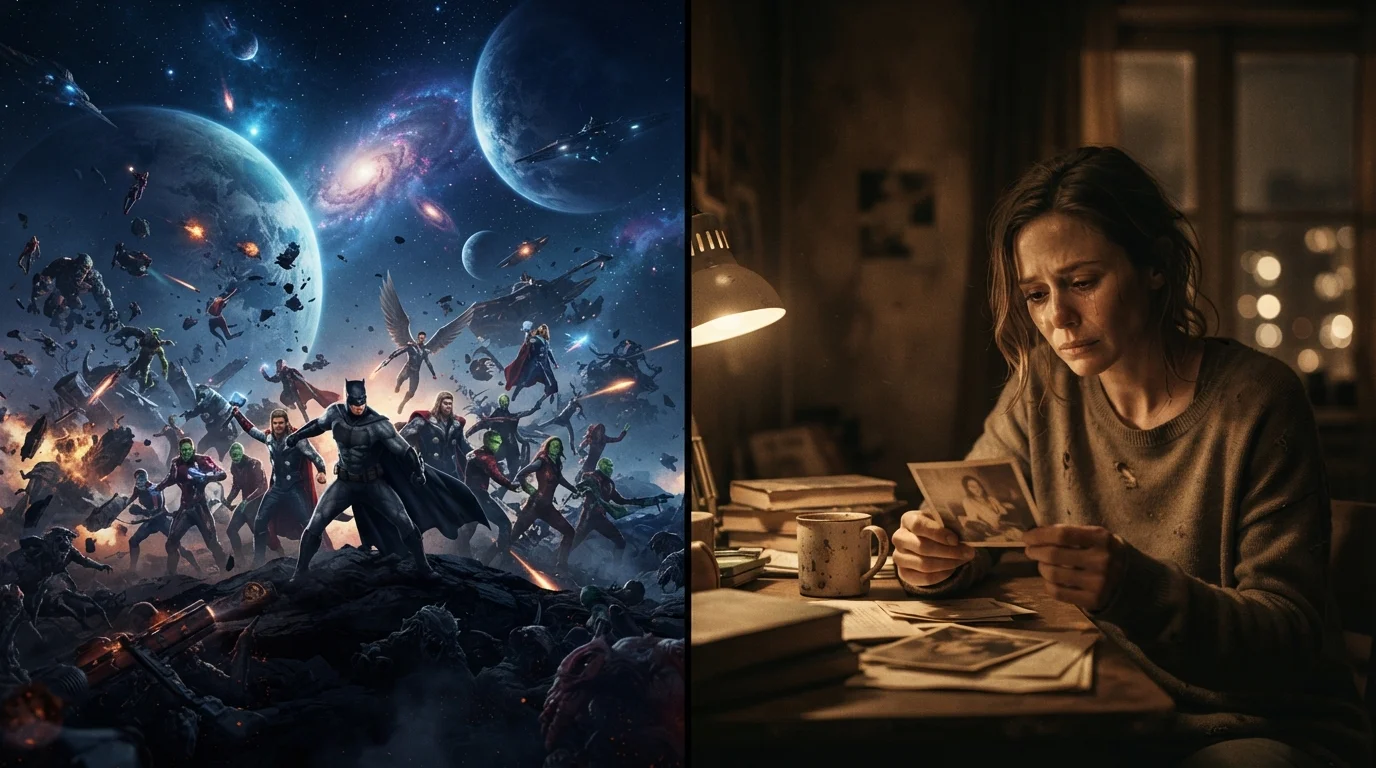
Photo credit: TrendingExperts.net
In this article
Franchise worldbuilding and self-contained stories serve very different purposes. Here's how each model shapes the films you watch.
Key Takeaways
- Cinematic universes prioritize expansive worldbuilding and character continuity across multiple films.
- Standalone films deliver complete narrative arcs with a clear beginning, middle, and end in one experience.
- Each model carries distinct creative advantages - and real limitations - for filmmakers and audiences alike.
- Neither format is inherently superior; the best choice depends on the story being told.
- Audience investment works differently: universes build gradually, while standalones demand immediate emotional engagement.
What Is a Cinematic Universe?
A cinematic universe is a franchise model in which multiple films share a continuous setting, characters, and mythology. The Marvel Cinematic Universe popularized the approach on a massive scale starting in 2008, demonstrating that audiences would enthusiastically track storylines across dozens of interconnected movies and TV series. The model has since been attempted across genres - from monsters and superheroes to wizarding worlds.
The key creative engine of a cinematic universe is continuity. Plot threads introduced in one film pay off in another; characters from separate stories collide in crossover events. This structure rewards loyal, attentive viewers and transforms filmgoing into something closer to long-form serialized fiction - similar to how format affects the television side of storytelling, as explored in this breakdown of limited series vs. ongoing TV shows.
The tradeoff is real, though. Films within a universe must balance serving their own story and setting up what comes next. When that tension tips too far toward franchise maintenance, individual movies can feel like extended trailers for upcoming releases rather than satisfying stories in their own right.
| Criterion | Cinematic Universe | Standalone Film |
|---|---|---|
| Narrative scope | Expansive, multi-film mythology | Complete story in one film |
| Viewer prerequisites | Prior films often required | No prior viewing needed |
| Creative control | Constrained by franchise continuity | Maximum director autonomy |
| Character development | Gradual across many films | Compressed within one runtime |
| Audience investment | Builds over years | Immediate emotional engagement |
| Risk of narrative clutter | Higher - many moving parts | Lower - focused story |
| Awards recognition | Less common in major categories | Frequently recognized |
What Makes Standalone Films Work?
A standalone film lives or dies on a single, complete story. Every narrative element - character arcs, thematic questions, conflict - must be introduced and resolved within one runtime. That constraint is actually a gift: it forces filmmakers to be precise, purposeful, and emotionally direct in ways that sprawling franchises rarely demand.
Classics like Parasite, Moonlight, and Everything Everywhere All at Once illustrate what standalone storytelling does best. There's no mythology to maintain, no cameos to engineer, and no obligation to a broader timeline. The story exists entirely on its own terms, which is why these films often generate the most intense critical praise and awards attention.
Standalone films also lower the barrier of entry for audiences. A viewer who missed nothing still misses nothing - the film offers its full emotional experience the moment the credits roll. This accessibility is part of what gives certain standalones enduring rewatchability and cultural longevity. Just as documentary formats serve different audience needs depending on their structure - a contrast explored in this look at documentary vs. docuseries - standalone films offer a self-contained depth that serialized cinema simply can't replicate.
23
MCU films before 'Avengers: Endgame'
The MCU's Phase 1-3 saga spanned 23 interconnected films before its crossover culmination, according to Marvel Studios' official release timeline.
3 of 5
Recent Best Picture winners were standalones
Among the Academy Award Best Picture winners from 2020 to 2024, the majority were self-contained films with no franchise connections.
$2.9B
Avengers: Endgame global box office
According to Box Office Mojo, Avengers: Endgame remains one of the highest-grossing films ever, illustrating the commercial ceiling the universe model can reach.
Which Model Serves Storytelling Better?
The honest answer is: it depends entirely on the story. Some narratives are simply too large, too mythologically rich, or too character-dense to be told in a single film. A cinematic universe gives those stories room to breathe and evolve. Others are precisely the opposite - their emotional power comes from compression, focus, and the unity of a single vision driven to its conclusion.
What's worth watching for as a viewer is whether a film you're watching is confidently operating within its chosen model. The best cinematic universe entries - think early MCU films or The Dark Knight - work as both franchise chapters and satisfying standalone experiences. The most beloved standalones feel like they couldn't exist any other way.
The storytelling model is ultimately a tool. When filmmakers choose it deliberately, in service of the story they want to tell, audiences feel that intention. When the model is chosen for commercial or institutional reasons rather than creative ones, the cracks tend to show - and audiences notice that too.

Author
Entertainment Editorial Team
Entertainment Editorial Team is the collective byline for our editorial team and contributor network. Articles published under this byline or an editorial pen name are researched, written, and reviewed according to our editorial standards for clarity, consistency, and independence before publication.
View all articles →