
Routine Maintenance Schedules: What Your Vehicle Actually Needs and When
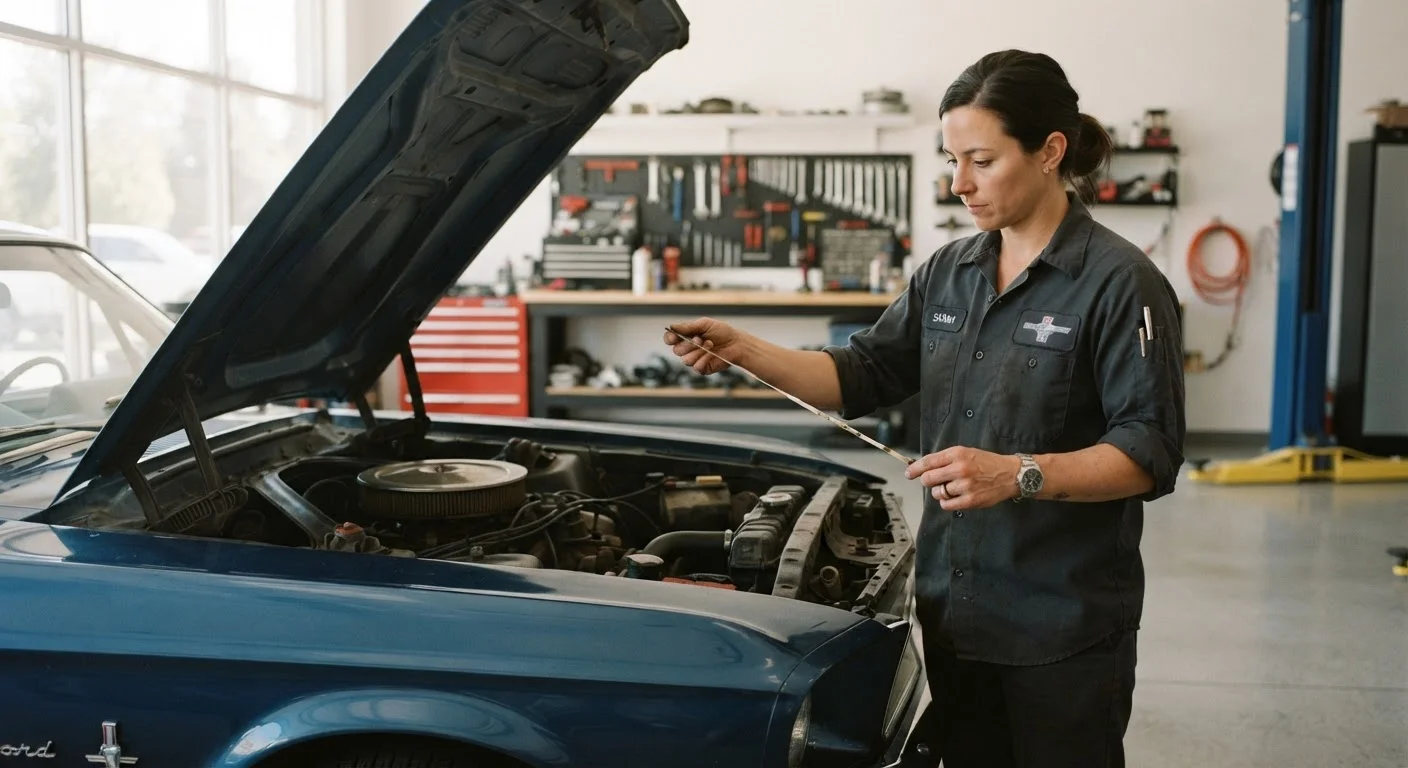
Photo credit: TrendingExperts.net
In this article
Oil changes, tire rotations, brake checks—understand the logic behind maintenance intervals and how to stay ahead of costly repairs.
Key Takeaways
- Your owner's manual sets the authoritative maintenance schedule for your specific vehicle - not generalized rules of thumb.
- Most routine services follow mileage or time intervals, whichever comes first - both thresholds matter.
- Skipping or delaying maintenance rarely saves money; it typically shifts costs to larger, avoidable repairs later.
- Driving conditions affect how quickly components wear - severe-duty driving warrants more frequent service.
- Keeping a written service log protects your vehicle's value and simplifies warranty or resale conversations.
Why Maintenance Intervals Exist
Every vehicle is engineered with predictable wear rates - fluids degrade, filters clog, rubber hardens, and friction surfaces thin down over time and miles. Maintenance intervals are the manufacturer's evidence-based answer to the question: at what point does leaving this unchanged start causing harm?
Understanding that logic helps you treat your service schedule as a tool rather than a formality. The goal isn't just compliance - it's keeping systems functioning within the tolerances they were designed to operate in. When a component is serviced on schedule, it rarely fails dramatically. When it isn't, wear compounds quietly until something breaks.
For a deeper look at how to read the milestone tables in your manual, see our guide to decoding your maintenance schedule.
Core Services and What Drives Their Timing
Most vehicles share a handful of recurring services, though the specific intervals vary by make, model, engine type, and how the vehicle is used.
Follow your owner's manual interval - not a universal rule - for oil changes.
Oil change recommendations have evolved significantly with modern engine design and lubricant chemistry. A blanket rule like every 3,000 miles may be unnecessary for many current vehicles, leading to wasted money; following too long an interval for an older engine or conventional oil can cause accelerated wear. Your manual specifies the correct interval for your exact powertrain.
Rotate tires every 5,000-7,500 miles or with each oil change.
Tires wear unevenly depending on their position - front tires on front-wheel-drive vehicles wear faster from steering and acceleration loads. Regular rotation evens out that wear pattern, extending the usable life of the full set and maintaining balanced handling across all four corners.
Inspect brake pads and rotors at least once a year or every 12,000 miles.
Brake wear varies widely based on driving style, terrain, and load. Annual inspection catches pads before they reach metal-on-metal contact, which damages rotors and significantly increases repair cost. Brakes are a safety-critical system - degraded stopping performance has direct consequences on the road.
Check tire pressure monthly and before long trips.
Tires lose roughly 1 PSI per month under normal conditions, and pressure drops further in cold weather. Under-inflated tires wear unevenly, reduce fuel efficiency, and compromise handling. Over-inflation reduces the contact patch and increases blowout risk. Neither extreme is visible without checking.
Replace engine and cabin air filters on schedule or when visibly clogged.
A clogged engine air filter restricts airflow to the combustion chamber, reducing efficiency and potentially affecting performance over time. A dirty cabin air filter degrades interior air quality and can strain the HVAC blower. Both are low-cost parts with straightforward replacement intervals, typically every 15,000-30,000 miles depending on driving environment.
Service transmission fluid according to the manufacturer's recommendation.
Transmission fluid lubricates and cools complex internal components. Degraded fluid can cause rough shifting, slipping, and ultimately transmission failure - one of the most expensive repairs a vehicle can require. Many manufacturers specify intervals between 30,000 and 60,000 miles, though some sealed transmissions have extended or "lifetime" fluid claims that still warrant periodic inspection.
Beyond these core services, cabin air filters, spark plugs, belts, and coolant all carry their own intervals - consult your owner's manual for specifics. If you're uncertain what oil type or interval your engine calls for, our oil change interval explainer walks through how to read those numbers correctly.
Severe vs. Normal Driving Conditions
Most owner's manuals include two maintenance tracks: normal and severe duty. "Severe" doesn't mean aggressive driving - it covers conditions many everyday drivers encounter regularly: frequent short trips under five miles, stop-and-go city traffic, dusty or unpaved roads, towing or hauling loads, and extreme temperature climates.
Under severe conditions, fluids and filters degrade faster because the engine works harder and reaches operating temperature less consistently. If your driving fits that profile, following the severe-duty schedule is the appropriate choice, not an upsell.
When "Severe Duty" Applies to Everyday Drivers
The severe-duty label in owner's manuals surprises many drivers who don't consider themselves hard on vehicles. However, frequent short trips - where the engine never fully warms up - are one of the most common qualifying conditions. Cold-start cycles are harder on oil and engine components than sustained highway driving. If most of your trips are under five miles, checking whether the severe schedule applies to you is worthwhile.
Understanding your driving profile also matters when evaluating a used vehicle's condition. As we note in our article on what the odometer doesn't tell you, how a vehicle was driven often matters as much as how far.
Building Habits That Keep You on Track
Knowing what needs doing is only half the equation - the other half is actually keeping up with it. These practical habits reduce the chance of missed services.
Logging every service also pays off beyond personal organization. A documented history supports warranty claims, provides transparency when selling, and can influence a buyer's confidence in your vehicle. Our article on keeping a vehicle maintenance log covers exactly what a useful record should include.
For newer drivers still building their ownership instincts, the new driver maintenance guide offers a grounded starting point. And if you're ever weighing whether to handle a service yourself or visit a shop, our DIY vs. shop decision framework can help you assess the tradeoffs sensibly.

Author
Automotive Editorial Team
Automotive Editorial Team is the collective byline for our editorial team and contributor network. Articles published under this byline or an editorial pen name are researched, written, and reviewed according to our editorial standards for clarity, consistency, and independence before publication.
View all articles →