
Night Driving Is More Dangerous Than Most People Realize
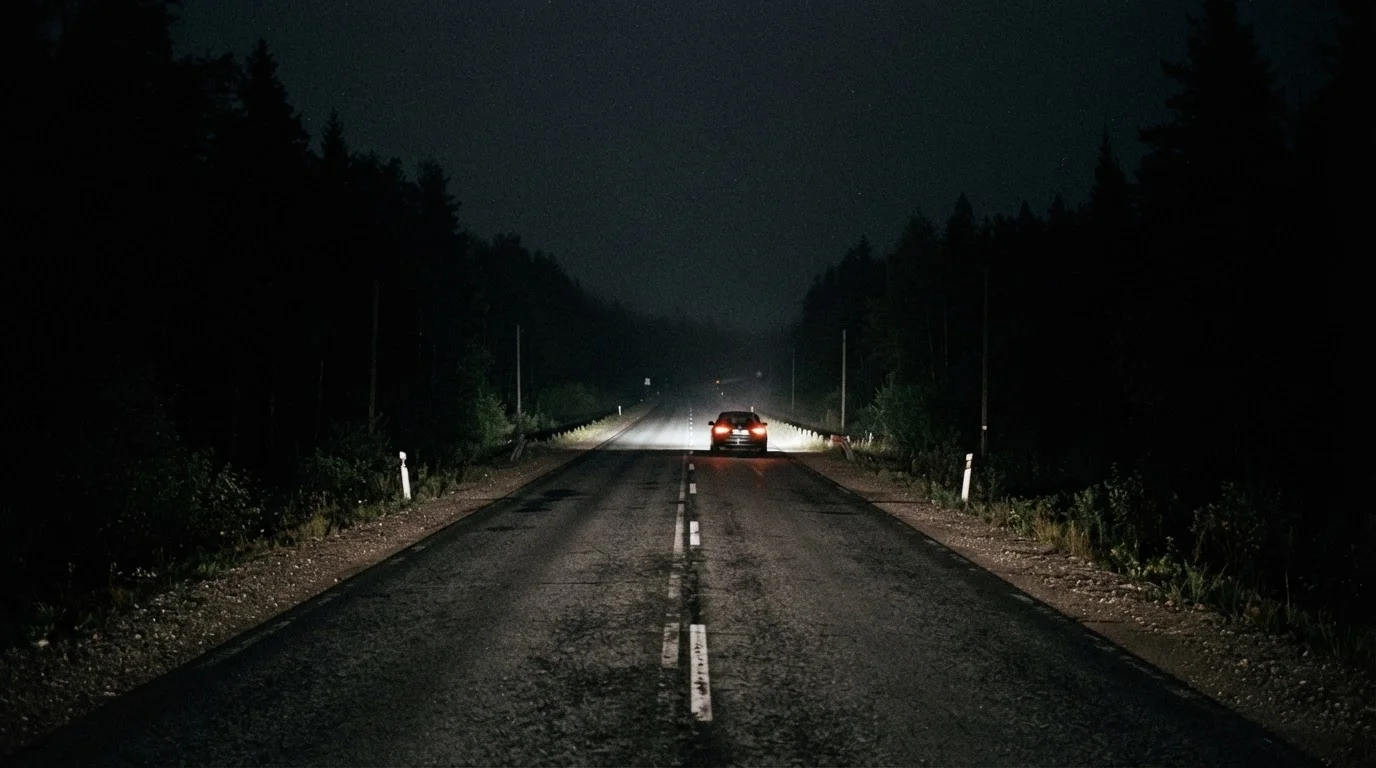
Photo credit: TrendingExperts.net
In this article
Reduced visibility, fatigue, and impaired drivers make nighttime roads riskier. Here's what the research shows and how to compensate.
Key Takeaways
- Fatal crash rates per mile driven are significantly higher at night than during the day.
- Human vision degrades sharply in low light, narrowing peripheral awareness and depth perception.
- Driver fatigue peaks in the late-night and early-morning hours, compounding visibility loss.
- Impaired driving is far more common at night, especially on weekends.
- Adjusting speed, following distance, and headlight use are the most effective countermeasures.
- Older drivers face greater night vision challenges due to normal age-related eye changes.
The Numbers Behind the Risk
Most drivers intuitively know nighttime driving feels different - but many underestimate just how much more dangerous it actually is. According to the National Highway Traffic Safety Administration (NHTSA), roughly half of all traffic fatalities in the United States occur at night or in low-light conditions, even though nighttime accounts for a significantly smaller fraction of total miles driven.
That gap is the core of the problem. It isn't simply that more cars are on the road at night creating more opportunity for crashes. The opposite is true - traffic thins considerably after dark. What fills that gap are compounding risk factors: limited visibility, fatigue, and a higher proportion of impaired drivers. Each of these independently raises crash risk. Together, they create conditions that demand a meaningfully different approach than daytime driving.
~50%
Traffic fatalities occurring at night or in low light
According to NHTSA data, roughly half of all U.S. traffic fatalities occur during nighttime or low-light conditions.
160 ft
Typical low-beam headlight range
Standard low-beam headlights illuminate approximately 160 feet ahead - less than two seconds of visibility at 60 mph.
3x
Higher drunk-driving fatality risk at night vs. day
NHTSA data shows alcohol-involved crash fatalities are heavily concentrated in late-night and early-morning hours, especially on weekends.
What Darkness Does to Your Vision
Human vision is optimized for daylight. In low-light conditions, the eye shifts from cone-based color and detail vision to rod-based peripheral and motion detection - a transition that comes with significant trade-offs. Depth perception deteriorates. Color contrast flattens. Peripheral vision narrows. A pedestrian wearing dark clothing or a deer at the roadside can appear with very little warning.
Standard low-beam headlights illuminate approximately 160 feet of road ahead. At highway speeds, that translates to less than two seconds of reaction time if an obstacle appears at the edge of your light range. This is what safety researchers call overdriving your headlights - traveling fast enough that your stopping distance exceeds what you can see. It's a common condition that most drivers don't recognize they're in.
Age compounds this further. The pupil gradually loses its ability to dilate fully with age, reducing the light that reaches the retina. Glare from oncoming headlights also becomes more disruptive over time. These are normal physiological changes - not failures - but they do shift the risk profile for older drivers in ways that warrant extra care. See our guide to blind spots and visual gaps for more on how limited sight lines affect driving decisions.
Fatigue and Impairment: The Hidden Multipliers
Darkness doesn't just limit what you can see - it influences your alertness. The human body's circadian rhythm is wired to promote sleep after dark. Driving between midnight and 6 a.m. - even after a full night of sleep - puts a driver in a window where cognitive sharpness naturally dips. Add genuine sleep deprivation and the effect intensifies. Research on driving fatigue shows that severe sleep deprivation can impair reaction time and judgment to a degree comparable to alcohol intoxication.
Alcohol-impaired driving is itself far more prevalent at night. NHTSA data consistently shows that alcohol-involved fatalities are significantly more concentrated in late-night and early-morning hours, with weekend nights carrying the highest risk. This means a sober, alert driver operating at night shares the road with a statistically higher proportion of impaired drivers than at any other time - a risk that can't be fully compensated for by individual skill alone, but that defensive driving principles can help address.
When to Pull Over and Rest
If you notice repeated yawning, difficulty maintaining your lane, or a sudden "lost time" moment where you can't account for the last few miles, these are serious signals - not mild inconveniences. The safest response is to exit the road, park in a well-lit area, and rest before continuing. Driving while severely fatigued carries risks similar to driving impaired, and no amount of caffeine reliably restores full alertness once impairment is this advanced.
Practical Adjustments That Make a Real Difference
The good news is that night driving risk is manageable with deliberate habits. None of these require special equipment or advanced training - they require awareness and a willingness to adapt.
- Slow down. Reducing speed is the single most effective response to limited visibility. A slower vehicle needs less distance to stop, which directly counteracts the headlight-range problem. Posted speed limits reflect ideal conditions - at night, ideal conditions don't apply.
- Increase your following distance. The three-second following rule is a daytime baseline. At night, extending it to four or five seconds gives more time to react to brake lights appearing in the dark.
- Use high beams appropriately. On unlit rural roads with no oncoming traffic, high beams nearly triple your visible range. Most drivers underuse them. Switch back to low beams whenever another vehicle is within about 500 feet, oncoming or ahead.
- Keep your windshield and headlights clean. Grime on glass scatters light and amplifies glare. Headlight lenses that have yellowed or fogged reduce output significantly - a condition that can be corrected without replacing the entire assembly.
- Watch for fatigue signals. Yawning frequently, difficulty holding your lane, or losing track of the last few miles are serious warnings. Pulling over and resting is not a failure - it's the correct decision.
Nighttime conditions also interact with other challenges. Adverse weather after dark multiplies visibility loss further, and even minor distractions carry amplified consequences when your visual margin is already razor-thin.
Frequently Asked Questions

Author
Automotive Editorial Team
Automotive Editorial Team is the collective byline for our editorial team and contributor network. Articles published under this byline or an editorial pen name are researched, written, and reviewed according to our editorial standards for clarity, consistency, and independence before publication.
View all articles →