
Blind Spots, Mirrors, and the Gaps No Camera Covers
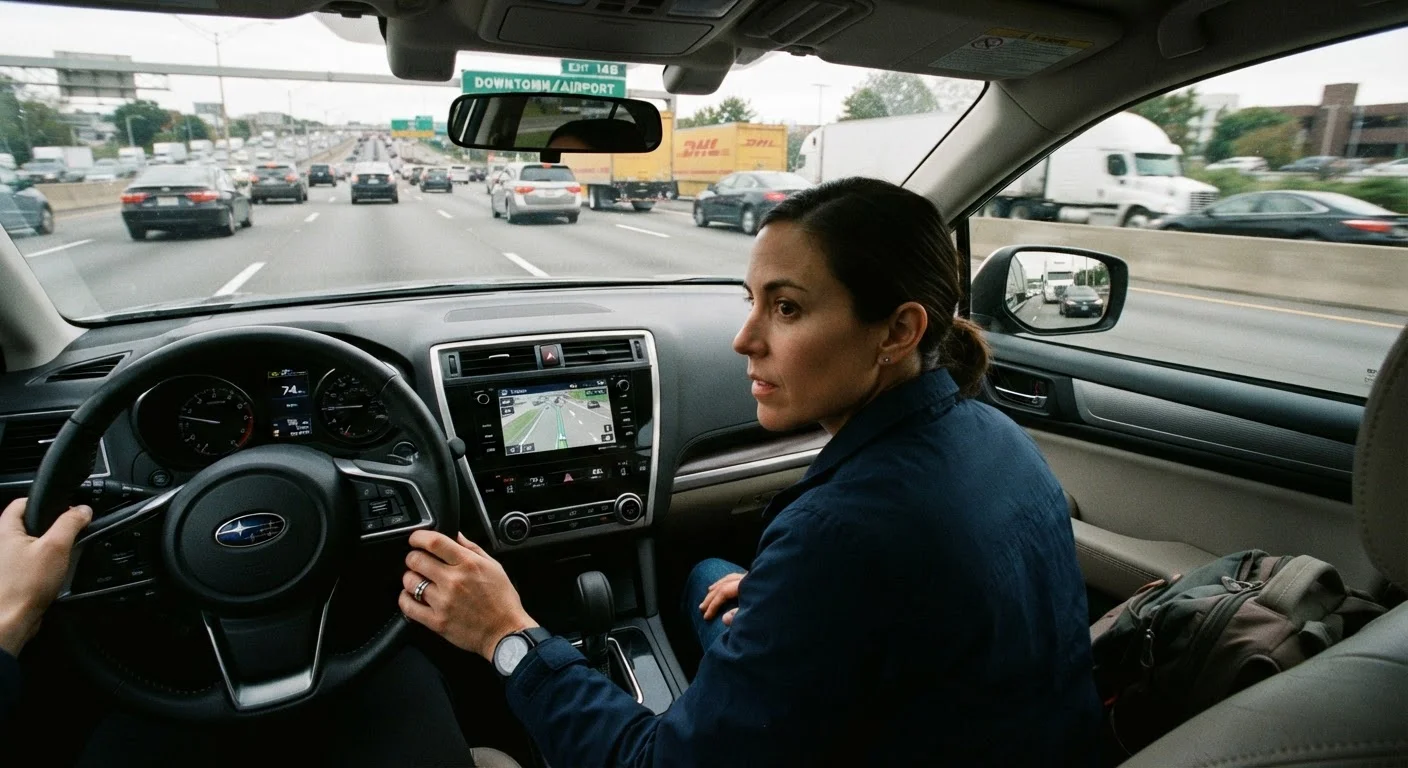
Photo credit: TrendingExperts.net
In this article
Mirrors and backup cameras don't eliminate blind spots — they just move them. Learn where the gaps are and how to account for each one.
Key Takeaways
- Every vehicle has multiple blind spots that mirrors and cameras cannot fully eliminate.
- Side-view mirrors leave a gap directly beside and slightly behind each rear quarter panel.
- Backup cameras have a fixed field of view and miss objects at the sides when reversing.
- Physically turning your head to check blind spots remains the most reliable method.
- Proper mirror adjustment reduces - but does not eliminate - dangerous gap zones.
- Blind spot monitoring systems assist but should not replace the head-check habit.
Why Mirrors Only Tell Part of the Story
Most drivers trust their mirrors the way they trust a rearview clock - glance at it, get the information, move on. But mirrors are optical tools with fixed positions and fixed angles, and they leave predictable gaps every single time.
The rearview mirror covers the area directly behind you through the rear window. The two side mirrors extend that view outward, but they hand off coverage at a specific angle - and that handoff point is precisely where danger hides. The zone beside your rear quarter panels, the area where a car can sit perfectly unseen while traveling at highway speeds, is the classic blind spot that driver education courses warn about for good reason.
Proper mirror adjustment helps significantly. Many drivers angle their side mirrors too far inward, essentially duplicating what the rearview mirror already shows. Tilting them outward - until you can barely see your own vehicle's edge - captures more of the adjacent lane. But even optimally adjusted mirrors leave a gap. No mirror angle eliminates it entirely.
For new or returning drivers building foundational awareness, the fundamentals of situational awareness are worth reviewing alongside any equipment-based technique.
Adjust Mirrors Before Every Drive
Mirror position changes whenever a different person drives the vehicle or the seat is adjusted. Make checking mirror angles part of your pre-drive routine so your coverage zones are always calibrated to your current seating position. A two-second adjustment prevents gaps you won't notice until it's too late.
The Camera Gap: What Backup Technology Misses
Backup cameras became federally required on new U.S. passenger vehicles starting in 2018, and they have meaningfully reduced certain types of backover incidents. The technology is genuinely useful. But it has a defined field of view - typically between 130 and 180 degrees - and that field is centered on the area directly behind the vehicle.
Objects close to the sides of the bumper, or far to the left or right as you exit a parking space, often fall outside the camera's frame. A small child, a cyclist passing behind you mid-backup, or a bollard near the side of your car may not appear on screen at all. The camera also cannot assess speed or predict movement the way a scanning human eye can.
~316,000
Estimated annual U.S. blind spot crashes
The National Highway Traffic Safety Administration has estimated that hundreds of thousands of crashes annually involve blind spot-related factors, including lane-change and merging collisions.
≈58%
Backover incidents involving children under 5
Research cited by safety advocates has found that young children are disproportionately represented in backover incidents, partly because they move unpredictably and often fall below camera field of view.
The practical result: backup cameras are a strong supplement, not a replacement for checking side mirrors and physically scanning the area. A pre-drive safety routine that includes a walk-around before reversing in unfamiliar environments gives you information no camera can provide.
The Zones Technology Still Can't Fully Cover
Modern vehicles increasingly offer blind spot monitoring systems - sensors, usually radar-based, mounted in the rear bumper that detect vehicles traveling in adjacent lanes. When a vehicle enters the monitored zone, a warning light appears in or near the corresponding side mirror. Some systems add an audible alert if you activate a turn signal while the zone is occupied.
These systems are effective at detecting other passenger vehicles traveling at highway speeds. They are less reliable with motorcycles, cyclists, pedestrians, and objects that don't return a strong radar signal. They can also be confused by guardrails, concrete barriers, or stationary objects close to the road edge.
There are also structural blind spots no sensor currently addresses in real time. The A-pillars - the roof supports on either side of the windshield - can obscure a pedestrian or cyclist at an intersection. This effect is more pronounced in vehicles with wider pillars, which have become common as side-impact safety requirements have grown stricter. Leaning slightly to look around the pillar at intersections is a habit worth building.
Visibility challenges compound at night. Reduced visibility conditions mean that even the zones your mirrors do cover become harder to read accurately.
A driver on a three-lane interstate checks both mirrors before merging left and sees clear lanes, but a motorcycle has been traveling in the gap zone beside the rear quarter panel the entire time.
A driver backs out of a parking space using only the backup camera and narrowly avoids a cyclist passing behind the vehicle from the right - a direction the camera angle didn't capture.
At a right-turn-on-red intersection, a driver doesn't see a pedestrian stepping off the curb because the A-pillar blocks the view at that specific angle.
A driver relies on a blind spot monitoring warning light while merging but the system doesn't alert because a cyclist - not a passenger vehicle - is in the adjacent zone.
The Habit That Replaces All the Gaps
The physical head check - turning your head to look directly into the blind spot zone before changing lanes or merging - remains the single most reliable technique available to any driver, in any vehicle, at any price point. It takes about one second and bypasses every limitation that mirrors and cameras share.
The challenge is that it requires taking your eyes off the road ahead, if only briefly. This is why the head check should be paired with good situational awareness: know what's in front of you before you check beside you. Distracted driving research consistently shows that even brief attention shifts carry real risk - which is an argument for making the head check a deliberate, smooth habit rather than a rushed reaction.
Used together - mirrors adjusted correctly, camera consulted when reversing, blind spot monitoring acknowledged but not relied on, and a physical head check before any lane change - these layers of awareness cover the gaps that any single method leaves open. No system is foolproof. But informed, deliberate driving consistently outperforms any technology working alone.
Frequently Asked Questions

Author
Automotive Editorial Team
Automotive Editorial Team is the collective byline for our editorial team and contributor network. Articles published under this byline or an editorial pen name are researched, written, and reviewed according to our editorial standards for clarity, consistency, and independence before publication.
View all articles →