
Driving Fatigue: Why Tired Behind the Wheel Is More Like Drunk Than Most Drivers Think
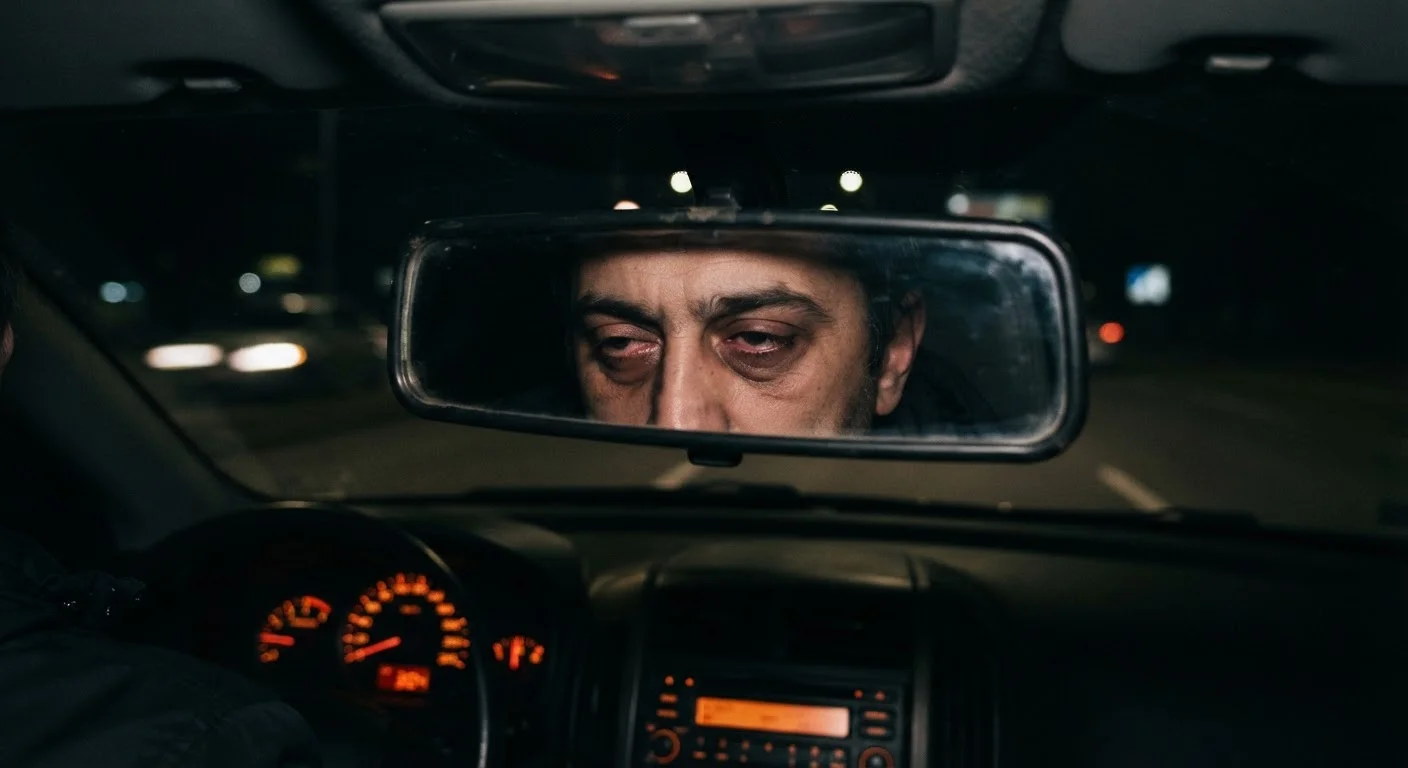
Photo credit: TrendingExperts.net
In this article
Research links severe sleep deprivation to impairment comparable to alcohol intoxication. Understand the signs of fatigue and when to stop driving.
Key Takeaways
- Being awake for 18-24 hours can impair driving similarly to having a measurable blood alcohol level.
- Drowsy drivers often cannot accurately judge how impaired they actually are.
- Microsleeps - brief unconscious lapses - can last several seconds at highway speed, covering significant distance.
- Caffeine and rolling down windows provide only temporary, unreliable relief from serious fatigue.
- The safest response to severe fatigue while driving is to stop and rest, not push through.
The Fatigue-Alcohol Parallel Drivers Dismiss
Most drivers take alcohol impairment seriously because the consequences - legal, social, physical - are well-documented and widely discussed. Fatigue rarely gets the same treatment. Yet research published by the AAA Foundation for Traffic Safety and studies from sleep science consistently find that staying awake for approximately 18 hours produces cognitive and motor impairment comparable to a blood alcohol concentration (BAC) of around 0.05%. Push that to 24 hours without sleep, and impairment levels approach or exceed the 0.08% legal threshold in most U.S. states.
What makes this comparison so consequential is that fatigued drivers, unlike most intoxicated ones, rarely feel as though they are dangerously impaired. The subjective experience of tiredness can plateau even as objective performance continues to deteriorate - a phenomenon sleep researchers call sleep debt dissociation. You feel merely tired; your reaction time, lane-keeping, and hazard recognition tell a different story.
This article unpacks the most persistent myths about driving fatigue and replaces them with what the evidence actually shows. For a related look at another major attention threat on the road, see how distraction compounds risk behind the wheel.
Myth
Feeling tired isn't that dangerous - you'd know if you were too impaired to drive.
Fact
Fatigue specifically impairs the self-awareness needed to gauge impairment. Drivers routinely overestimate their ability to function when sleep-deprived.
Sleep deprivation disrupts the prefrontal cortex - the region responsible for self-monitoring and judgment. Studies using driving simulators consistently show that participants who perform poorly also rate their own performance as adequate. This creates a self-sealing error: the worse the impairment, the less capable the driver is of detecting it. Trusting your gut feeling about fitness to drive is least reliable precisely when you most need accurate judgment.
Myth
Caffeine or opening the window will fix tiredness and make driving safe again.
Fact
These strategies can temporarily mask sleepiness but do not restore the reaction time, attention, and cognitive function that fatigue has degraded.
Caffeine blocks adenosine receptors in the brain, delaying the subjective feeling of sleepiness for a limited window - typically 30 to 60 minutes at best in a severely fatigued individual. It does not reverse the accumulated performance deficits. Cold air and loud music have even shorter and less reliable effects. Research indicates the only reliable remedy for fatigue impairment is sleep itself. Countermeasures like caffeine are best used to bridge a short gap until a safe stop is possible, not as a strategy for extended fatigued driving.
Myth
Only people with sleep disorders or who drove all night need to worry about drowsy driving.
Fact
Even moderate, routine sleep restriction - sleeping six hours instead of eight for several consecutive nights - builds cumulative impairment comparable to complete sleep deprivation.
Research by sleep scientist David Dinges and colleagues at the University of Pennsylvania found that restricting sleep to six hours per night for two weeks produced cognitive deficits equivalent to two full nights without sleep - yet participants did not feel subjectively as impaired as those who had gone entirely without sleep. Ordinary workweek sleep patterns for many adults fall into exactly this range. Drowsy driving is not a problem reserved for extreme situations; it is a routine risk for a significant portion of everyday commuters.
Myth
Drowsy driving is only really dangerous on long highway trips.
Fact
A substantial proportion of fatigue-related crashes occur within short distances of the driver's origin, including on familiar local roads.
The National Highway Traffic Safety Administration (NHTSA) has noted that many drowsy-driving incidents happen during relatively short trips, often close to home. Familiarity with a route can actually reduce mental engagement, accelerating the onset of dangerous inattention. A driver who has been awake since early morning and makes a routine evening drive is exposed to meaningful fatigue risk regardless of trip length. Short and familiar does not mean low-risk.
Myth
If you fall asleep at the wheel, you'll wake up before anything serious happens.
Fact
Microsleeps can result in a complete loss of vehicle control for several seconds - enough time for a serious crash - before a driver regains awareness, often too late to respond.
Unlike a longer sleep episode, a microsleep does not necessarily produce the sensation of having slept. A driver may experience a microsleep and perceive only a slight mental gap, unaware that the vehicle traveled uncontrolled for a significant distance. At highway speeds, even a two-second lapse covers nearly 60 feet. There is no reliable internal alarm that fires in time to prevent a crash; the event and the outcome can occur before consciousness returns.
What Fatigue Actually Does to Your Driving
Drowsiness degrades driving performance across multiple dimensions simultaneously. Reaction time slows, sometimes dramatically - a driver who is severely sleep-deprived may take a full second longer to respond to a hazard. At 65 mph, one additional second of reaction delay translates to roughly 95 extra feet of travel before braking begins.
~0.08% BAC
Impairment level after 24 hours without sleep
AAA Foundation for Traffic Safety research indicates that 24 hours of wakefulness produces impairment comparable to the legal intoxication threshold in most U.S. states.
100 ft
Distance covered in a 1-second reaction delay at 65 mph
At highway speed, each additional second of delayed response due to fatigue translates to roughly 95-100 feet of uncontrolled forward travel before braking begins.
1 in 25
Drivers who report falling asleep at the wheel monthly
CDC data indicates approximately 1 in 25 adult drivers report having fallen asleep while driving in the previous 30 days.
Perhaps more alarming is the phenomenon of microsleeps: brief, involuntary lapses in consciousness lasting between one and thirty seconds. During a microsleep, a driver's eyes may remain open and appear functional, but the brain has effectively disconnected from the task of driving. At 60 mph, a five-second microsleep means the vehicle travels the length of a football field with no one at the wheel in any meaningful sense.
Fatigue also impairs the judgment needed to recognize these lapses. Unlike alcohol, which many drivers have experienced and can partially calibrate against, sleep deprivation creates a false sense of coping. Drivers report feeling capable of continuing when objective metrics say otherwise. This is why the standard advice to "just push through" is particularly dangerous - it is advice based on the very faculty that fatigue has most compromised.
Nighttime driving amplifies every one of these risks. The combination of reduced visibility and the body's natural circadian dip in alertness between midnight and 6 a.m. creates conditions where fatigue-related crashes cluster heavily. Our companion piece on night driving dangers explores the full picture of why darkness demands extra caution.
Do Not Rely on 'Pushing Through' Fatigue
If you notice warning signs - drifting lanes, repeated yawning, or gaps in your memory of recent miles - pull off the road at the next safe, well-lit exit or rest area. A 20-30 minute nap is the most effective short-term remedy. Continuing to drive while hoping alertness returns puts you, your passengers, and other road users at serious risk.
Recognizing Warning Signs and Responding Safely
The clearest signals that fatigue has crossed into dangerous territory include: difficulty keeping eyes focused or open, repeated yawning, drifting out of your lane, missing exits or signs you intended to watch for, and a gap in memory about the last few miles driven. That last symptom - a stretch of road you cannot recall - is a strong indicator that microsleeps have already occurred.
When these signs appear, the appropriate response is to exit the roadway and stop in a safe, well-lit location. A short nap of 20-30 minutes, followed by time to fully wake before resuming driving, is the most effective short-term intervention supported by sleep research. Switching drivers, if a rested passenger is available, is equally valid.
New and returning drivers should build an awareness of their personal fatigue patterns early. For foundational habits that support safe, attentive driving from the start, this guide for new drivers covers the situational awareness skills that matter most.
This article is for general informational purposes only. It is not a substitute for professional medical advice regarding sleep disorders or any related health conditions. If you regularly struggle with excessive daytime sleepiness, consult a qualified healthcare provider.

Author
Automotive Editorial Team
Automotive Editorial Team is the collective byline for our editorial team and contributor network. Articles published under this byline or an editorial pen name are researched, written, and reviewed according to our editorial standards for clarity, consistency, and independence before publication.
View all articles →