
Why Your Following Distance Is Almost Certainly Too Short
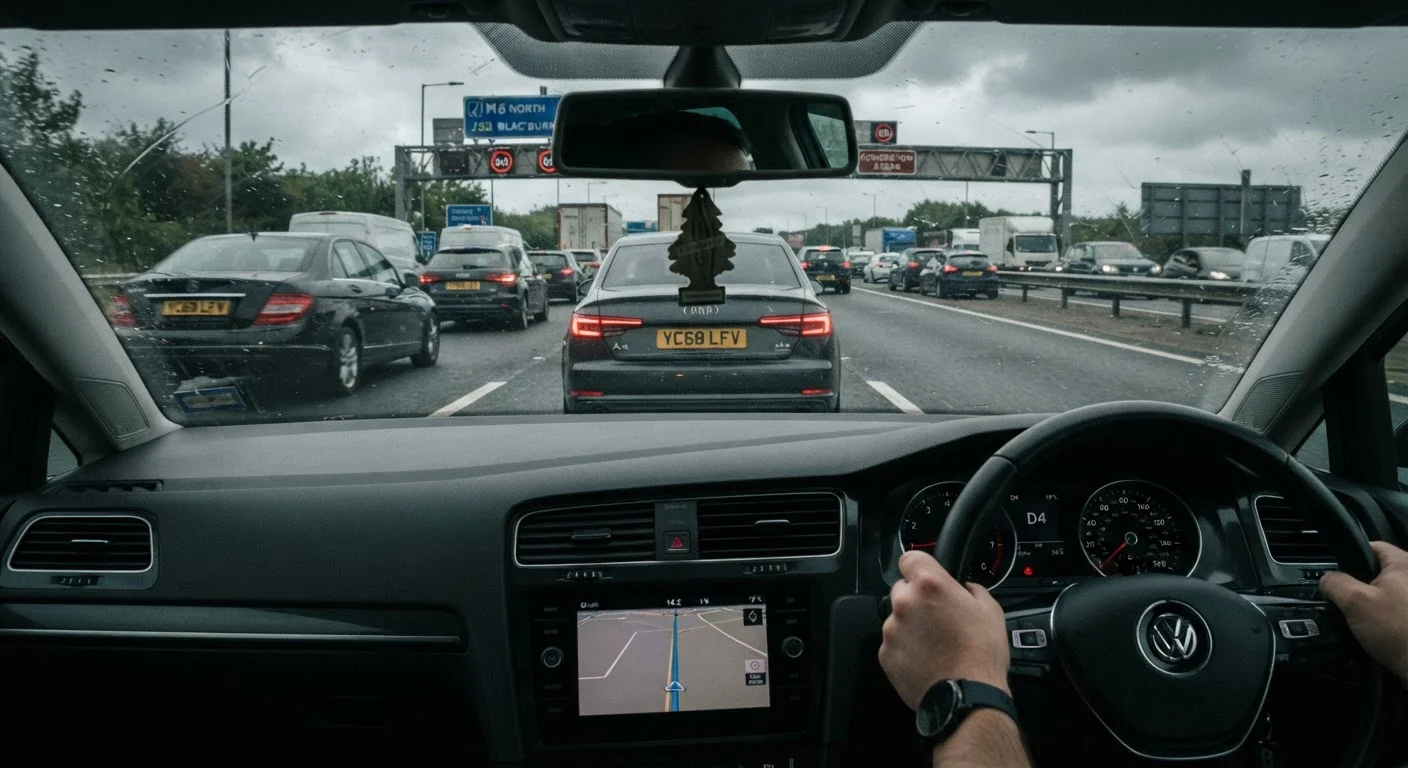
Photo credit: TrendingExperts.net
In this article
The three-second rule exists for a reason. Understand how reaction time and stopping distance work together — and why tailgating is so dangerous.
Key Takeaways
- The three-second rule is the minimum following distance under ideal conditions - not a universal target.
- Reaction time alone consumes roughly 1.5 seconds before your brakes even engage.
- Tailgating is a leading cause of rear-end collisions, which account for roughly a third of all crashes.
- Weather, fatigue, and distraction all lengthen your effective stopping distance significantly.
- Adjusting your following distance is one of the simplest, highest-impact safety habits you can build.
Why Following Distance Is a Bigger Deal Than It Looks
Most drivers think of tailgating as a rudeness problem. It's actually a physics problem. When you're traveling at highway speed, the gap between your front bumper and the car ahead disappears in fractions of a second. By the time your brain registers a hazard, signals your foot to brake, and your vehicle's braking system actually begins slowing the car, you've already covered a significant distance - often more than that gap contained.
Understanding following distance requires understanding two separate but linked concepts: reaction distance (the space you travel during the time it takes to respond) and braking distance (the space your car needs to physically stop after brakes are applied). At 60 mph, reaction distance alone can exceed 100 feet, even for an alert driver. Add braking distance on dry pavement, and you're looking at well over 200 feet to come to a complete stop.
This is why the principles of defensive driving place following distance near the top of any safety checklist. It's the buffer that gives all your other skills room to work.
~29%
Share of all U.S. crashes that are rear-end collisions
According to the National Highway Traffic Safety Administration (NHTSA), rear-end crashes represent roughly 29 percent of all reported traffic crashes, making following distance a direct safety factor.
1.5 sec
Average driver reaction time before braking begins
Traffic safety research commonly cites 1.5 seconds as a representative reaction time for an alert driver - meaning significant distance is covered before the brakes even activate.
Common Following-Distance Mistakes - and How to Correct Them
Drivers of all experience levels fall into predictable patterns when it comes to spacing. Recognizing these mistakes is the first step toward breaking them.
Treating the three-second rule as the ideal rather than the absolute minimum.
Why it happens: Driver education often presents three seconds as 'the answer,' and many drivers internalize it as a fixed target regardless of conditions.
Closing the gap to prevent other drivers from merging into your lane.
Why it happens: Drivers feel that a safe following distance is wasted space that invites lane-changers, so they tighten up to 'defend' their position.
Not adjusting following distance when driving a heavier or loaded vehicle.
Why it happens: Drivers accustomed to their personal sedan apply the same habits when driving a truck, SUV, van, or towing a trailer - despite significantly longer stopping distances.
Underestimating personal reaction time, especially when fatigued or distracted.
Why it happens: Most drivers believe their reactions are faster than average. Research suggests the opposite - reaction time is consistently underestimated, and fatigue or phone use can nearly double it.
Following at safe distance on highways but compressing space in city or stop-and-go traffic.
Why it happens: Slow-speed traffic feels less dangerous, and drivers default to bumper-to-bumper gaps because everyone else is doing it.
Wet and Icy Roads Demand Far More Space
On wet pavement, stopping distances can increase by 50 percent or more compared to dry conditions. On ice, that figure can climb to four to ten times the normal distance, depending on speed and tire type. If you're applying your dry-road following distance to winter or rainy conditions, you are operating with far less margin than you realize. Increase your gap significantly whenever traction is reduced.
If any of these patterns sound familiar, the good news is that following distance is entirely within your control. Unlike road conditions or other drivers' behavior, your gap is a choice you make continuously. For newer drivers still building situational awareness, foundational driving habits like spacing are worth prioritizing early, before other habits solidify.
When the Three-Second Rule Isn't Enough
The three-second rule - picking a fixed point on the road and counting how long it takes your car to reach it after the vehicle ahead passes - is a practical baseline, but it's calibrated for ideal conditions: dry roads, good visibility, an alert driver, a well-maintained vehicle. None of those conditions are guaranteed.
Rain dramatically reduces tire grip, extending stopping distances by 50 percent or more. Adverse weather conditions like ice or snow can require four to ten times the normal stopping distance. Fog limits how far ahead you can see, which compresses the time available to react. And driving at night adds its own complications - reduced visibility and driver fatigue both impair the speed and accuracy of your response.
A practical rule: any time conditions deviate from ideal - wet roads, reduced visibility, heavy loads, an unfamiliar vehicle - add at least one full second to your baseline gap, and consider adding more. Fatigue and distraction deserve the same adjustment. Research consistently shows that distracted driving extends reaction time significantly, meaning your three-second cushion may already be too thin before you factor in road conditions at all.
This article is for general informational and educational purposes. Always follow the traffic laws and posted speed regulations in your state or jurisdiction, and consult qualified driving instruction resources for personalized guidance.

Author
Automotive Editorial Team
Automotive Editorial Team is the collective byline for our editorial team and contributor network. Articles published under this byline or an editorial pen name are researched, written, and reviewed according to our editorial standards for clarity, consistency, and independence before publication.
View all articles →