
Highway Driving vs. City Driving: The Skills That Transfer and Those That Don't
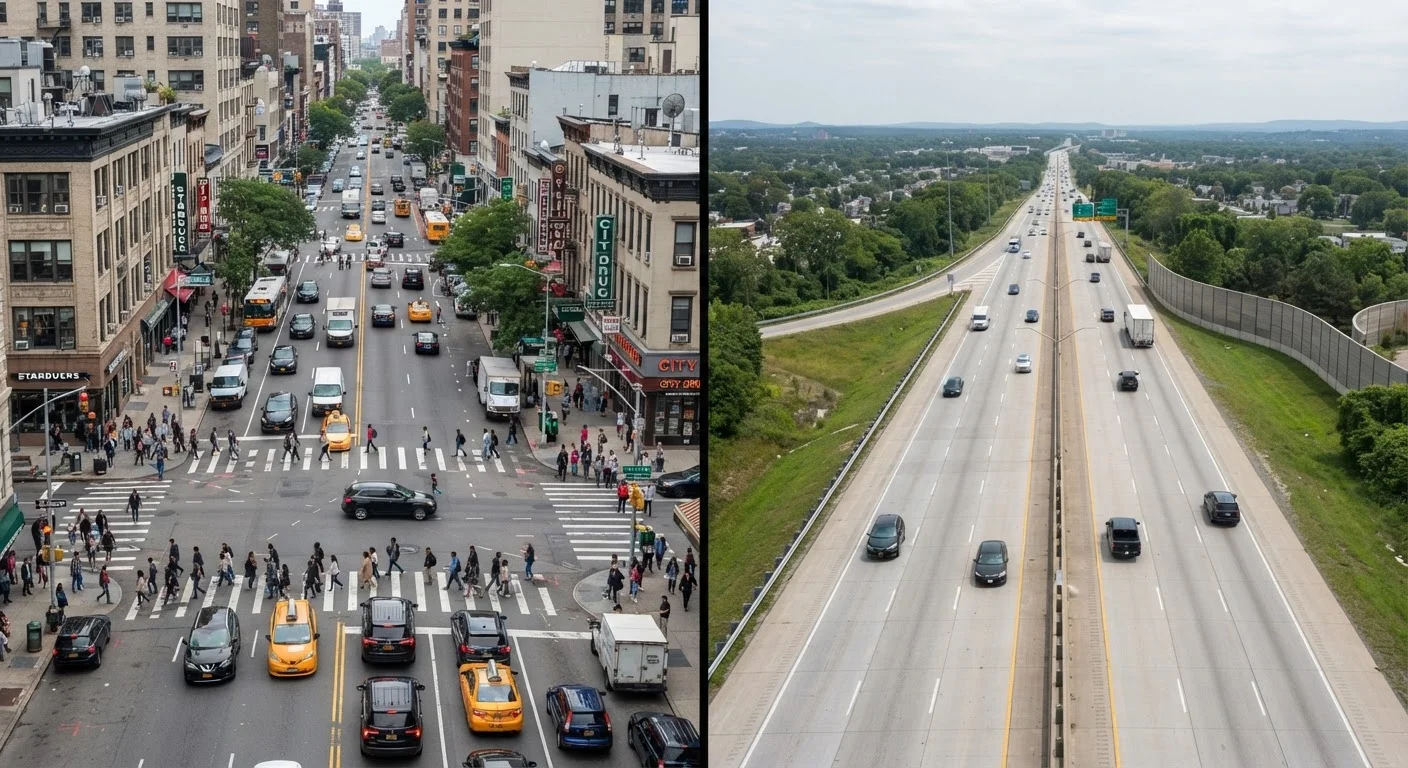
Photo credit: TrendingExperts.net
In this article
Urban intersections and open interstates require very different habits. See how the two environments compare and what each demands from a driver.
Key Takeaways
- Highway and city driving share foundational skills like signaling and mirror use, but apply them in very different ways.
- City driving demands faster, more frequent decisions due to pedestrians, cyclists, and intersections.
- Highway driving requires managing fatigue, long following distances, and safe merging at speed.
- Overconfidence in one environment can create dangerous blind spots when transitioning to the other.
- Defensive driving principles apply equally in both settings, though the hazards they address differ.
Two Very Different Driving Environments
Most licensed drivers regularly encounter both city streets and open highways - yet the mental and physical demands of each are surprisingly distinct. A driver who handles rush-hour urban traffic with confidence may feel genuinely uncomfortable merging onto a busy interstate at 70 mph for the first time. The reverse is equally true: experienced long-haul commuters can struggle with the constant micro-decisions city streets demand.
Understanding what each environment actually requires - and where the skills overlap - helps drivers avoid overconfidence and stay sharp in unfamiliar conditions. If you're building your fundamentals, this guide for new drivers covers the core habits every driver should develop first.
| Criterion | Highway Driving | City Driving |
|---|---|---|
| Typical speed range | 55-80 mph | 10-45 mph |
| Decision frequency | Low but high-stakes | High and rapid |
| Primary hazards | Speed, fatigue, merging | Pedestrians, cyclists, signals |
| Following distance needed | 3-4 seconds minimum | 2-3 seconds typical |
| Lane changes | Less frequent, higher speed | Frequent, slow speed |
| Fatigue risk | Higher (monotony) | Lower (constant stimulation) |
| Emotional stress drivers | Tailgating, slow vehicles | Congestion, road rage triggers |
Skills That Transfer Across Both Environments
Several core driving habits remain valuable whether you're navigating a gridlocked boulevard or cruising an open interstate:
- Mirror and blind-spot checks: Both environments require constant awareness of what surrounds your vehicle. The frequency and urgency differ, but the habit is universal.
- Signaling intentions early: Announcing lane changes and turns in advance gives other drivers time to react - on a highway at speed and at a congested urban intersection alike.
- Maintaining following distance: The appropriate gap changes with speed (longer on highways, shorter in slow city traffic), but the principle of leaving reaction time never changes.
- Scanning ahead, not just immediately in front: Whether you're watching for brake lights a quarter-mile up the interstate or a pedestrian about to step off a curb, looking further ahead is always safer.
These habits form the core of what's commonly called defensive driving - anticipating hazards before they become emergencies, regardless of environment.
~52%
Fatal crashes on rural roads
According to NHTSA data, roughly half of all U.S. traffic fatalities occur on rural roads, where higher speeds and less infrastructure play a significant role.
3 sec
Minimum safe following distance
Safety guidelines consistently recommend at least a three-second following gap, which must be extended in adverse weather or at higher speeds.
~76%
Pedestrian fatalities in urban areas
NHTSA data indicates the large majority of pedestrian traffic deaths occur in urban environments, underscoring the elevated vulnerability risk in city driving.
What City Driving Demands That Highways Don't
City driving is fundamentally an exercise in rapid, layered decision-making. Drivers must simultaneously track traffic signals, crosswalks, cyclists, double-parked vehicles, turning buses, and emerging pedestrians - often at unpredictable intervals. The stakes of a single missed cue are high precisely because everything happens at close range.
Key city-specific demands include:
- Intersection management: Navigating four-way stops, protected and unprotected left turns, and yielding sequences requires constant attention to right-of-way rules.
- Vulnerability awareness: Cities concentrate pedestrians, cyclists, and motorcyclists. Sharing the road responsibly with these users demands patience and predictability from drivers.
- Speed and space management: Frequent stops, tight lanes, and sudden double-parkers require precise vehicle control at low speeds - a skill that doesn't get exercised much on open roads.
- Emotional regulation: Stop-and-go frustration can escalate into aggressive behavior. Understanding the line between assertive and aggressive driving is especially important in congested urban settings.
What Highway Driving Demands That Cities Don't
Highways remove many of the micro-decision pressures of city streets - but they introduce different challenges that catch underprepared drivers off guard.
- Safe merging at speed: Entering a highway requires matching traffic flow before joining, not slowing down and forcing other drivers to brake. This is a skill that genuinely takes practice.
- Fatigue and attention management: Monotonous stretches reduce stimulation, which accelerates mental fatigue. Drowsy driving is a documented contributor to serious highway crashes.
- Higher-speed following distances: At 65-70 mph, a vehicle travels roughly 100 feet per second. The three-second rule for following distance becomes even more critical - and many drivers underestimate how much space they actually need.
- Lane discipline: Staying in the right lane except when passing, keeping a consistent speed, and avoiding abrupt lane changes are behavioral norms that improve safety for everyone.
Conditions also compound highway risk significantly. Rain, fog, and ice affect braking and visibility far more severely at highway speeds than in city traffic. Similarly, night driving on highways amplifies fatigue and reduces the margin for error.
Transitioning Between Environments
Drivers who spend most of their time in one environment can develop blind spots when switching to the other. If you primarily drive city streets, practice highway on-ramp merging deliberately before a long road trip. If you're predominantly a highway driver, take extra time to recalibrate your speed expectations and intersection awareness when returning to urban roads. Neither environment is inherently safer - they each carry different, well-documented risks.

Author
Automotive Editorial Team
Automotive Editorial Team is the collective byline for our editorial team and contributor network. Articles published under this byline or an editorial pen name are researched, written, and reviewed according to our editorial standards for clarity, consistency, and independence before publication.
View all articles →