
Sharing the Road With Cyclists, Motorcyclists, and Pedestrians
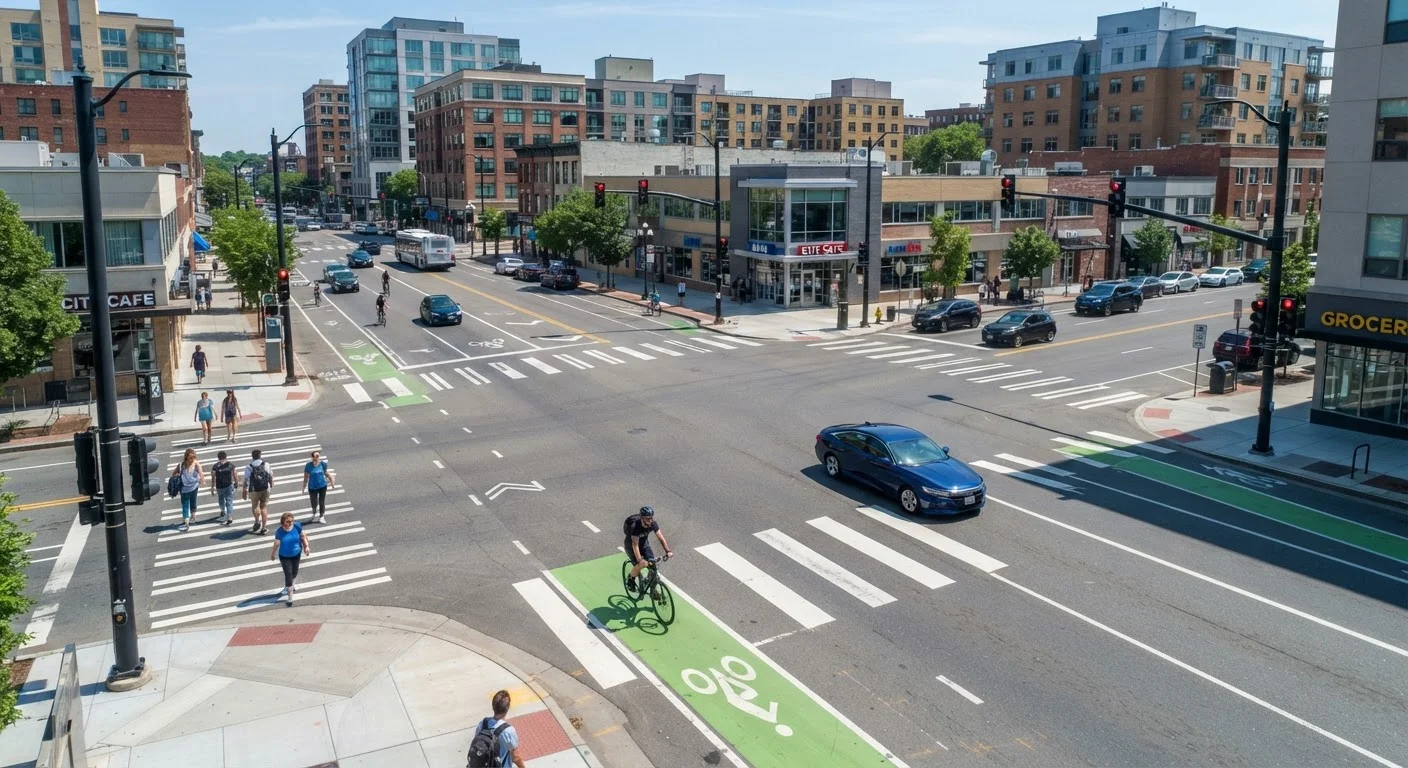
Photo credit: TrendingExperts.net
In this article
Vulnerable road users follow different rules and face different risks. Learn the responsibilities drivers carry when sharing lanes and crossings.
Key Takeaways
- Cyclists, motorcyclists, and pedestrians are far more vulnerable than vehicle occupants in any collision.
- Drivers must actively look for vulnerable road users, not just react when they appear.
- Passing distance, speed, and distraction are the three most controllable factors in preventing crashes.
- Right-of-way rules apply equally to all road users - knowing them reduces conflict.
- Most fatal pedestrian and cyclist crashes involve driver inattention or excessive speed.
Why Vulnerable Road Users Require Special Attention
Every driver shares the road with people who have virtually no protection in a crash. Cyclists wear helmets; pedestrians wear nothing at all. Motorcyclists have leather and gear, but at 35 mph, that protection is limited. When a multi-thousand-pound vehicle makes contact with a person, the outcomes are rarely minor - which is why the law, and common sense, place significant responsibility on drivers.
The term vulnerable road user (VRU) is a legal and traffic safety designation covering pedestrians, cyclists, motorcyclists, and sometimes skaters or mobility device users. These groups share one defining characteristic: they're at severe physical disadvantage in any conflict with a motor vehicle. Understanding that asymmetry should shape how every driver approaches intersections, lane changes, and parking maneuvers.
For a broader foundation on anticipating hazards before they escalate, see our guide to defensive driving.
7,522
Pedestrians killed on U.S. roads in one year
According to NHTSA data, pedestrian fatalities reached their highest level in decades in recent reporting years.
~29%
Cyclist fatalities involving driver distraction
Research published in traffic safety journals consistently links a significant share of cyclist crash deaths to inattentive drivers.
3 feet
Minimum passing distance for cyclists in many states
Most states with explicit passing laws require drivers to leave at least three feet between their vehicle and a cyclist.
Sharing Space With Cyclists
Cycling infrastructure has expanded in many American cities, but most cycling still occurs on roads shared with motor vehicles. Bike lanes offer some protection, but they don't eliminate conflicts - especially at intersections where turning vehicles must cross the bike lane path.
The most dangerous moment for a cyclist and a driver often occurs during a right-hook turn: a driver turning right at an intersection cuts off a cyclist proceeding straight, either in a bike lane or at the roadside. Always signal early, check mirrors, and yield to any cyclist you'd be crossing before completing the turn.
Drivers should also be aware of door zones - the area a vehicle door sweeps through when opened. Parking adjacent to a bike lane without checking for cyclists first is a predictable, preventable cause of serious injuries.
State Laws Vary Widely
Many states have enacted specific passing distance laws - some require drivers to give cyclists at least three feet of clearance; others mandate four. Pedestrian right-of-way rules at marked versus unmarked crosswalks also differ by jurisdiction. Always verify the specific rules in your state and any state you drive through regularly.
For context on how right-of-way rules apply in these situations, this breakdown of yielding rules covers the commonly misunderstood scenarios in plain language.
Treat every cyclist as a legitimate lane user, not an obstacle.
Cyclists are legally permitted on most roads and follow the same basic traffic laws as drivers. Treating them as lane-sharers rather than nuisances encourages patient, predictable behavior from both parties - and reduces the risk of dangerous close passes.
Give motorcyclists a full lane of space, not just a passing gap.
Motorcyclists are entitled to use a full lane. Lane-splitting laws aside (which vary by state), a motorcycle's position within a lane often changes to avoid road hazards - gravel, potholes, wet pavement - that a car would simply roll over. Following too closely removes a rider's ability to maneuver safely.
Yield to pedestrians at every crosswalk, marked or unmarked.
In most U.S. states, drivers are required to yield to pedestrians who have entered a crosswalk - including many unmarked intersections. Failing to yield is one of the leading legal and physical causes of pedestrian fatalities.
Check your mirrors and blind spots before turning, opening doors, or changing lanes near cyclists.
Cyclists travel quickly and can move through blind spots faster than drivers anticipate. 'Dooring' - opening a car door into a cyclist's path - is a common, preventable crash type. A quick over-the-shoulder check before opening a driver-side door costs seconds but can prevent serious injury.
Slow down well in advance when approaching pedestrians near roadways, not just at crosswalks.
Children, older adults, and people with disabilities may enter the roadway unexpectedly or take longer to cross. Slowing down early gives you more reaction time and reduces the severity of any collision that does occur.
Eliminate phone use and in-vehicle distractions entirely when navigating areas with vulnerable road users.
Distracted driving is a documented contributor to crashes involving pedestrians and cyclists. Even a two-second glance at a phone at 30 mph covers nearly 90 feet - enough distance to miss someone stepping into a crosswalk.
Motorcyclists: Common Misunderstandings That Cause Crashes
Motorcycles are harder to see than cars - their narrow profile and smaller visual footprint mean they're easily lost in mirrors and blind spots. Many collisions involving motorcycles happen because a driver genuinely did not see the rider. This is why motorcycle advocates use the phrase "look twice, save a life" - a single mirror check is often not enough.
A few driver behaviors cause a disproportionate share of motorcycle crashes:
- Turning left in front of an oncoming motorcycle - drivers frequently misjudge a motorcycle's speed and distance when making left turns at intersections.
- Following too closely - motorcycles can brake faster than cars in many conditions; tailgating eliminates your reaction window.
- Failing to signal before lane changes - a motorcycle in your blind spot has no crumple zone to absorb an unexpected merge.
Urban environments amplify these risks. See how city and highway driving demand different habits in our comparison of highway vs. city driving skills.
“The most dangerous belief a driver can hold is that vulnerable road users will simply get out of the way. Roads are shared spaces, and the burden of care falls heaviest on the party with the most mass and protection.”
— National Highway Traffic Safety Administration, Federal road safety agency, U.S. Department of Transportation
Pedestrian Safety: Where Drivers Carry the Most Responsibility
Pedestrian fatalities in the U.S. have risen sharply in recent years - a trend safety researchers attribute to a combination of larger vehicles, distracted driving, and higher travel speeds. The physics are stark: a person struck by a vehicle traveling at 40 mph faces dramatically worse odds than one struck at 20 mph.
Drivers bear the most responsibility at intersections and crossings, but pedestrian encounters happen elsewhere too: mid-block crossings in commercial districts, parking lots, driveways, and residential streets where children may enter the roadway unexpectedly. Standard rules of thumb:
- Stop fully before crosswalks, not over them.
- Do not wave pedestrians across - other drivers may not see them.
- When a pedestrian steps off a curb into your lane, you are already legally obligated to yield in most states.
Night and Low-Light Driving Demands Extra Caution
Pedestrian and cyclist fatalities spike significantly after dark. Even if you have headlights on, vulnerable road users wearing dark clothing can be nearly invisible until they're dangerously close. Reduce speed at night in residential or commercial areas, and scan further ahead rather than just the road immediately in front of you.
Drivers who are newer to dense urban environments will find it useful to revisit fundamentals around situational awareness - our foundation guide for new drivers covers the mindset shifts that matter most.

Author
Automotive Editorial Team
Automotive Editorial Team is the collective byline for our editorial team and contributor network. Articles published under this byline or an editorial pen name are researched, written, and reviewed according to our editorial standards for clarity, consistency, and independence before publication.
View all articles →