
Loyalty Programs vs. One-Time Discount Codes: Which Saves More Over Time
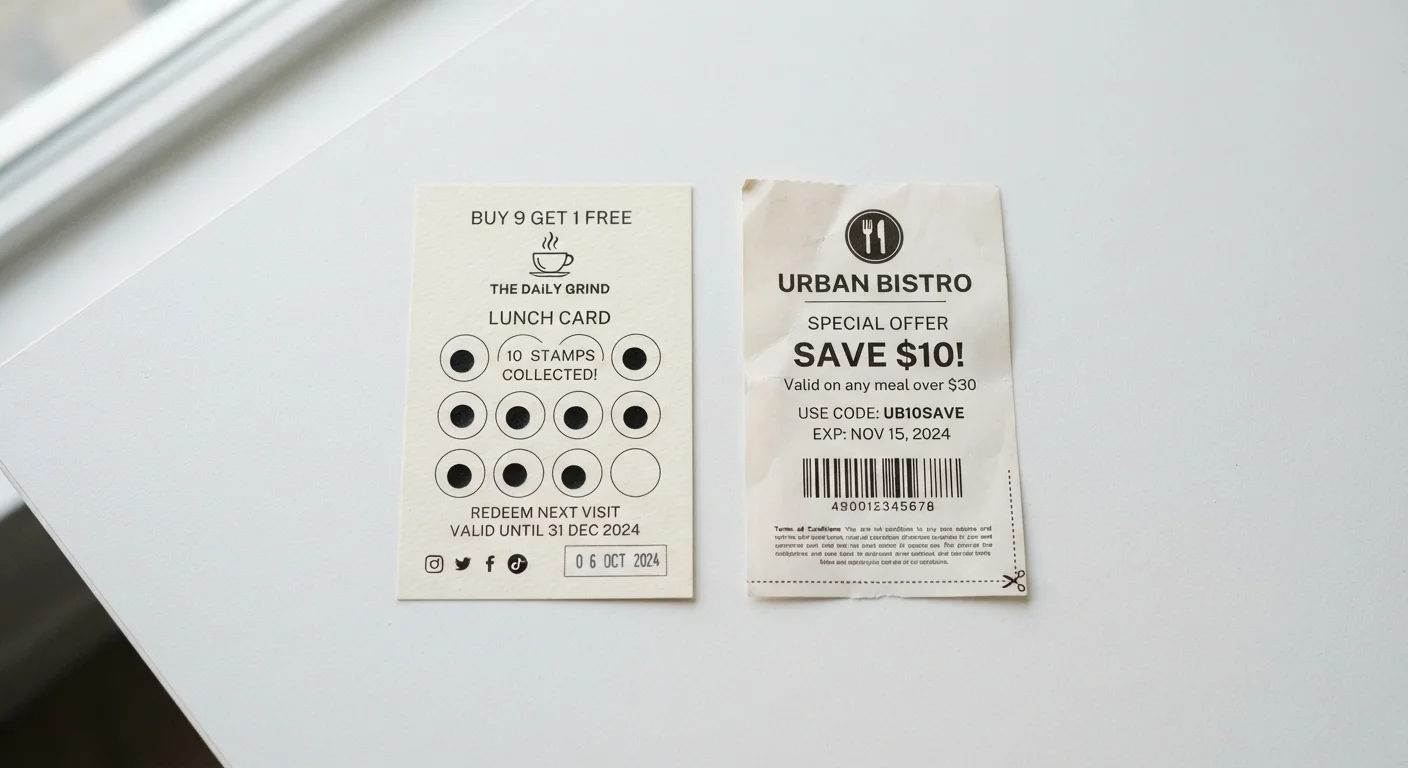
Photo credit: TrendingExperts.net
In this article
Loyalty points feel rewarding, but are they actually better than a simple discount code? A clear-eyed look at how both work in practice.
Key Takeaways
- Loyalty programs reward repeat spending but often require significant accumulation before delivering real value.
- One-time discount codes give immediate, transparent savings with no strings attached.
- Points can expire, devalue, or carry redemption restrictions that reduce their real-world worth.
- Discount codes may push minimum spend thresholds that quietly inflate your total purchase.
- The better option depends on your shopping frequency, retailer loyalty, and how closely you track rewards.
- Combining both strategies is possible in some cases - but each has distinct terms worth reading carefully.
How Each System Actually Works
Loyalty programs operate on a deferred-value model. Shoppers earn points, miles, or "cash back" credits with each qualifying purchase, then redeem those accumulated rewards for discounts, free products, or perks - usually after meeting a minimum threshold. The retailer decides the earn rate (e.g., 1 point per dollar spent), the redemption rate (e.g., 100 points = $1 off), and all the conditions in between.
One-time discount codes - also called promo codes or coupon codes - work differently. You enter a code at checkout and a fixed dollar amount or percentage is deducted from your total immediately. There's no accumulation phase. What you see applied is what you save, provided you meet any minimum purchase requirement attached to the code.
Understanding this structural difference is the starting point. Loyalty programs are a retailer engagement tool dressed up as a savings vehicle. Discount codes are a direct price reduction, though they often come with their own fine print. For a broader look at how these savings types compare to cashback and rebates, see our plain-language field guide.
| Criterion | Loyalty Programs | One-Time Discount Codes |
|---|---|---|
| When savings are received | Deferred - after accumulation | Immediate at checkout |
| Transparency of value | Requires conversion math | Clearly stated upfront |
| Expiration risk | Points can expire unused | Single-use, fixed window |
| Commitment required | Ongoing repeat spending | None - one transaction |
| Retailer control over value | High - rates can change | Fixed at time of issue |
| Combinability with other savings | Often restricted | Varies; sometimes stackable |
| Best effective return | High-frequency shoppers | Any purchase, any frequency |
The Hidden Costs of Points-Based Rewards
Loyalty programs are deliberately designed to be engaging - the psychological pull of watching a points balance grow is real and intentional. But several structural features routinely reduce their practical value.
- Expiration dates: Many programs expire points after 12 to 24 months of account inactivity. If you don't shop frequently enough, you may lose value you assumed was banked.
- Redemption floors: Programs often require a minimum balance before redemption is allowed. Reaching that floor takes longer than most marketing materials imply.
- Points devaluation: Retailers can change how many points equal a dollar of savings at any time, typically with limited notice. What seemed like a strong earn rate can quietly become less favorable.
- Category restrictions: Points often can't be earned - or redeemed - on sale items, certain brands, or specific product categories.
None of these features make loyalty programs worthless, but they make the effective return harder to calculate. Before valuing your points balance, it's worth confirming the current redemption rate and checking expiration terms. You can also review how minimum spend thresholds affect perceived vs. actual savings in our piece on why cart totals keep climbing after a great deal.
~1%
Typical loyalty earn rate (points to dollar)
Most standard retail loyalty programs offer roughly 1 point per dollar spent, with 100 points redeeming for $1 - an effective 1% return before restrictions.
Over 50%
Loyalty points that go unredeemed
Industry estimates have consistently found that a large share of earned loyalty points are never redeemed, often due to expiration or redemption minimums not being met.
10-20%
Common one-time discount code range
Promotional codes distributed by retailers typically offer between 10% and 20% off a purchase, representing a significantly higher immediate return than standard loyalty earn rates.
When Discount Codes Fall Short
Promo codes feel simple, but they come with their own catch points. The most common is the minimum purchase requirement - a code offering $15 off may only activate on orders over $75, which can push shoppers to add items they wouldn't otherwise buy. That dynamic quietly erodes the actual savings.
Other limitations include single-use restrictions (the code works once and can't be applied to a future return or exchange), expiration windows measured in days, and exclusions that mirror loyalty program restrictions - sale items, clearance stock, and specific brands are frequently carved out.
There's also the question of legitimacy. Codes found on third-party coupon sites are sometimes expired, fake, or tied to affiliate tracking that benefits the site rather than the shopper. Before applying any code, it's worth running a quick check. Our pre-checkout verification routine walks through exactly what to confirm before clicking apply.
Finally, discount codes are rarely stackable with each other, and their interaction with loyalty point earning varies by retailer. Some programs don't award points on discounted order totals - meaning using a promo code could reduce the points you'd otherwise earn. For clarity on what actually combines, see what savings methods can actually be combined.
Making the Comparison Concrete
Consider a shopper spending $100 per month at a single retailer over one year - a $1,200 total annual spend. Under a typical loyalty program earning 1 point per dollar with 100 points equaling $1 in redemption value, that shopper earns roughly $12 in redeemable value, assuming no points expire and no category exclusions apply. That's an effective return of about 1%.
A single one-time discount code offering 15% off a $100 purchase saves $15 in one transaction - more than the full year of loyalty accumulation, applied immediately with no tracking required.
That comparison isn't an argument against loyalty programs across the board. A shopper spending $500 per month at a retailer with a 3% earn rate and access to tiered perks - free shipping, early access, extended returns - extracts meaningfully more value. The math shifts when volume and frequency increase.
The practical question is whether your actual spending behavior matches what the program assumes. Most loyalty programs are calibrated to reward their highest-frequency customers. For occasional or moderate shoppers, the deferred-value model rarely delivers what the program's marketing implies. This dynamic has parallels in subscription discount math - where upfront commitment savings often favor the retailer more than the buyer.
Loyalty Tiers Change the Calculation
Many loyalty programs operate on a tiered structure - base, silver, gold - where higher spending unlocks better earn rates, bonus rewards, or exclusive perks like free shipping. For shoppers who reach upper tiers, the effective return can substantially exceed the baseline 1% rate. If you're considering a program primarily for tier benefits rather than points, evaluate those perks on their own terms rather than treating the points earn rate as the whole story.

Author
Shopping Editorial Team
Shopping Editorial Team is the collective byline for our editorial team and contributor network. Articles published under this byline or an editorial pen name are researched, written, and reviewed according to our editorial standards for clarity, consistency, and independence before publication.
View all articles →