
Coupon Stacking, Price Matching, and Cashback: What Can Actually Be Combined
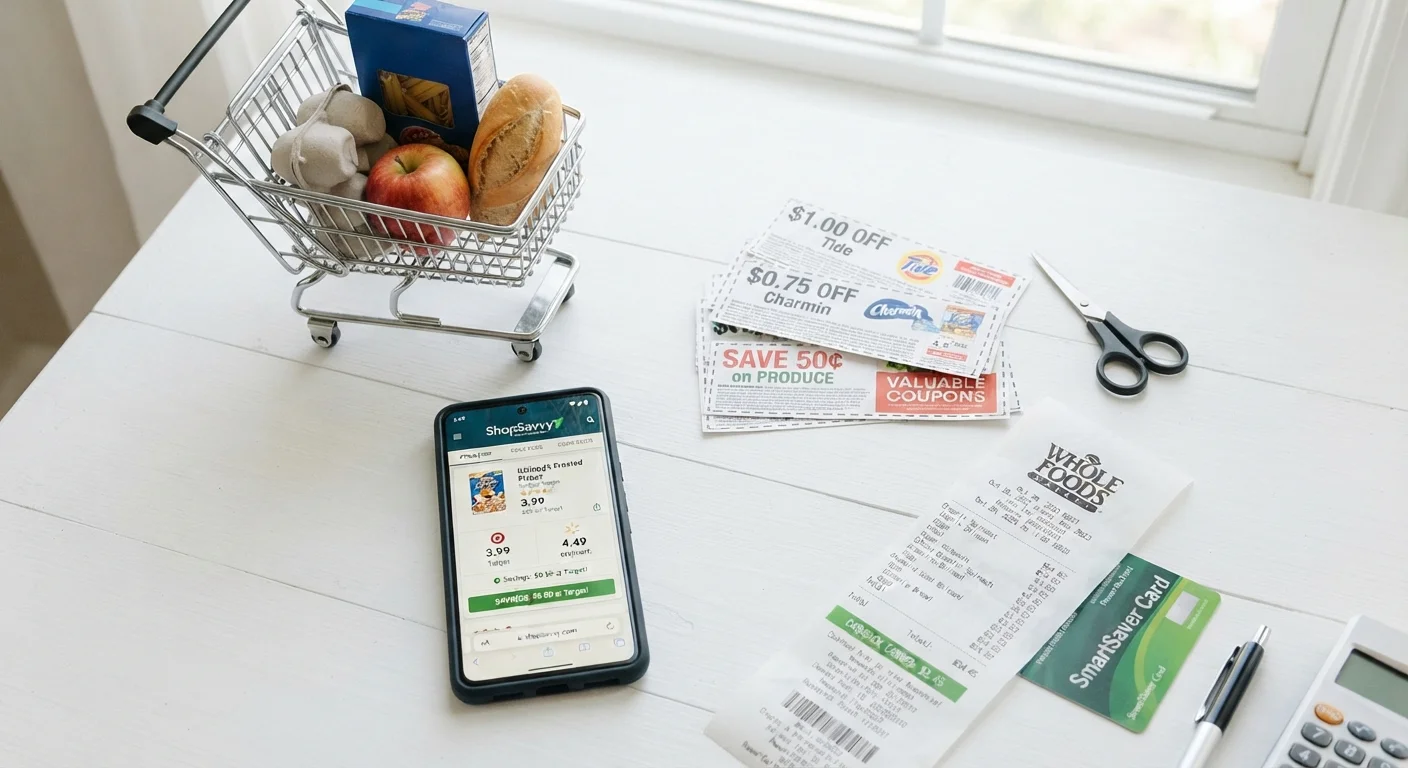
Photo credit: TrendingExperts.net
In this article
Not every savings method works together. Here's a plain-language breakdown of which deal strategies can be layered — and which can't.
How These Savings Tools Actually Work
Coupons, price matching, and cashback programs are each genuinely useful on their own. The confusion - and the opportunity - comes when you try to combine them. Retailers and third-party apps each have their own rules about what they'll honor simultaneously, and those rules are rarely posted in plain sight.
Before layering any strategies, it helps to understand what each tool actually does. A coupon or promo code reduces the purchase price directly at checkout. Price matching is a retailer policy where a store agrees to match a lower price advertised by a competitor. Cashback - whether through a credit card, a browser extension, or a dedicated app - returns a percentage of what you spent after the transaction clears.
That sequence matters: price first, then cashback on whatever you actually paid. If a store matches a competitor's price, the cashback calculation typically applies to the matched (lower) price, not the original. For a deeper look at how coupons function before you reach checkout, see our pre-checkout verification routine.
What Can Typically Be Combined - and What Usually Can't
The general rule: tools that operate at different points in the transaction or through different systems are more likely to stack. Tools that both reduce the pre-tax subtotal often can't be combined.
Combinations That Often Work
- Coupon code + credit card cashback: A promo code lowers the price; your credit card's cashback rate then applies to the reduced total. Most card issuers don't restrict this.
- Price match + cashback app or extension: If the retailer matches a competitor price, a cashback portal or browser extension can still track and reward the purchase - provided the portal is the referral source.
- Store loyalty points + coupon code: Many retailers allow loyalty points to accrue on coupon-discounted purchases, though some exclude certain promotional items. Check the program's terms.
- Manufacturer coupon + store coupon: Traditionally in grocery retail, one coupon from a manufacturer and one coupon from the store for the same item can be applied together. This is classic "stacking" and is explicitly permitted by many chains.
Combinations That Usually Don't Work
- Two store coupons on the same item: Retailers almost universally block applying multiple store-issued codes to a single item.
- Price match + coupon on a price-matched item: Many price-match policies state they'll match a competitor's listed price, but won't also accept a coupon on top of that match. Read the fine print.
- Cashback portal + cashback browser extension simultaneously: Using both for the same transaction can cause tracking conflicts, and one or both rewards may not pay out. Pick one per purchase.
- Third-party promo code + retailer's own loyalty discount: Retailer-site promo fields sometimes auto-remove other active discounts when a code is entered. Test before confirming your order.
For context on how one-time codes compare to ongoing loyalty strategies over time, our loyalty programs vs. one-time discount codes breakdown goes deeper.
Reading the Fine Print Before You Assume
Retailers write stacking policies to protect their margins, not to make them easy to find. Here's where to actually look:
- Coupon terms and conditions: Look for phrases like "one offer per transaction," "cannot be combined," or "excludes sale items." These are enforceable at checkout.
- Price-match policy page: Search for the retailer's name plus "price match policy." Key exclusions typically include limited-time flash sales, marketplace sellers, and bundle deals.
- Cashback portal terms: Browser extension and cashback app providers publish terms about which retailers participate and whether stacked discounts affect payout eligibility.
- Credit card rewards terms: Some cards exclude cashback on purchases made through third-party portals or with certain payment methods.
A practical habit: before completing any multi-strategy checkout, verify your cart total at each step - after the coupon, after price matching, and after any portal activation. If a number doesn't change when it should, something likely got blocked. Our guide on why cart totals keep climbing after a deal explains some of the less obvious reasons totals shift unexpectedly.
If you're newer to deal-hunting and want to build these habits from the start, the Smart Deal-Hunting From Scratch guide covers the fundamentals without the overwhelm.

Author
Shopping Editorial Team
Shopping Editorial Team is the collective byline for our editorial team and contributor network. Articles published under this byline or an editorial pen name are researched, written, and reviewed according to our editorial standards for clarity, consistency, and independence before publication.
View all articles →