
Coupons, Promo Codes, Rebates, and Cashback: A Plain-Language Field Guide
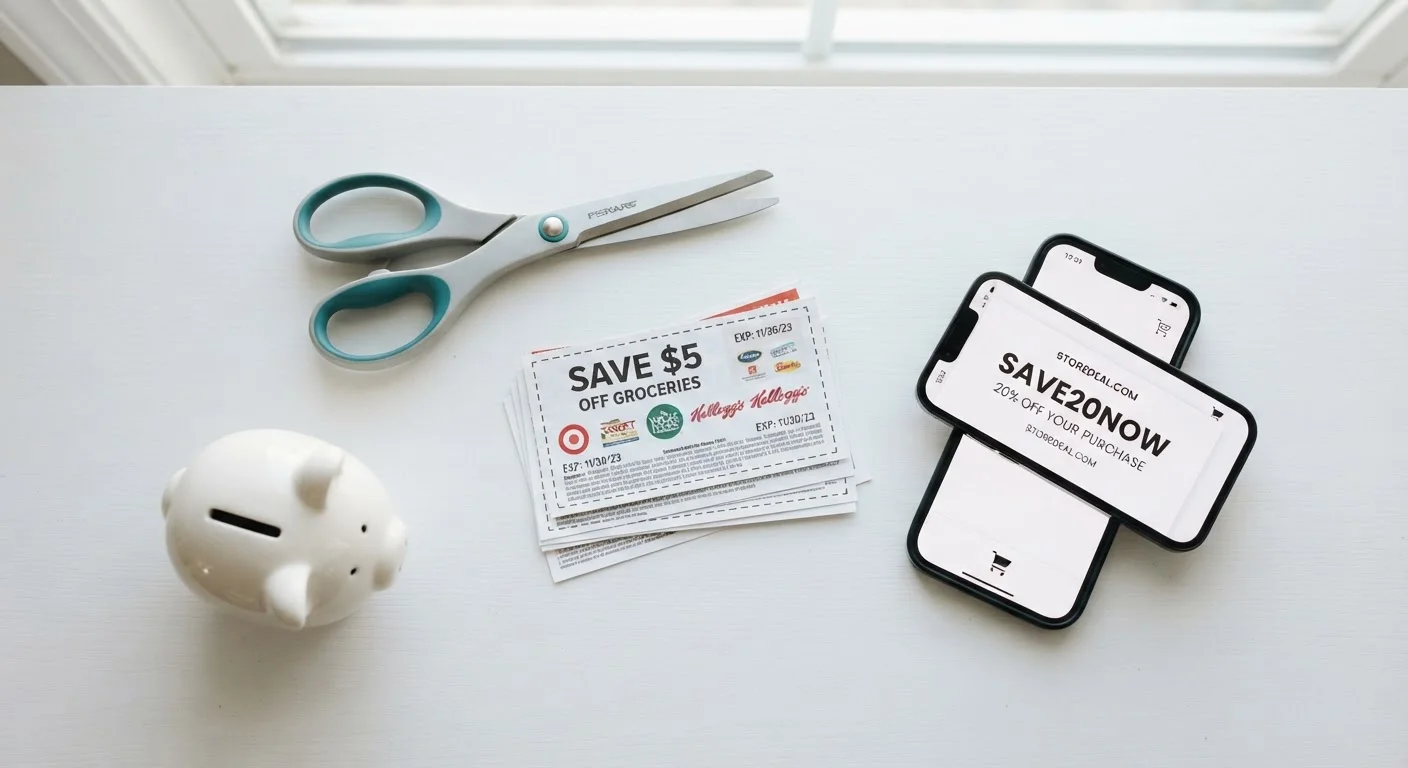
Photo credit: TrendingExperts.net
In this article
These four savings types are often lumped together but work very differently. Here's how each one functions and where each tends to fall short.
Key Takeaways
- Coupons and promo codes reduce the price you pay at checkout; rebates and cashback return money after the fact.
- Rebates require deliberate action after purchase and have documented low redemption rates.
- Cashback rates and payout rules vary significantly across programs - always read the terms.
- Marketing often uses these terms interchangeably; the actual mechanics determine real value.
- Combining savings methods is possible but restricted - stacking rules differ by retailer and offer type.
Why These Four Terms Get Confused
Retailers, apps, and ad copy routinely use "coupon," "promo code," "rebate," and "cashback" as though they mean roughly the same thing: a way to pay less. They don't. Each mechanism works differently, delivers savings at a different point in time, and carries a distinct set of conditions that can dramatically affect whether you actually save anything.
Understanding the mechanics - not just the marketing label - is the first step toward evaluating any deal on its real merits. This guide breaks down each type plainly, then explains how they interact.
Coupons: Instant Discounts With Fine Print
A coupon is a voucher - physical or digital - that reduces the price of a specific item or order at the point of sale. The discount is immediate and visible on your receipt. That directness is their main strength.
Where coupons get complicated is in their restrictions. Common limitations include:
- Product specificity: Many coupons apply only to a particular size, variety, or quantity of a product.
- Expiration dates: Unused coupons are simply worthless after a cutoff date.
- One-per-transaction rules: Retailers frequently prohibit using more than one manufacturer coupon on the same item.
- Minimum purchase thresholds: A $5-off coupon valid only on orders over $40 may push you to spend more than you intended.
Always Compare the Full Price, Not Just the Discount
A coupon or promo code only saves money if the starting price is reasonable. Before applying any discount, check whether the same item is available elsewhere at a lower base price - with no code required. Discount math only works in your favor when the reference price is honest.
Before assuming a coupon saves you money, compare the price after the coupon against the price of a generic or alternative product without one. The "discounted" item may still cost more.
Promo Codes: Digital Coupons With More Variables
A promo code (also called a discount code or coupon code) is a string of characters entered at online checkout to trigger a discount. Functionally, it's a digital coupon - but the variability is wider.
A single promo code might apply a flat dollar amount off, a percentage discount, free shipping, or a bundled benefit. Terms also vary more broadly: some codes are public and widely shared; others are single-use, tied to a specific email address, or restricted to first-time customers.
When evaluating any savings offer, identify the moment the money actually changes hands in your favor. If it requires action after purchase, build that action into your schedule immediately - not after you've forgotten about the purchase.
The redemption gap on rebates and cashback programs is largely behavioral. Shoppers who treat post-purchase steps as non-optional capture far more of the stated savings than those who intend to act later.
Compare the final out-of-pocket price across retailers before applying any coupon or code. A code that delivers 15% off may still leave you paying more than a competitor's baseline price with no discount at all.
Price anchoring is a well-documented retail tactic. Discounts are calculated against a reference price that retailers control, not against a market standard or fair value.
One common misconception is that a code found on a third-party deal site is always valid. Retailers control activation on their end, and codes can be deactivated, geographically restricted, or silently expired without notice on external sites. Always verify the discount is reflected in your cart total before completing checkout.
For a structured approach to confirming a code is legitimate before you submit an order, see our pre-checkout verification routine.
Rebates: You Pay First, Save Later - Maybe
A rebate is a partial refund issued after purchase, contingent on the buyer completing a claim process. You pay full price (or a temporarily reduced price) at checkout, then submit proof of purchase - a receipt, UPC code, or online form - within a specified window to receive money back.
The gap between the advertised rebate and what shoppers actually receive is a known consumer issue. Rebate programs have historically relied on "breakage" - the percentage of buyers who never complete the redemption process - as part of their economic model.
Rebate Deadlines Are Strict - Don't Miss Them
Rebate processing times can range from weeks to several months. If a company goes out of business or changes its rebate administrator, unclaimed rebates may become impossible to redeem. Always photograph or scan your submission materials and note the submission deadline in your calendar before mailing anything.
Rebate processing times can range from weeks to several months. If a company goes out of business or changes its rebate administrator, unclaimed rebates may become impossible to redeem. Always photograph or scan your submission materials and note the submission deadline in your calendar before mailing anything.
Rebates tend to make most sense on high-value, considered purchases - vehicle accessories or automotive parts, appliances, or electronics and gadgets - where the dollar amount justifies the administrative effort.
Cashback: Real Money or Marketing Gloss?
Cashback programs return a percentage of your spending as a reward, either through a credit card, a browser extension, a shopping portal, or a dedicated app. Unlike coupons or promo codes, cashback doesn't reduce the sticker price - it accumulates in an account and is paid out later under program-specific rules.
The critical variables to evaluate:
- Payout threshold: Some programs require you to accumulate a minimum (e.g., $25) before you can withdraw.
- Payout method: Cashback may be paid as a direct deposit, check, gift card, or statement credit - and gift-card options sometimes carry a conversion premium.
- Rate accuracy: Cashback rates shown in browser extensions are often approximate. The actual rate confirmed by the retailer may differ.
- Qualifying purchase rules: Returns, canceled orders, and certain product categories (gift cards, for instance) are frequently excluded.
Cashback stacks conceptually well with other discounts in theory, but stacking rules vary by program and retailer. See our detailed breakdown of what can actually be combined.
~40-60%
Estimated mail-in rebate non-redemption rate
Industry observers and consumer advocates have long cited substantial rebate breakage rates, reflecting how many buyers never complete the claim process.
3-5%
Typical cashback rate range for general purchases
Most general cashback programs and portals offer between 1% and 5% back on non-bonus categories; rates above that typically apply to specific merchants or promotions.
How to Combine and Compare Them Wisely
The practical question most shoppers eventually face is: can I use more than one of these at once? Sometimes yes - but the answer requires checking the terms of each offer individually.
A useful mental model: place each savings type on a timeline.
- Before checkout: Apply coupons and promo codes, confirm the discount appears in your cart.
- At checkout: Activate any cashback portal or extension before initiating the transaction.
- After purchase: Submit rebate claims promptly, within the stated window.
Comparing offers also means looking past the headline number. A 20% promo code on an inflated price may deliver less actual savings than a smaller coupon on a fairly priced item. For a longer-term lens on savings strategies, our comparison of loyalty programs versus one-time discount codes is worth reading alongside this guide.
If you're newer to deal-hunting and want to build habits from scratch, our beginner's guide to deal-hunting covers the foundational steps without the extremes.

Author
Shopping Editorial Team
Shopping Editorial Team is the collective byline for our editorial team and contributor network. Articles published under this byline or an editorial pen name are researched, written, and reviewed according to our editorial standards for clarity, consistency, and independence before publication.
View all articles →