
Why Your Cart Total Keeps Climbing After a 'Great Deal'
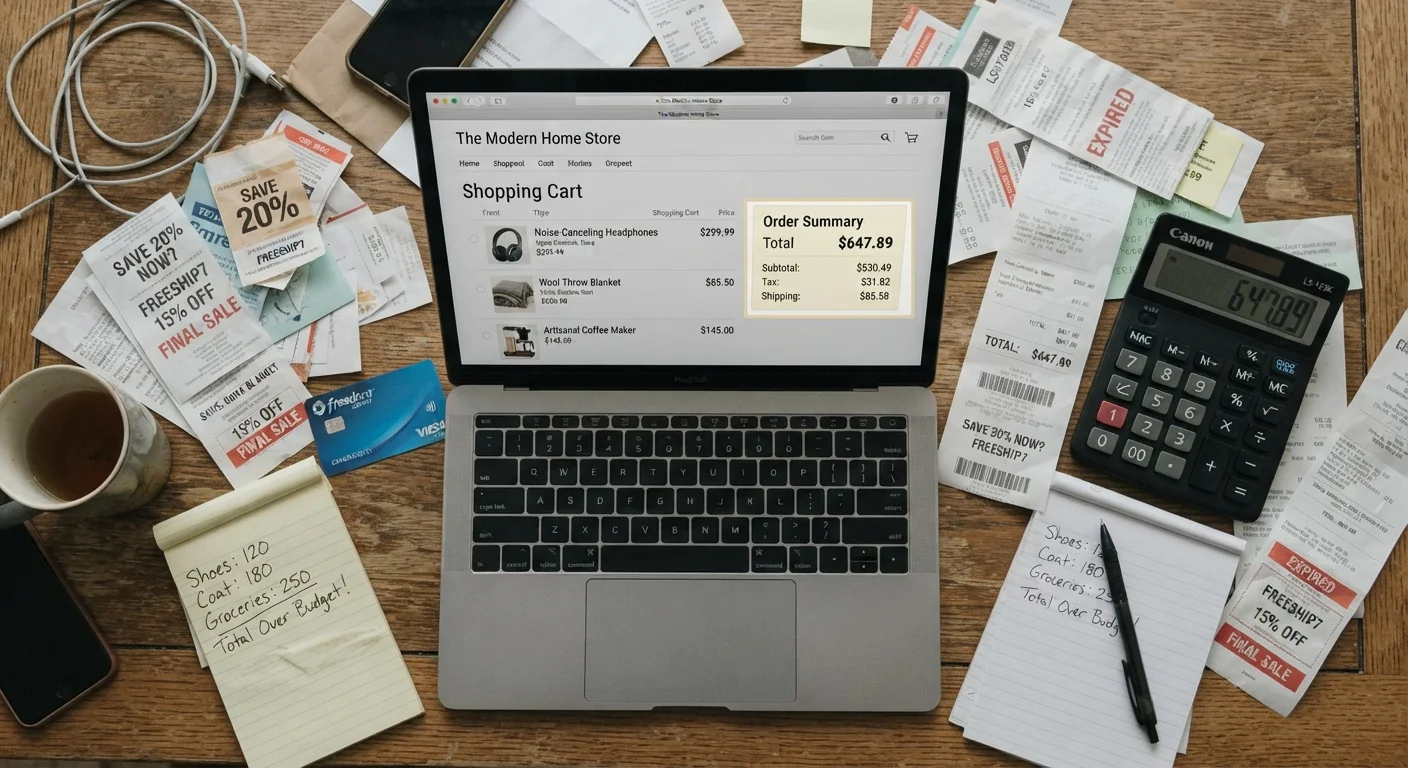
Photo credit: TrendingExperts.net
In this article
Minimum spend thresholds, upsell nudges, and shipping tiers can quietly erase coupon savings. Learn to spot these patterns before checkout.
Key Takeaways
- Minimum spend thresholds pressure shoppers into adding items they didn't plan to buy.
- Shipping tier structures can cost more than the coupon saves if you're not paying attention.
- Upsell nudges at checkout exploit deal momentum to inflate your final total.
- Calculating your true net spend - after all fees and add-ons - reveals the real savings.
- Pausing before checkout to verify your actual total is the most effective defense.
How a 'Deal' Becomes a Spending Trap
The checkout experience is engineered to convert deal-seeking energy into higher spending. A promotional discount captures your attention and lowers your psychological guard - once you believe you're saving money, you're more receptive to spending more of it. Retailers understand this sequence well, which is why discounts are almost never presented in isolation.
The pattern typically unfolds in three stages: a headline offer draws you in, a minimum spend or shipping threshold asks you to add more, and upsell prompts at checkout extract additional spend from your deal momentum. Each stage individually seems reasonable; together they frequently push your final total above what a straightforward, no-discount purchase would have cost.
Understanding how retail markdowns are constructed is the first step toward separating genuine savings from theater.
Discounts Don't Equal Savings
A coupon reducing an item's sticker price does not automatically mean you spend less overall. Minimum purchase requirements, add-on fees, and upsells routinely push final totals above what you would have paid without the discount. Always calculate your net out-of-pocket cost against what you intended to spend before the deal appeared.
Common Mistakes That Inflate Your Cart
The errors below follow predictable patterns. Recognizing them in real time - before you hit 'Place Order' - is what separates shoppers who leave with genuine savings from those who simply feel like they saved.
Adding unneeded items to meet a minimum spend threshold.
Why it happens: Retailers display a 'You're $X away from free shipping' prompt that feels like an invitation to save, not a nudge to spend more.
Treating the coupon discount as the final measure of savings.
Why it happens: Shoppers focus on the percentage or dollar amount shown in the promotional headline, not on what the final cart total actually is versus a baseline.
Accepting checkout upsells because they seem minor relative to the main purchase.
Why it happens: Extended warranties, gift wrapping, and bundled accessories are presented after you've already committed mentally to buying, making small add-ons feel trivial.
Assuming a coupon code found online is genuinely reducing your price.
Why it happens: Widely shared coupon codes sometimes apply to an inflated 'original' price that was raised before the sale, so the discount returns the item to its normal price or slightly below.
Stacking savings methods without verifying which combinations are allowed.
Why it happens: Multiple discounts - store credit, a coupon code, and cashback - sound additive, but retailers often restrict combinations in fine print that's easy to overlook.
For a structured pre-checkout routine to catch these errors before they cost you, see our pre-checkout verification checklist.
Calculating Your True Net Spend
The only number that matters at checkout is your total out-of-pocket cost compared to what you intended to spend on items you actually needed. Follow this simple framework:
- Set a baseline: Before hunting for deals, note the regular price of each item you planned to buy.
- Add all fees: Include shipping, taxes, and any mandatory service or processing charges.
- Subtract only verified savings: Apply coupon values and cashback only if you've confirmed the terms allow it.
- Compare to baseline: If your final total exceeds your pre-deal baseline for the same items, the deal cost you money.
Shipping Tier Math Often Works Against You
Free shipping thresholds are set deliberately close to - but above - typical cart values. Adding a low-cost filler item to 'unlock' free shipping only saves money if that item's price is less than the shipping fee you're avoiding. Run the numbers before adding anything to your cart solely to hit a tier.
Deal-chasing itself can become a cost center. If you find yourself regularly adding items to hit thresholds or redeeming offers on categories you'd never budgeted for, deal fatigue may be affecting your decisions more than you realize.
~49%
Shoppers who add items only to qualify for free shipping
A National Retail Federation survey found nearly half of online shoppers report adding unplanned items specifically to meet free-shipping minimums.
Up to 30%
Cart value increase driven by upsell prompts at checkout
Research from the Baymard Institute found that strategically placed product recommendations and bundles at checkout can increase average order value significantly.

Author
Shopping Editorial Team
Shopping Editorial Team is the collective byline for our editorial team and contributor network. Articles published under this byline or an editorial pen name are researched, written, and reviewed according to our editorial standards for clarity, consistency, and independence before publication.
View all articles →