
Listening Well: Habits That Deepen Your Relationship with Music
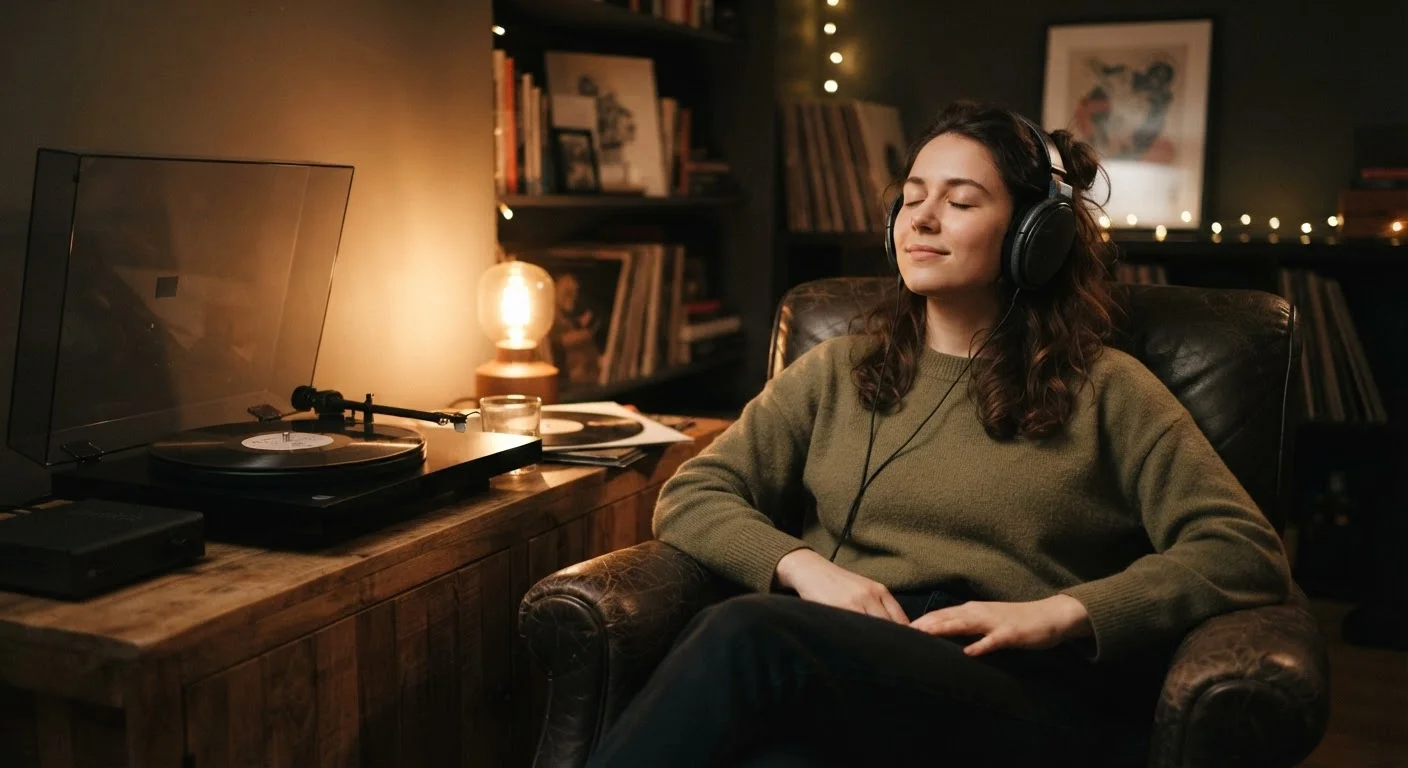
Photo credit: TrendingExperts.net
In this article
Most of us hear music passively. These evidence-backed listening practices help you engage more fully — and get more out of what you hear.
Key Takeaways
- Passive background listening and active focused listening produce very different experiences and emotional payoffs.
- Simple habits - like tracking a single instrument or reading liner notes - measurably enrich musical perception.
- Genre exploration and historical context help listeners understand why a piece of music sounds the way it does.
- Intentional listening sessions, free from multitasking, are associated with stronger emotional and aesthetic responses.
- Your relationship with music deepens when you treat it as a subject of curiosity rather than ambient noise.
Why Listening Matters More Than Hearing
Music is everywhere - in grocery stores, car speakers, earbuds on the subway - but ubiquity can work against real engagement. Research in music psychology suggests that active listening, meaning deliberate, focused attention to what you're hearing, generates richer emotional and cognitive responses than passive exposure. The distinction is not about snobbery; it's about presence.
Think of it this way: you can look at a painting while scrolling your phone, but you won't see it. The same principle applies to music. Most of us hear far more than we listen, and closing that gap doesn't require special equipment or a conservatory degree - just a few intentional habits practiced consistently.
The good news? Deeper listening is accessible to everyone. And it connects directly to how music shapes identity - the more closely you engage with what you hear, the more clearly you understand what it means to you.
Core Practices for Deeper Engagement
The following habits are grounded in how music perception and attention actually work. None of them require expensive gear or hours of free time - though even small improvements to your listening environment help, as explored in our look at wired vs. wireless headphone trade-offs.
Designate at least one listening session per week as a single-focus activity - no screens, no multitasking.
Divided attention significantly reduces how much sonic detail you register. Neuroscience research on auditory attention shows that the brain processes music differently under conditions of focused versus split attention, with richer encoding occurring during dedicated listening. This translates directly into stronger emotional response and longer-term musical memory.
On repeat listens, isolate and follow a single instrument or voice through an entire song.
Most listeners hear music as a unified wash of sound. Deliberately tracking one element - the bass line, the rhythm guitar, the backing vocals - trains your ear to perceive the arrangement as distinct layers. Over time, this dramatically expands what you notice on any listen.
Read liner notes, artist interviews, or critical essays about music you love before or after listening.
Context activates what psychologists call top-down processing - your brain uses prior knowledge to interpret sensory input more richly. Knowing that a lyric is autobiographical, or that a production technique was experimental for its era, gives you more to hear even when the sound itself hasn't changed.
Regularly listen to at least one genre or artist outside your usual taste - with genuine curiosity, not judgment.
Familiarity breeds comfort but also limits. Exposure to unfamiliar musical traditions - different rhythmic frameworks, tonal scales, or structural conventions - expands your perceptual vocabulary. Listeners with broader genre exposure tend to perceive more nuance even within their preferred genres.
After a meaningful listen, spend two minutes reflecting on what you noticed - mentally or in a brief journal note.
Reflection consolidates experience. Writing or mentally reviewing what struck you - a chord change, a lyric, a production choice - reinforces memory and builds the kind of musical vocabulary that makes future listening richer.
Quick Ways to Start Today
You don't need to overhaul your entire music routine. A few targeted changes can shift the quality of your listening almost immediately. Try these to get started:
Genre curiosity pays compounding dividends over time. If you want a concrete on-ramp to a traditionally challenging genre, our guide to getting into jazz without getting lost applies many of these same habits to a specific musical tradition.
Context, Culture, and Listening Across Formats
Great listening isn't just about attention - it's also about understanding. Knowing something about an artist's biography, the era a record was made in, or the genre conventions being followed (or deliberately broken) opens up layers that pure sonic attention alone can't reach.
~27%
Listeners who say music helps them process emotions
A 2022 survey by the Music Industry Research Association found roughly 27% of listeners cited emotional processing as their primary reason for engaging with music.
2x
Stronger memory encoding with focused attention
Studies in auditory cognitive neuroscience suggest that music heard during focused listening is encoded into memory at roughly twice the strength of music heard as background noise.
67%
Streaming listeners who use music as background activity
According to MIDiA Research data, the majority of music streaming occurs during other activities, underlining how rare true active listening has become for most people.
Format matters too. The ongoing vinyl revival tells us something important: listeners who choose physical formats often report more deliberate, ritualistic listening sessions - perhaps because the format demands it. Streaming's convenience is real, but some fundamentals of music culture have proven durable regardless of platform. The habit of focused listening translates across any format you prefer.
“Music gives a soul to the universe, wings to the mind, flight to the imagination, and life to everything.”
— Plato, Ancient Greek philosopher, writing on music and the soul
Cultural curiosity extends listening outward. Paying attention to how different communities use music - for instance, exploring why country music is resonating in urban settings - adds social and emotional texture to what might otherwise just be background sound.

Author
Entertainment Editorial Team
Entertainment Editorial Team is the collective byline for our editorial team and contributor network. Articles published under this byline or an editorial pen name are researched, written, and reviewed according to our editorial standards for clarity, consistency, and independence before publication.
View all articles →