
Wired vs. Wireless Headphones: Sound, Convenience, and the Hidden Compromises
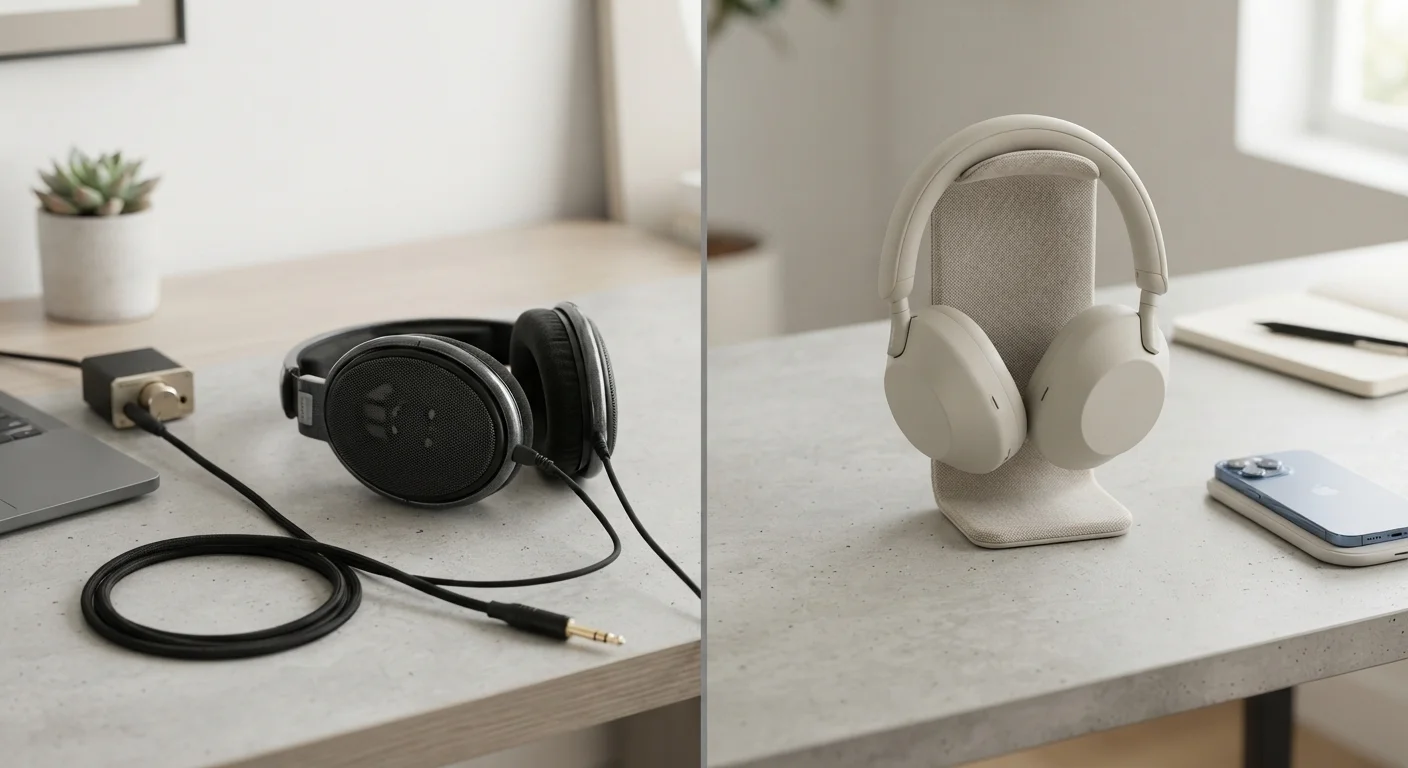
Photo credit: TrendingExperts.net
In this article
Latency, audio quality, battery dependency — wired and wireless headphones each have real trade-offs worth understanding before you choose.
Key Takeaways
- Wired headphones deliver audio with zero latency and no battery dependency.
- Wireless headphones use Bluetooth compression, which can affect audio quality depending on the codec used.
- Battery life and charging requirements are the primary practical burden of wireless models.
- Latency in wireless headphones is largely unnoticeable for music but can be an issue for video or gaming.
- Neither option is universally superior - the right choice depends on how and where you listen.
How Each Connection Type Actually Works
Wired headphones transmit audio as an analog electrical signal through a physical cable - most commonly a 3.5mm plug or a balanced connector. That signal travels directly from the audio source to your ears with no processing in between beyond what's already in your device's DAC and amplifier. The path is short, the signal is complete, and nothing gets dropped along the way.
Wireless headphones rely on Bluetooth, a short-range radio protocol, to transmit audio. Here's the catch: Bluetooth doesn't send raw audio. It compresses the audio signal using a codec - a compression format - before transmitting it, then decompresses it inside the headphones. Common codecs include SBC (the baseline standard), AAC (used widely on Apple devices), and higher-quality options like aptX, aptX HD, and Sony's LDAC. The codec your headphones and device share determines how much audio information survives the transmission. If both devices support LDAC, the audio can be very close to lossless. If they fall back to SBC, you'll lose more detail.
Understanding this process demystifies a lot of the marketing language around wireless audio - and helps explain why the gap between wired and wireless sound quality has narrowed considerably in recent years, even if it hasn't fully closed.
| Criterion | Wired Headphones | Wireless Headphones |
|---|---|---|
| Audio signal | Uncompressed analog | Compressed via Bluetooth codec |
| Latency | Effectively zero | 100-300ms (codec-dependent) |
| Battery required | No | Yes - typically recharges via USB-C |
| Cable management | Cables tangle and fray over time | No cable needed |
| Device compatibility | Requires 3.5mm port or adapter | Works with any Bluetooth-enabled device |
| Best use case | Critical listening, video/audio work | Commuting, exercise, daily mobility |
Latency, Battery, and the Hidden Costs of Each
Latency - the tiny delay between a sound being generated and you hearing it - is effectively zero with wired headphones. Bluetooth introduces latency that typically ranges from around 100 to 300 milliseconds depending on the codec. For casual music listening, this is completely imperceptible. For watching video or gaming, even small delays can cause audio to fall slightly out of sync with the visuals, which some people find distracting. Many wireless headphones now include low-latency modes specifically for video use, though these modes often trade audio quality for speed.
Battery life is the defining practical burden of wireless headphones. Most models deliver between 20 and 40 hours of playback on a full charge, with the headphones themselves needing recharging via USB-C or proprietary connectors. Forget to charge them and they become useless. Wired headphones have no such dependency - plug them in and they work, every time, indefinitely. That reliability has real value, especially in travel or work scenarios where you can't control when you'll have access to a charger.
Wired headphones carry their own hidden friction: cables snag, tangle, and eventually fray at connection points. The 3.5mm jack itself has been dropped from most modern flagship smartphones, requiring a dongle or adapter for wired use - which introduces its own inconvenience and an additional failure point. For deeper thinking about how you use audio during everyday activities, see our piece on habits that deepen your relationship with music.
~300ms
Typical Bluetooth audio latency
Standard SBC Bluetooth codec latency; aptX Low Latency can reduce this to under 40ms on compatible devices.
990 kbps
Maximum bitrate via Sony LDAC codec
LDAC, developed by Sony, is one of the highest-bandwidth Bluetooth audio codecs available for consumer headphones.
Choosing Based on How You Actually Listen
The most useful question isn't which type sounds better in a lab - it's which type fits how you actually use headphones day to day. Wireless headphones genuinely excel for commuting, working out, or any context where being tethered to a device creates physical friction. Wired headphones are the better tool when you're sitting still at a desk, editing audio or video, or listening critically to music and want every detail the recording contains.
It's also worth noting that many listeners own both - a wireless pair for everyday mobility and a wired pair for focused listening at home. Just as there's no single right answer to choosing between a laptop or tablet, your audio setup doesn't have to be a single permanent decision. Context shapes the tool. Once you understand what each type actually trades away - not just what the marketing promises - you're in a much stronger position to choose with confidence rather than speculation.
If you're also thinking about the role audio plays in your broader media experience, our article on subtitles versus dubbed audio explores how audio delivery choices shape the way we engage with content.

Author
Technology Editorial Team
Technology Editorial Team is the collective byline for our editorial team and contributor network. Articles published under this byline or an editorial pen name are researched, written, and reviewed according to our editorial standards for clarity, consistency, and independence before publication.
View all articles →