
Oil Painting vs. Digital Illustration: Two Traditions, Two Skill Sets
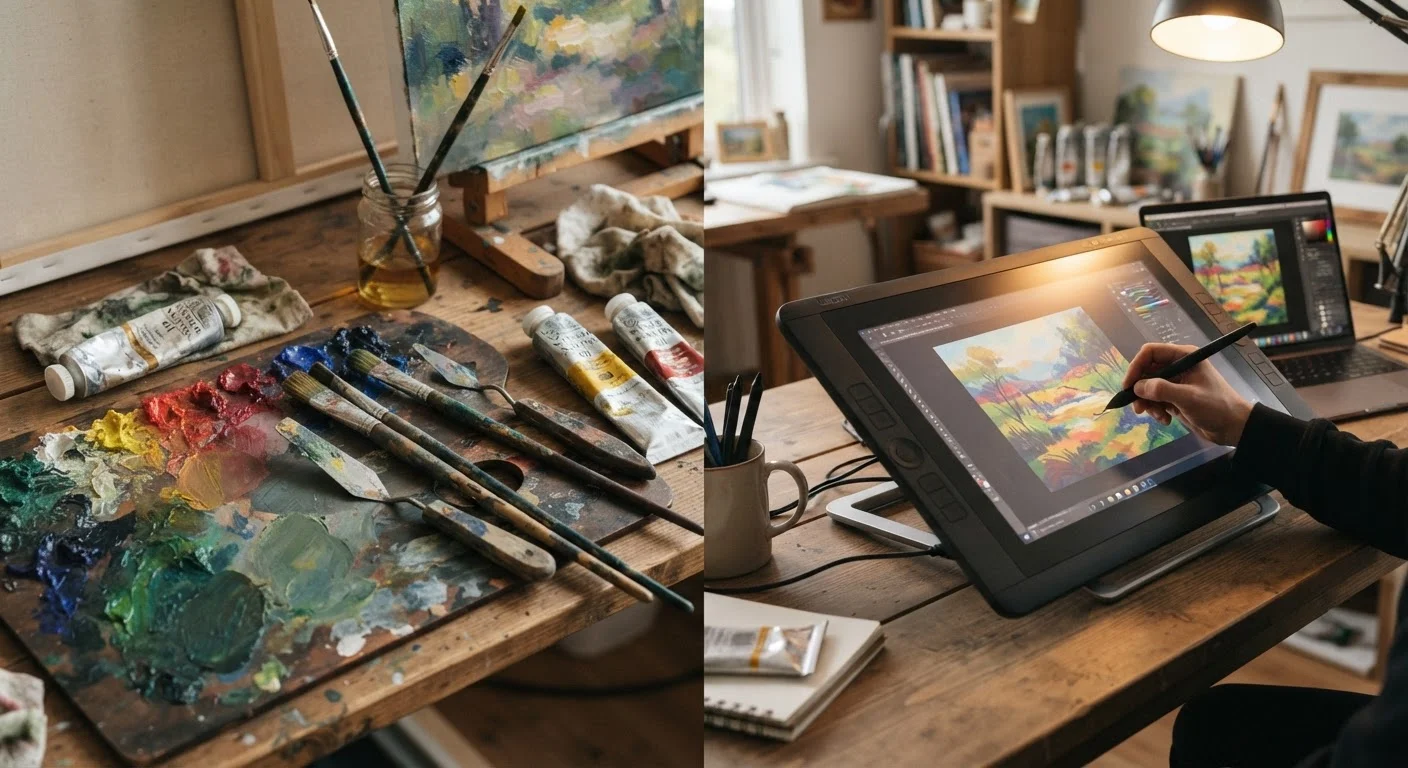
Photo credit: TrendingExperts.net
In this article
Oil painting and digital illustration demand very different skills and workflows. See how they compare before committing to one.
Key Takeaways
- Oil painting requires physical materials and longer drying times but produces unique, tactile originals.
- Digital illustration offers unlimited undos, scalable files, and a lower long-term cost of materials.
- Both disciplines share fundamental art principles - composition, color theory, and value still matter in each.
- Oil painting has a steeper materials investment upfront; digital requires a quality tablet and software subscription.
- Career paths differ: digital illustrators often work in commercial fields, while oil painters more frequently pursue fine art markets.
- Neither is objectively superior - the right choice depends on your goals, lifestyle, and creative instincts.
The Fundamentals: What Each Discipline Actually Involves
Oil painting is one of the oldest sustained art forms in Western tradition, dating back to at least the 15th century. Artists work with pigments suspended in a drying oil - typically linseed oil - applied to canvas, wood panel, or other primed surfaces. The medium is famously slow-drying, which allows for blending and reworking over days or even weeks. That same quality demands planning, patience, and a tolerance for process. If you've ever wanted to understand what you're really seeing in a painting, knowing how oil is built up in transparent glazes or opaque impasto layers changes everything.
Digital illustration, by contrast, is created on a screen using a stylus-and-tablet setup (or a display tablet) and software such as Procreate, Adobe Illustrator, or Clip Studio Paint. The artist works with virtual brushes that can simulate almost any traditional medium - or invent textures that exist nowhere in the physical world. Files are infinitely scalable, endlessly revisable, and instantly shareable. The workflow is fundamentally different: instead of waiting for a layer to dry, you simply switch layers in your software.
| Criterion | Oil Painting | Digital Illustration |
|---|---|---|
| Medium | Pigment in drying oil on canvas | Software and stylus on tablet |
| Upfront cost | Moderate to high (paints, canvas, tools) | High hardware cost, lower ongoing cost |
| Drying / iteration speed | Slow (days to weeks per layer) | Instant layer switching |
| Error recovery | Difficult - overpainting or scraping | Easy - unlimited undo |
| Portability | Limited - requires studio setup | High - tablet goes anywhere |
| Output | Unique physical artwork | Scalable, reproducible digital file |
| Primary career market | Fine art galleries, collectors | Commercial, publishing, gaming |
Skills and Learning Curves
Both disciplines demand a solid foundation in the core principles of art - value, color relationships, composition, and form. The difference lies in how you apply those principles. Oil painting forces you to understand your materials physically: how pigments interact chemically, how fat-over-lean layering (placing oil-rich paint over leaner, faster-drying paint) prevents cracking, and how solvents like odorless mineral spirits thin paint and clean brushes. These aren't just techniques - they're practical chemistry that every oil painter eventually internalizes.
Digital illustration has its own learning curve centered on software mastery. Understanding layers, masks, blending modes, and resolution settings takes real time. The tactile feedback of painting on a tablet is noticeably different from working on canvas, and many artists spend months calibrating their hand-eye coordination on a screen. That said, the undo function and layer-based workflow mean errors are recoverable in seconds - a luxury oil painters simply don't have. For anyone curious about how art traditions have evolved over centuries, our overview of major art movements offers illuminating context.
500+ years
Oil painting's documented Western history
Oil as a painting medium became widely adopted in Northern Europe during the early 15th century, per standard art history scholarship.
~72%
Illustrators using digital tools as primary medium
A 2023 survey by the Association of Illustrators found a strong majority of professional illustrators primarily use digital workflows.
$500-$1,500+
Estimated starter cost for a display drawing tablet
Mid-range to professional-grade display tablets (screens you draw directly on) typically fall within this price band as of recent market data.
Cost, Setup, and Practical Realities
Starting with oil painting involves purchasing paints (professional-grade oils can run $15-$40 per tube), brushes, solvents, mediums, canvas or panels, and a palette. Ventilation matters too - oil painting solvents require a well-aired workspace. Over time, supplies are continually replenished. Digital illustration requires an upfront hardware investment - a drawing tablet or display tablet - plus software costs that may include a subscription. After that initial spend, the per-project material cost is essentially zero.
Studio space is another practical factor. Oil painting needs a dedicated area that can tolerate paint spills and solvent odors. A digital setup can fit on any desk, travels easily, and requires no drying time between sessions. If you're weighing how art fits into your broader life - as a hobby, side project, or full-time pursuit - it's worth reading through the trade-offs between art as a hobby and a career. Your living situation and schedule may shape your medium choice as much as your creative instincts do.
For artists drawn to traditional paint but unsure whether oil is the right fit, it's also worth exploring how watercolor, gouache, and acrylic compare before committing. Each has a distinct personality and set of demands.
Career Paths and Cultural Context
Where you take your work matters too. Digital illustrators are in steady demand across publishing, gaming, advertising, animation, and social media content creation. The deliverable is always a file, which fits cleanly into commercial pipelines. Understanding where fine art and commercial art diverge can help you see which world your ambitions point toward.
Oil painting occupies a different cultural space. The original object - the physical painting - carries a prestige and collectibility that digital prints are still working to establish, though NFTs and limited-edition prints have begun to shift that landscape. Gallery representation, residencies, and institutional recognition still tend to favor painters working in traditional media. Neither path is better in absolute terms; they simply serve different goals, audiences, and economies. The richest creative lives often draw from both traditions, using each where it serves best.

Author
Entertainment Editorial Team
Entertainment Editorial Team is the collective byline for our editorial team and contributor network. Articles published under this byline or an editorial pen name are researched, written, and reviewed according to our editorial standards for clarity, consistency, and independence before publication.
View all articles →