
Pursuing Art as a Hobby vs. a Career: Trade-Offs Worth Thinking Through
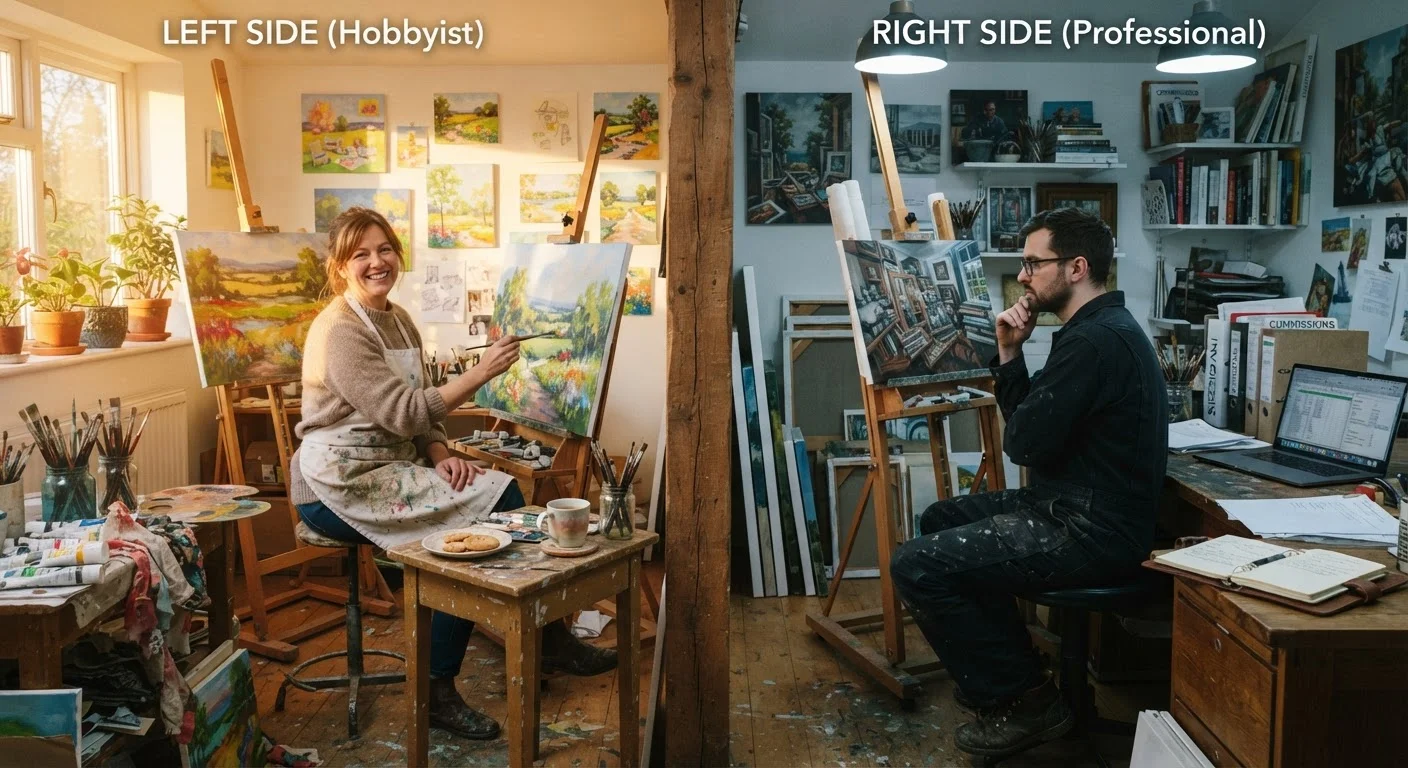
Photo credit: TrendingExperts.net
In this article
Turning a passion into a profession changes the relationship. Weigh the real advantages and drawbacks before making the leap.
Key Takeaways
- Turning art into a career offers income potential but often changes your creative relationship with the work.
- Art as a hobby preserves creative freedom and emotional joy without financial pressure.
- Professional artists navigate inconsistent income, self-promotion, and client demands alongside their craft.
- Many artists find a middle path - sustaining a day job while building an art practice on the side.
- The right choice depends heavily on your financial situation, risk tolerance, and creative goals.
Full creative freedom with no commercial constraints
Hobby artists answer to no client brief, editorial direction, or market demand. Every creative choice belongs entirely to the maker.
No financial pressure attached to the work
When art doesn't need to pay the rent, experimentation and "failure" carry no real cost - which can actually accelerate learning.
Sustainable emotional relationship with the craft
Many artists report that keeping art as a hobby preserves their love for it over the long term, whereas professionalizing can lead to burnout.
Low barrier to start or pause at any time
A hobby practice scales with life's demands - it can shrink during a busy season and expand when there's more bandwidth, without career consequence.
Income from art is typically inconsistent early on
Most artists building a professional practice face irregular cash flow for years. Freelance income can swing dramatically month to month, which requires strong financial planning.
Client demands can override creative instincts
Commercial work often requires compromising aesthetic choices to meet a client's vision, budget, or deadline - a significant shift from making art purely for yourself.
Self-promotion and business tasks consume creative time
Professional artists spend substantial hours on marketing, invoicing, contracts, and networking - activities that have nothing to do with making art.
Risk of losing the intrinsic joy that started it all
Psychological research on motivation suggests that externalizing rewards for intrinsic activities can reduce the pleasure those activities once provided - a risk artists frequently cite.
Why This Decision Deserves More Than a Gut Check
For many people, art starts as a private pleasure - a sketchbook on the nightstand, watercolors on a weekend afternoon, a digital drawing app opened after work. Then someone says, "You should sell these." And suddenly, a simple question becomes complicated: should I try to make a living from this?
It's worth slowing down before answering. The gap between making art for yourself and making art professionally isn't just about income - it reshapes the creative experience itself. Understanding the difference between fine art and commercial art is a useful first step, because professional art often means serving someone else's vision, not just your own.
This breakdown covers the real trade-offs - not to steer you one way or the other, but to help you think it through clearly.
The Case for Keeping Art as a Hobby
There's something quietly powerful about art that exists purely for its own sake. When no one is paying you, no one gets to dictate the subject, style, deadline, or outcome.
Full creative freedom with no commercial constraints
Hobby artists answer to no client brief, editorial direction, or market demand. Every creative choice belongs entirely to the maker.
No financial pressure attached to the work
When art doesn't need to pay the rent, experimentation and "failure" carry no real cost - which can actually accelerate learning.
Sustainable emotional relationship with the craft
Many artists report that keeping art as a hobby preserves their love for it over the long term, whereas professionalizing can lead to burnout.
Low barrier to start or pause at any time
A hobby practice scales with life's demands - it can shrink during a busy season and expand when there's more bandwidth, without career consequence.
Hobbyist artists are also free to experiment and fail without consequence. You can explore different paint mediums with zero obligation to master any of them commercially. That kind of low-stakes exploration is often where the most interesting creative growth happens.
There's also strong evidence that creative hobbies contribute meaningfully to stress reduction and psychological well-being - not because art is therapy, but because absorption in a skilled, self-directed activity is inherently satisfying in ways that passive entertainment rarely matches.
The Case for Pursuing Art Professionally
A professional art path is genuinely compelling for people with the right combination of skills, temperament, and financial flexibility to navigate the early years.
Income from art is typically inconsistent early on
Most artists building a professional practice face irregular cash flow for years. Freelance income can swing dramatically month to month, which requires strong financial planning.
Client demands can override creative instincts
Commercial work often requires compromising aesthetic choices to meet a client's vision, budget, or deadline - a significant shift from making art purely for yourself.
Self-promotion and business tasks consume creative time
Professional artists spend substantial hours on marketing, invoicing, contracts, and networking - activities that have nothing to do with making art.
Risk of losing the intrinsic joy that started it all
Psychological research on motivation suggests that externalizing rewards for intrinsic activities can reduce the pleasure those activities once provided - a risk artists frequently cite.
That said, there are real upsides. Earning income from work you find meaningful is a different kind of satisfaction than a hobby provides. Many working artists describe deepening their craft faster once clients and deadlines create structured accountability. The professional growth framework that applies to other fields applies here too - skills compound, reputations build, and networks open doors that pure hobbyists never encounter.
~$58,000
Median annual wage for craft and fine artists (U.S.)
According to the U.S. Bureau of Labor Statistics Occupational Outlook Handbook, median pay for fine artists and craft artists reflects wide variation across specializations and experience levels.
60%+
Visual artists who supplement income with other work
Research from the Strategic National Arts Alumni Project (SNAAP) consistently finds that a majority of arts graduates combine art-related work with other employment throughout their careers.
Artists who find sustainable careers often do so by combining multiple revenue streams: commissions, licensing, teaching, editorial illustration, or digital products. It's rarely a single clean income source, and that flexibility is itself a skill to develop.
The Middle Path Most Artists Actually Take
The hobby-versus-career framing is useful for thinking, but in practice most working artists live somewhere in between. A graphic designer who illustrates personal work on weekends. A muralist who keeps a part-time job while building a client base. A fine artist who teaches community classes to stabilize income.
The Hybrid Model Is More Common Than You Think
Many respected professional artists maintain a day job or part-time work, especially in their early and mid-career years. This isn't a sign of failure - it's a practical strategy that preserves both financial stability and creative autonomy. Some artists deliberately never go fully independent, finding that the separation between "paid work" and "personal art" actually keeps both healthier.
This hybrid approach isn't a failure to commit - it's often a deliberate, sensible strategy. Having financial stability from other sources can actually protect creative integrity, since financial desperation tends to push artists toward whatever pays rather than whatever's meaningful.
If you're considering committing to a specific medium or discipline, it's worth asking whether that medium has a viable commercial market, or whether it's better kept as a personal practice. Both answers are legitimate - but knowing which fits your situation matters enormously.
The artists who navigate this most successfully tend to be honest with themselves about what they need from the work emotionally, and what they need from it financially. Those two things don't always point in the same direction - and acknowledging that tension is the first step toward resolving it thoughtfully.

Author
Entertainment Editorial Team
Entertainment Editorial Team is the collective byline for our editorial team and contributor network. Articles published under this byline or an editorial pen name are researched, written, and reviewed according to our editorial standards for clarity, consistency, and independence before publication.
View all articles →