
Reading a Painting: How to Understand What You're Looking At
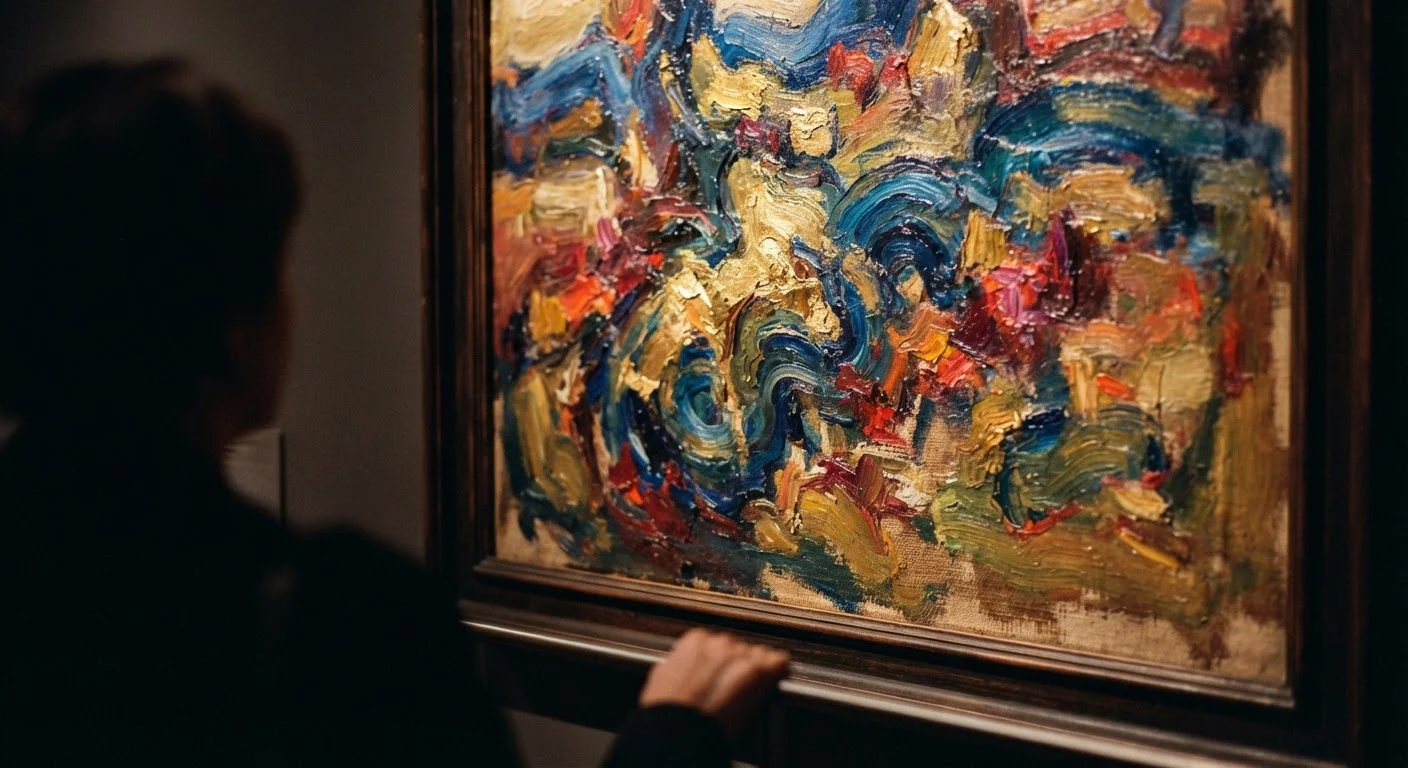
Photo credit: TrendingExperts.net
In this article
You don't need an art degree to engage with a painting. This guide walks you through composition, color, and context step by step.
Key Takeaways
- Start by observing freely before reaching for your phone or a wall label.
- Composition, color, and subject each reveal different layers of the artist's intent.
- Historical and cultural context can transform how you interpret a painting's meaning.
- There is no single correct reading - your personal response is a valid part of engagement.
- Asking questions is more valuable than arriving with answers when viewing art.
Why Looking Closely Is a Skill Worth Building
Standing in front of a painting and feeling nothing - or worse, feeling like you're supposed to feel something and don't - is a surprisingly common experience. Most of us were never taught how to look at art; we were just expected to absorb it through cultural osmosis. The good news is that close looking is a learnable skill, and it pays dividends well beyond museum visits.
Paintings are dense objects. A single canvas can carry compositional decisions, color relationships, symbolic references, and emotional intentions all at once. Learning to unpack those layers doesn't make the experience more clinical - it actually deepens the emotional resonance. Think of it the way film critics describe mise-en-scène: once you notice how a director uses space and light, you can't un-see it, and every frame becomes richer. The same principle applies here. If you've ever wondered how critics develop that kind of vocabulary, our guide to film criticism language makes a useful parallel read.
Below, we walk through a reliable, repeatable process for reading any painting - from a Renaissance altarpiece to a contemporary abstract canvas.
What you will need
Step-by-Step: How to Read a Painting
Work through these steps in order the first few times. Eventually the process becomes intuitive, and you'll find yourself cycling through them naturally rather than consciously.
Look Before You Read
Resist the urge to check the wall label or do a quick search before you've formed your own first impressions. Spend two to three minutes simply observing. Let your eye move wherever it wants to go. Notice what draws your attention first, what you return to, and what you initially skip over.
This raw first pass is valuable precisely because it's unmediated. You're registering your genuine response - something title cards and art historical context can subtly override if you encounter them too soon.
Map the Composition
Composition refers to how the artist arranged the visual elements within the picture plane. Ask yourself: where does the eye enter the image? What lines - actual or implied - guide your gaze through the work? Is the composition symmetrical and stable, or diagonal and dynamic?
A few key concepts to apply:
- Foreground, middle ground, background: Where is the action located in relation to the viewer?
- Rule of thirds: Is the main subject centered, or offset? Centering creates formality; offsetting creates tension.
- Leading lines: Roads, arms, gazes, and architectural edges all direct the eye toward or away from the focal point.
Read the Color and Light
Color does enormous emotional and symbolic work in painting. Observe which hues dominate and which appear as accents. Notice whether the palette is warm (reds, oranges, yellows) or cool (blues, greens, purples), and consider how that affects the feeling the work produces.
Then look at light source. Is there a clear single light source, or is the illumination diffuse? Dramatic chiaroscuro - the high-contrast interplay of light and shadow associated with Caravaggio and Rembrandt - creates psychological intensity. Soft, even light often produces calm or intimacy.
Understanding how value (lightness and darkness) structures a composition is a foundational skill. Our color theory primer goes deeper on these mechanics.
Identify the Subject and Its Details
What is depicted - literally? A portrait, a landscape, a mythological scene, an abstraction? Once you identify the broad subject, zoom in on details: What are the figures wearing or carrying? Are there objects in the scene that seem deliberately placed? In many traditions, specific items carry symbolic weight - a skull signals mortality, a lily suggests purity, a mirror implies truth or vanity.
These symbolic systems are called iconography, and while you won't know every convention without study, simply noticing that certain objects seem conspicuous is already productive reading.
Bring in Context
Now is the time to consult the wall label, catalog entry, or a quick search. Knowing the artist's name, approximate date, and cultural moment can dramatically reframe what you've observed. A painting created during wartime reads differently from one made in prosperity. A work produced under religious patronage was shaped by constraints and expectations very different from one made for a private collector.
Understanding the broader movements that shaped an artist's choices - from Impressionism's interest in fleeting light to Abstract Expressionism's rejection of representation - gives your observations a historical anchor. Our guide to major art movements provides exactly that kind of contextual backbone.
Form Your Own Interpretation
With all of the above gathered, articulate what you think the painting is doing - not just what it depicts, but what it means or achieves. Is it creating emotional intimacy? Asserting political power? Exploring a formal problem in color or texture? Questioning a convention?
Your interpretation doesn't need to match critical consensus to be valuable. Art history is full of works whose meanings have been genuinely contested or radically revised across generations. What matters is that your reading is grounded in what you've actually observed rather than what you assume you're supposed to say.
Putting It All Together
Reading a painting is an iterative process. You rarely unlock everything in a single visit, and that's entirely by design - artists embed layers meant to reward sustained attention. A practical habit: return to a painting you've already analyzed using these steps, and notice how your reading shifts with a second or third look.
Color is one of the most immediately felt but least examined elements. If you want to go deeper on how hue, value, and saturation interact to create mood and emphasis, our plain-English guide to color theory fills in that background beautifully. And if you find yourself curious about the broader movements - Impressionism, Expressionism, Conceptualism - that shaped the paintings you're encountering, our art movements overview provides the cultural scaffolding to connect individual works to larger histories.
Ultimately, there's no wrong response to a painting. Your emotional and intellectual reaction is data - about you, about the work, and about the conversation between the two. The goal of these steps isn't to replace that reaction but to enrich it.
Make It a Habit in Everyday Life
You don't need a museum ticket to practice close looking. Print reproductions, public murals, illustrated book covers, and even editorial photography all respond well to this same process. The more frequently you apply these steps to any visual image, the more natural - and rewarding - they become when you encounter a major work.

Author
Entertainment Editorial Team
Entertainment Editorial Team is the collective byline for our editorial team and contributor network. Articles published under this byline or an editorial pen name are researched, written, and reviewed according to our editorial standards for clarity, consistency, and independence before publication.
View all articles →