
Watercolor, Gouache, and Acrylic: Choosing a Paint Medium That Fits How You Work
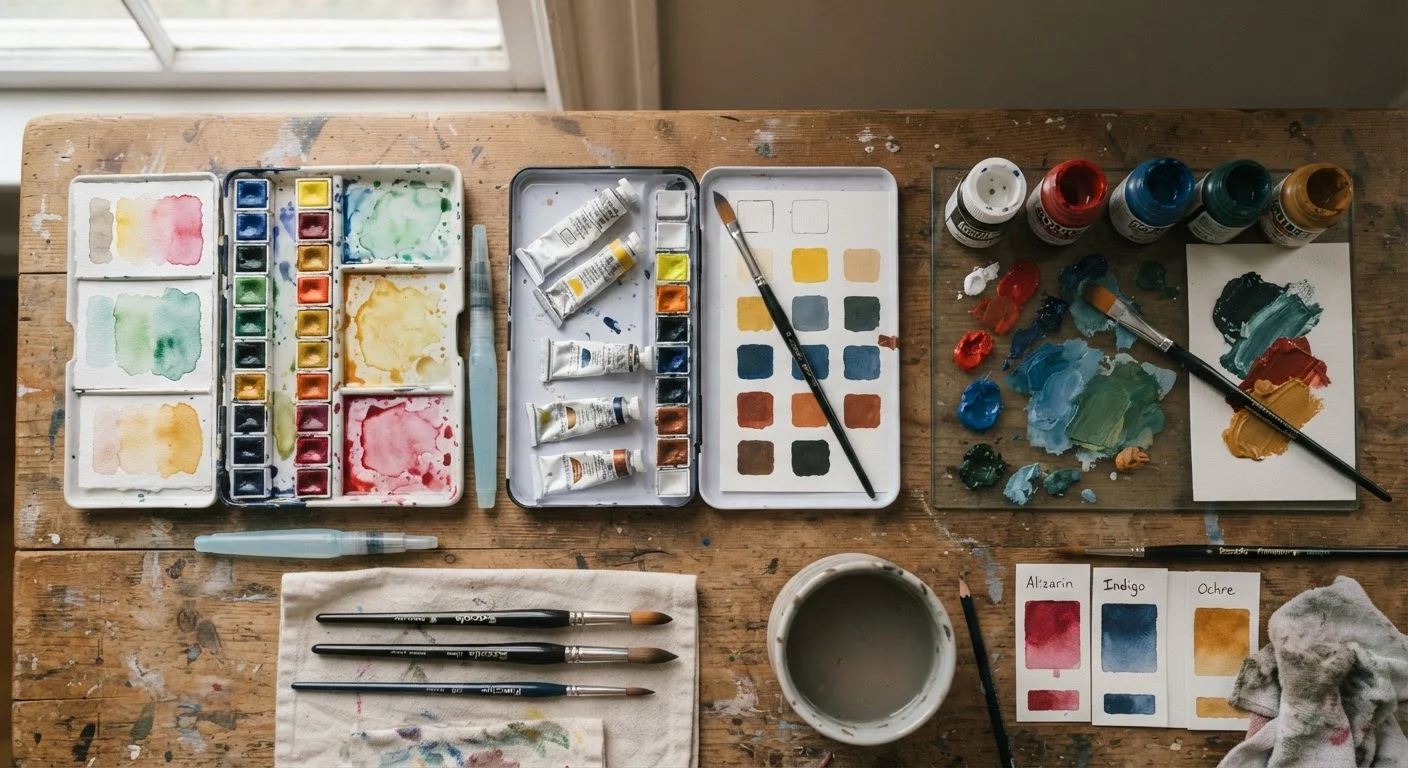
Photo credit: TrendingExperts.net
In this article
Each paint medium has its own personality. Compare watercolor, gouache, and acrylic to find which suits your creative process.
Key Takeaways
- Watercolor rewards transparency and spontaneity but is less forgiving of mistakes.
- Gouache offers matte, opaque coverage and is easier to correct than traditional watercolor.
- Acrylic is the most versatile of the three, working on nearly any surface and drying quickly.
- Your working style - intuitive vs. deliberate - matters as much as the medium itself.
- All three mediums are water-based, making them accessible and relatively low-mess to start.
What Makes Each Medium Different
All three mediums are water-based - that's where the easy similarities end. Watercolor is pigment suspended in a gum arabic binder. It's translucent by design, meaning the white of the paper shines through to create luminosity. Layering washes builds depth, but mistakes are hard to fully erase. Gouache (pronounced gwash) is essentially watercolor's opaque cousin - the same binder, but with added chalk or white pigment that blocks the paper beneath it. Acrylic uses a polymer emulsion binder; it's opaque or translucent depending on how you dilute it, dries to a plastic-like film, and is waterproof once cured.
Understanding these structural differences helps you predict how each medium will behave before you commit to a canvas - or a palette. For a broader look at how paint-based traditions compare to digital methods, see Oil Painting vs. Digital Illustration.
| Watercolor | Gouache | Acrylic | |
|---|---|---|---|
| Opacity | Transparent | Opaque, matte | Variable (thin to thick) |
| Correctability | Low - largely permanent | Medium - can rework when wet | High - layers cover well |
| Drying time | Minutes | Minutes | Minutes to 1 hour |
| Waterproof when dry | No | No | Yes |
| Surface options | Paper only | Paper and board | Most primed surfaces |
| Portability | Excellent | Good | Moderate |
| Best for | Luminous, atmospheric work | Flat, graphic illustration | Textured, layered painting |
Working with Watercolor: Luminous but Unforgiving
Watercolor's magic lies in what you don't paint. Leaving the paper bare creates your brightest whites; building transparent layers - called glazing - produces rich shadows and glowing color. The medium rewards artists who enjoy working intuitively and accepting happy accidents as part of the process.
The trade-off is control. Once pigment dries into the paper's fibers, it's largely permanent. You can lift some color with a damp brush, but heavy-handed corrections often leave muddy staining. Watercolor also demands good paper - thin sketching paper will buckle and pill. Cold-press watercolor paper (with a slight texture) is a practical starting point for most painters.
Start With Small Experiments
Before committing to a full supply investment, try each medium with a basic starter set on a small sheet of paper. Focus on how the paint feels as you apply it, not on producing a finished piece. This exploratory approach reveals your natural preferences faster than any tutorial can.
Portability is a real strength. A travel-sized palette, a small water container, and a pocket-sized paper block are all you need to paint on location. Many plein-air (outdoor) painters favor watercolor for exactly this reason.
Working with Gouache: The Illustrator's Secret Weapon
Gouache occupies a fascinating middle ground. Like watercolor, it re-wets with water - you can reactivate dried gouache on the palette and rework areas on paper. Unlike watercolor, it covers previous marks with flat, matte opacity. That combination makes it forgiving in a way traditional watercolor isn't: paint light colors over dark, correct an edge, or repaint an entire section without visible ghosting.
This opacity and flat finish made gouache the go-to medium for commercial illustrators and animators throughout the 20th century, and it's seen a major revival among contemporary illustrators who appreciate its clean graphic quality. Colors can look slightly lighter when dry (a phenomenon called drying shift), so testing swatches before committing to a final layer is a smart habit. Gouache works on paper, illustration board, and even toned paper where its opacity lets you paint light values convincingly.
Working with Acrylic: The Versatile All-Rounder
Acrylic is the newest of the three - developed commercially in the 1950s - and its biggest selling point is flexibility. Thin it with water for transparent washes that mimic watercolor; use it straight from the tube for impasto (thick, textured) effects. It adheres to canvas, wood, paper, fabric, and most primed surfaces. Once dry (usually within minutes to an hour), it's waterproof and permanent, making layering over previous work clean and risk-free.
The fast drying time cuts both ways: corrections are easy because each layer sets quickly, but blending wet paint on canvas requires working fast or using a stay-wet palette. Artists who love slow, deliberate blending sometimes find acrylic frustrating compared to oil paint.
If you're weighing whether painting - in any medium - fits into your life as a hobby or something more serious, Pursuing Art as a Hobby vs. a Career walks through the real-world trade-offs worth considering.
Matching Medium to Your Creative Process
The honest answer is that the "right" medium is the one that doesn't get in the way of making work. Ask yourself a few practical questions:
- Do you prefer planning or improvising? Planned compositions suit gouache and acrylic; loose, exploratory work suits watercolor.
- How do you handle mistakes? If corrections frustrate you, gouache and acrylic offer more forgiveness.
- Where do you work? Watercolor and gouache are low-mess and portable; acrylic requires slightly more cleanup but offers more surface options.
- What's your aesthetic goal? Airy luminosity → watercolor. Flat graphic color → gouache. Textured richness → acrylic.
Many artists use all three at different points in their practice - sketching ideas in watercolor, refining illustrations in gouache, and tackling large-scale work in acrylic. Trying each medium on a small scale before investing heavily is worth the time. Reading a Painting can also sharpen your eye for how different mediums create different visual effects in finished work.

Author
Entertainment Editorial Team
Entertainment Editorial Team is the collective byline for our editorial team and contributor network. Articles published under this byline or an editorial pen name are researched, written, and reviewed according to our editorial standards for clarity, consistency, and independence before publication.
View all articles →