
Merging, Yielding, and Right-of-Way: What the Rules Actually Require
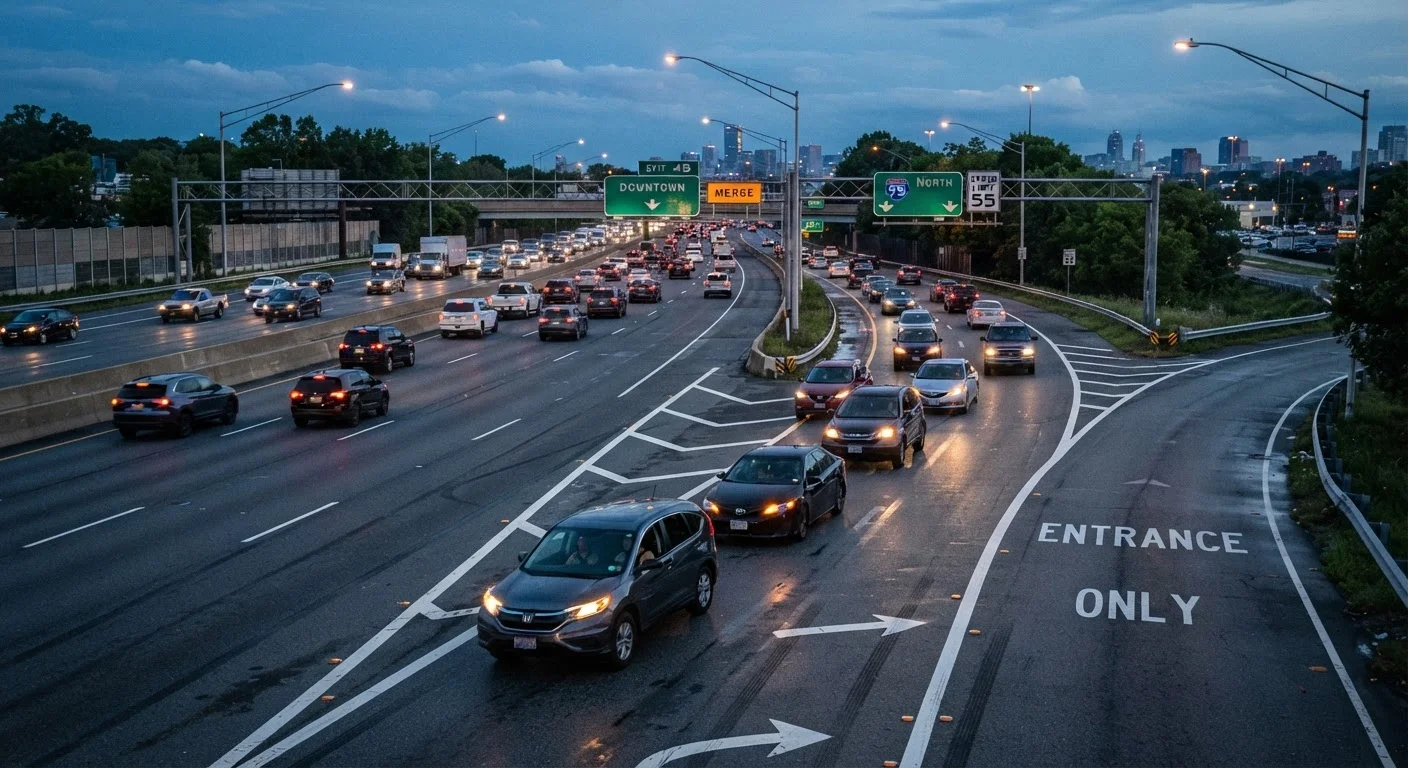
Photo credit: TrendingExperts.net
In this article
Confusion over right-of-way causes thousands of crashes each year. This plain-language breakdown covers the most commonly misunderstood scenarios.
Why Right-of-Way Is Widely Misunderstood
Right-of-way is one of the most cited - and most misapplied - concepts in U.S. traffic law. The term doesn't grant a legal privilege to go first. Instead, it identifies which driver has the obligation to yield. That distinction matters: no traffic code gives any driver the absolute right to proceed regardless of conditions.
Confusion over these rules contributes to a significant share of intersection and highway crashes each year. Understanding what the law actually requires - rather than what drivers assume - is one of the most practical steps toward safer driving.
| Who yields at an uncontrolled intersection | The driver who arrived second; if simultaneous, the driver on the left |
| Left-turn rule | Turning driver yields to oncoming traffic and pedestrians, even on green |
| Highway ramp merging | Entering vehicle yields to mainline traffic in nearly all U.S. states |
| Roundabout rule | Entering traffic always yields to vehicles already circulating inside |
| Emergency vehicle requirement | Pull right and stop; all 50 states require this |
| Move-over laws | All U.S. states have enacted some form of move-over legislation |
Yielding at Intersections: The Core Scenarios
Intersection conflicts account for a large proportion of vehicle crashes. Here are the rules that govern the most common situations:
- Uncontrolled intersections (no signs or signals): Yield to the vehicle that arrived first. If two vehicles arrive simultaneously, the driver on the left yields to the driver on the right.
- Yield signs: The signed vehicle must slow or stop and let crossing or merging traffic proceed before entering.
- Four-way stops: First to arrive, first to go. Simultaneous arrivals use the yield-to-the-right rule. Turns do not automatically confer priority.
- Left turns: A driver turning left must yield to oncoming traffic and to pedestrians in the crosswalk - even when a green light is displayed.
- T-intersections: Traffic on the terminating road yields to traffic on the through road.
See how pedestrian right-of-way applies at crossings for a closer look at yielding responsibilities involving walkers and cyclists.
Highway Merging: Who Actually Yields?
Highway merges generate some of the most heated disagreements among drivers. The legal standard in nearly every U.S. state is clear: the vehicle entering the highway from a ramp or acceleration lane must yield to vehicles already traveling in the main lanes.
That said, highway safety guidance and many state codes also encourage through-traffic drivers to change lanes or adjust speed when it's safe to do so - making room for merging vehicles is cooperative, even if it isn't always legally mandated.
A particularly debated practice is the zipper merge, also called the late merge. Research and transportation departments in several states have found that using the full length of a closing lane and merging at the merge point - rather than moving over early - can reduce backups and collisions in high-volume conditions. Drivers who use the full lane are not cutting in line; the technique is sanctioned by traffic engineers precisely because it distributes traffic flow more evenly.
For a broader look at how highway driving demands differ from city driving, see Highway Driving vs. City Driving.
Right-of-way
The legal designation indicating which driver must yield to another. It does not grant an absolute right to proceed - it identifies who has the obligation to wait.
Yield
To slow down, stop if necessary, and allow designated traffic to pass before entering a lane, intersection, or roadway.
Zipper merge
A lane-merge technique in which drivers use the full length of a closing lane and take turns merging at the designated merge point, similar to a zipper closing. Supported by transportation engineers to reduce congestion.
Uncontrolled intersection
An intersection with no traffic signals, stop signs, or yield signs. Drivers must rely on right-of-way rules - first arrival, then yield-to-the-right - to determine who proceeds.
Move-over law
A law requiring drivers to change lanes or reduce speed when passing stopped emergency, law enforcement, or roadside assistance vehicles. All U.S. states have some form of this law.
Emergency Vehicles, Roundabouts, and Special Cases
A few scenarios catch even experienced drivers off guard:
- Emergency vehicles: All 50 states require drivers to pull to the right and stop when an emergency vehicle is approaching with lights and sirens active - regardless of direction. Move-over laws also require drivers to change lanes or slow down when passing stopped emergency or roadside service vehicles.
- Roundabouts: Entering vehicles always yield to circulating traffic already inside the roundabout. Do not stop once you're inside unless a pedestrian or cyclist is crossing.
- Private driveways and parking lots: Vehicles exiting a driveway or lot yield to all traffic on the public road, including pedestrians on the sidewalk.
- Funeral processions: Many states grant procession vehicles the right to proceed through signals as a unit. Other drivers should not cut through a procession, even on a green light.
State Laws Vary - Check Your Local Rules
While most right-of-way principles are consistent across the U.S., specific language, penalties, and exceptions differ by state. Your state's official driver handbook is the authoritative source for jurisdiction-specific requirements. When in doubt, consult your state's Department of Motor Vehicles or equivalent agency.
Traffic laws vary by state. Always consult your state's driver's manual or the relevant motor vehicle authority for jurisdiction-specific rules.

Author
Automotive Editorial Team
Automotive Editorial Team is the collective byline for our editorial team and contributor network. Articles published under this byline or an editorial pen name are researched, written, and reviewed according to our editorial standards for clarity, consistency, and independence before publication.
View all articles →