
The True Cost of Owning a Car Beyond the Sticker Price
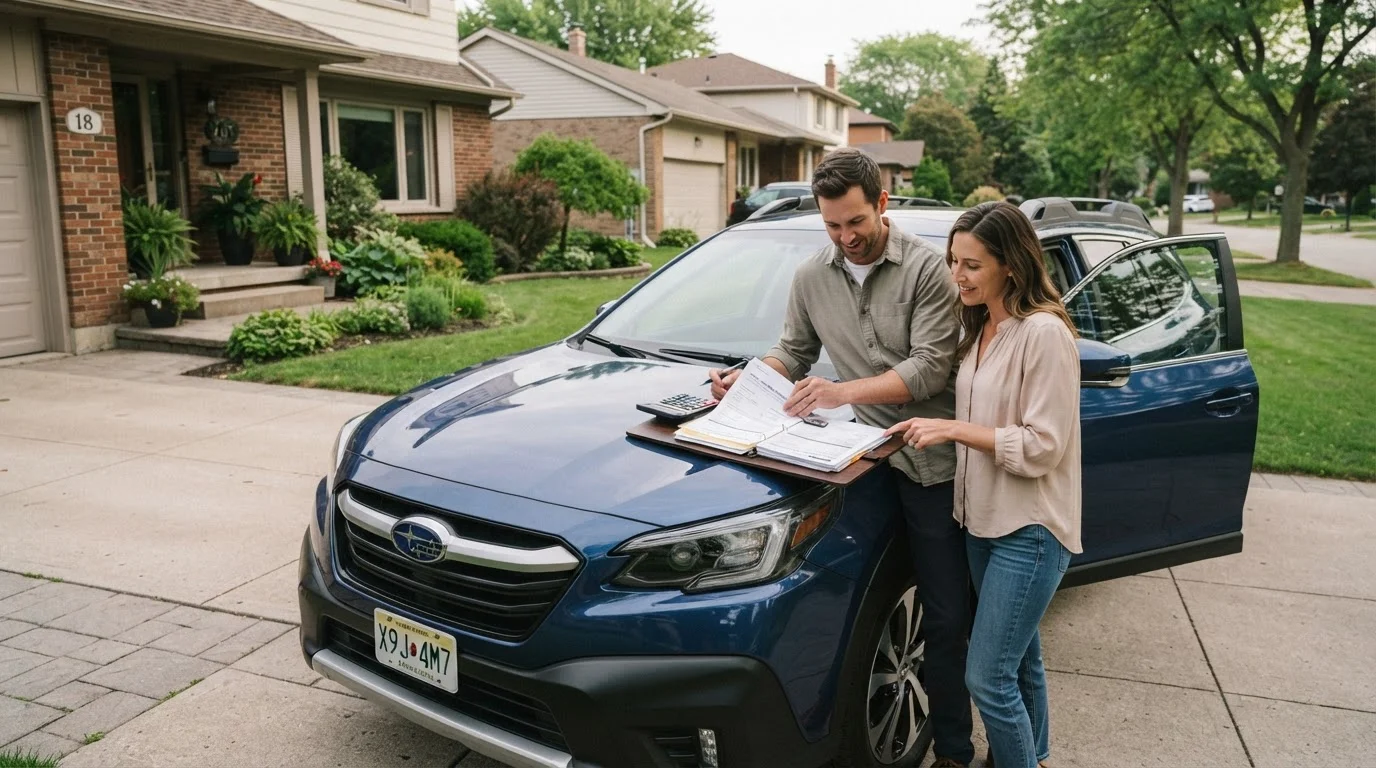
Photo credit: TrendingExperts.net
In this article
Insurance, fuel, maintenance, depreciation—learn what car ownership actually costs per year and how to plan for it.
Key Takeaways
- The purchase price typically represents less than half of what you'll spend on a car over five years.
- Depreciation is usually the single largest ownership cost, especially in the first three years.
- Insurance, fuel, and maintenance together can easily exceed $5,000 per year depending on the vehicle and driver.
- A lower sticker price doesn't guarantee lower ownership costs - fuel efficiency, reliability, and insurance rates all matter.
- Building a monthly ownership budget beyond your car payment helps prevent financial surprises.
Why the Sticker Price Is Only the Beginning
When most people shop for a car, they focus on the monthly payment or the negotiated purchase price. Those numbers matter - but they represent only a fraction of what you'll actually spend. The real financial commitment of car ownership includes a web of costs that begin the moment you drive off the lot and continue every month you keep the vehicle.
For a clearer look at the terminology behind these expenses, our car ownership costs glossary breaks down terms like TCO, residual value, and GAP coverage in plain English. And for the full financial arc from purchase to resale, see Car Ownership from Start to Finish.
The core categories of ongoing ownership costs include: depreciation, financing charges, insurance, fuel, maintenance and repairs, tires, and registration and taxes. Each one deserves its own honest accounting.
$10,000+
Estimated average annual car ownership cost
AAA's annual Your Driving Costs study consistently places total vehicle ownership costs for the average U.S. driver above $10,000 per year when all expenses are included.
~20%
Value lost in a new car's first year
Industry estimates suggest a new vehicle typically depreciates 15-25% of its original value within the first 12 months of ownership.
~$2,000
Average annual auto insurance premium
National average auto insurance costs have risen in recent years; individual premiums vary widely based on location, vehicle type, and driving record.
Depreciation: The Invisible Expense That Hits Hardest
Depreciation is the loss in a vehicle's market value over time - and it's almost always the single largest ownership cost, yet many drivers never think about it. A new vehicle can shed 15-25% of its value within the first year. By the end of year five, many cars are worth only 40-60% of their original purchase price.
This matters even if you never plan to sell. Depreciation represents real money you won't recover. The practical implication: two cars with identical sticker prices can have very different five-year costs if one holds its value significantly better than the other.
Buying a vehicle that's two to three years old allows someone else to absorb the steepest depreciation curve. Our article on what the odometer doesn't tell you about a used car's condition explains how to evaluate whether a used vehicle is actually a sound investment once mileage is removed from the equation.
Use Depreciation to Your Advantage
If buying new isn't a priority, consider purchasing a certified pre-owned vehicle that's two to four years old. You'll avoid the sharpest depreciation drop while still getting a vehicle with relatively low mileage. Many certified programs also include limited warranty coverage, which can reduce repair cost uncertainty in the near term.
Insurance, Fuel, and Maintenance: The Recurring Costs
Insurance is a mandatory, recurring expense whose price depends on your driving record, location, age, the vehicle's safety ratings, and its repair cost profile. Luxury vehicles and performance cars typically carry higher premiums - sometimes dramatically so - even when their purchase prices overlap with more modest vehicles.
Fuel costs are directly tied to how much you drive and how efficiently your vehicle uses fuel. A driver covering 15,000 miles per year in a vehicle averaging 20 mpg will spend roughly twice as much on gas as one driving an equivalent 40 mpg vehicle, assuming similar prices at the pump. Over five years, that gap can total thousands of dollars.
Maintenance - oil changes, brake service, tire rotations, filters, fluids - is non-negotiable for keeping a vehicle safe and reliable. Budgeting 1-2% of the car's value per year toward maintenance is a reasonable starting point for most vehicles, though older cars and higher-mileage vehicles may require more. Our car maintenance hub covers essential upkeep tasks drivers should understand.
It's also worth factoring in costs that can appear before you've made a single car payment. Hidden fees at the dealership - documentation charges, add-on packages, title and registration - can add hundreds or thousands to your actual out-of-pocket cost from day one.
A driver buys a new midsize SUV for $38,000. The purchase price feels manageable, but annual insurance runs $1,800, fuel costs roughly $2,400, and scheduled maintenance adds another $800 - before a single unexpected repair.
A shopper finds a compact sedan for $4,000 less than a competing model with better fuel economy and stronger reliability ratings.
A driver purchasing a used three-year-old vehicle instead of a new one of the same model saves roughly $8,000 on the purchase price while also avoiding the steepest depreciation years.
Building a Realistic Ownership Budget
A practical ownership budget accounts for every cost category, not just the loan payment. A simplified framework: take your monthly financing cost, add your average monthly insurance premium, estimate monthly fuel spend based on your commute, and set aside a fixed amount each month for maintenance and unexpected repairs. The sum gives you a far more accurate picture of what the vehicle actually costs to keep.
For drivers weighing whether to buy or lease, the total cost calculation shifts somewhat - leasing can lower monthly payments but introduces mileage limits and end-of-term costs. Our comparison of buying vs. leasing walks through how those long-term financial pictures differ.
The broader principle applies well beyond cars: a lower upfront price rarely tells the complete story. The same framework explored in price vs. value - cost-per-use, reliability, and total expenditure over time - applies directly to vehicle decisions. Choosing the car that costs less to own, rather than the one that costs less to buy, is a meaningful distinction worth making before you sign anything.
“Consumers often focus on the monthly payment, but that single number obscures the true financial commitment. The informed buyer asks what this vehicle will cost me per mile, per year, over five years - not just at signing.”
— AAA Automotive Research, Ongoing publisher of the annual Your Driving Costs study
Frequently Asked Questions

Author
Automotive Editorial Team
Automotive Editorial Team is the collective byline for our editorial team and contributor network. Articles published under this byline or an editorial pen name are researched, written, and reviewed according to our editorial standards for clarity, consistency, and independence before publication.
View all articles →