
Retail Pricing Tricks That Make Markdowns Look Bigger Than They Are
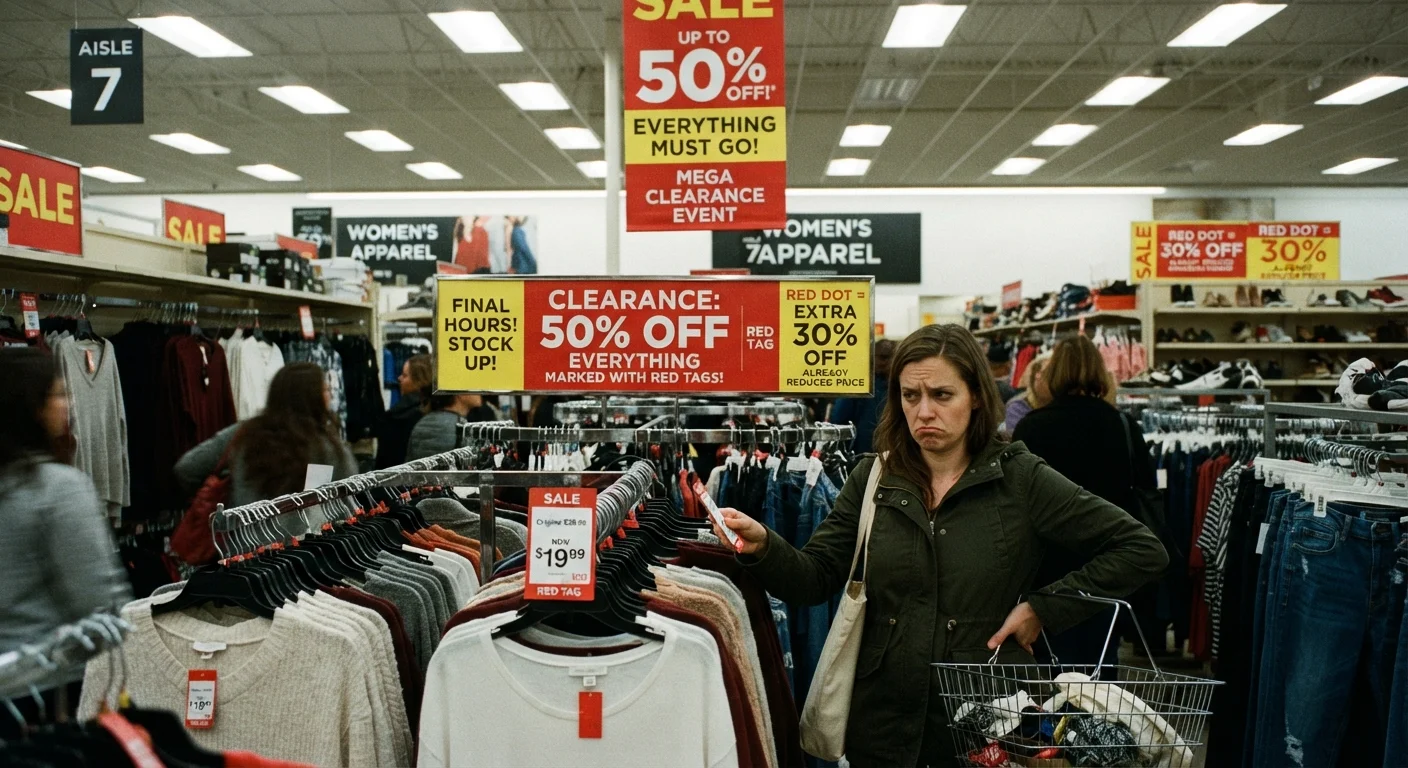
Photo credit: TrendingExperts.net
Anchor pricing, fake MSRPs, and percent-off theater are everywhere. Understand how these tactics work so you can spot them in the wild.
Key Takeaways
- Anchor pricing uses inflated 'original' prices to make discounts appear larger than they really are.
- MSRP and 'compare at' prices are often set artificially high and rarely reflect what most shoppers paid.
- Percentage-off framing can obscure small absolute savings, especially on low-priced items.
- Price history tools and unit-price math are practical ways to verify whether a markdown is genuine.
- Urgency language and short sale windows are psychological tactics, not reliable indicators of deal quality.
The Mechanics of Markdown Theater
Walk through any major retailer - physical or online - and you'll encounter the same visual language: bold red tags, dramatic slashes through original prices, countdown timers ticking toward zero. These elements aren't accidental. They're the output of deliberate pricing strategy designed to create a perception of value that the actual discount may not support.
The core mechanism is anchor pricing: present a high reference price first, then show a lower selling price. The gap between the two becomes the mental measure of the deal. Research in consumer psychology consistently shows that people judge the attractiveness of a price relative to whatever number they saw first - even when that reference number is arbitrary or inflated. Retailers know this, and they use it.
Understanding these tactics doesn't require cynicism about every sale. It requires a practical framework for evaluating whether a markdown reflects real savings or is primarily a presentation choice. The sections below walk through the most common techniques and how to read past them. For a broader look at how urgency and psychological triggers operate together, see how urgency tactics shape purchase decisions.
Myth
If a price tag shows a crossed-out 'original' price, that was the real price customers paid before the sale.
Fact
Reference prices are often set artificially high and may reflect a price the item was never meaningfully sold at.
The Federal Trade Commission has guidelines stating that a 'former price' comparison is deceptive if the item was not actually offered at that price for a substantial period in good faith. Despite this, enforcement is inconsistent, and retailers - particularly online - sometimes set elevated reference prices that exist primarily to make the discount look larger. A crossed-out price is a retailer's claim, not an independent audit. Treat it as a starting point for investigation, not a verified fact.
Myth
MSRP (Manufacturer's Suggested Retail Price) represents what most consumers actually pay for a product.
Fact
MSRP is a manufacturer's suggested ceiling, and many products routinely sell well below it.
For many product categories - electronics, appliances, automotive accessories - MSRP functions more as a negotiating ceiling than a realistic market price. Retailers discount from MSRP so routinely that the "suggested" price can become a de facto anchor rather than a meaningful reference. When a retailer advertises "30% off MSRP," the relevant comparison is what that item actually sells for across competing stores, not what the manufacturer suggested.
Myth
A higher percentage off always means a better deal.
Fact
Percentage discounts and absolute dollar savings are two different measures, and neither alone determines whether a deal is good.
A 70% discount on a $10 item saves $7. A 15% discount on a $200 item saves $30. The percentage tells you how large the markdown is relative to the reference price - it says nothing about whether the reference price was accurate, whether the item is worth buying, or what the absolute saving is. Retailers frequently lead with high percentages on low-priced goods because those numbers are dramatic. Recalculating in dollars is a useful automatic habit. Understanding what percentage off means in real terms can sharpen this instinct.
Myth
A sale ending soon is a reliable sign that the price will go up after the deadline.
Fact
Many 'limited time' sales roll over, repeat, or are replaced immediately by equivalent promotions.
Countdown timers and "ends Sunday" messaging are urgency triggers - psychological tools designed to compress decision time and reduce comparative shopping. While some sales do have genuine end dates, many retailers run promotions on near-continuous cycles, particularly during high-traffic retail periods. The same item that was "30% off this weekend only" may be back at an equivalent or lower price within a few weeks. Retail pricing follows predictable seasonal patterns, which means urgency messaging often overstates the scarcity of an opportunity.
Myth
'Compare at' prices on retailer tags mean a competitor currently sells the item for that higher price.
Fact
'Compare at' language has no standardized legal definition and can refer to a wide range of reference points.
Some retailers use "compare at" to reference a competitor's price; others use it to reference their own former price, the MSRP, or a price the product was sold at in a different channel. Without transparency about what the comparison is actually based on, the figure is effectively unverifiable. If a comparison price matters to your decision, check the competing source directly rather than taking the tag at face value.
How to Verify a Deal Without Falling for the Frame
Once you recognize anchor pricing and percent-off framing as presentation tools rather than objective measures of value, a few practical habits help you cut through them.
Check price history. Browser extensions and price-tracking services record historical prices for many online products. A sweater marked down from $120 to $60 looks like 50% off - but if the price was $60 for the prior six months and briefly spiked to $120 before the sale, the "original" price is the anomaly, not the reference point. Price tracking tools have real limitations, but even a quick check can reveal whether a listed original price was ever the norm.
Convert percentages to dollars. A 40% discount on a $12 item saves $4.80. Framed as a percentage it sounds significant; in dollar terms it may not change your decision. Translating percentage off into actual dollar savings is one of the most underused checks in everyday shopping.
Compare on a unit-price basis. Bulk sale offers and multi-buy promotions often look compelling but require you to buy more than you need. Divide the total price by the quantity and compare that figure across options.
Separate the discount from the decision. The relevant question is whether the item is worth its sale price to you - not whether the markdown is large. A genuine 5% discount on something you actually need may be a better outcome than a theatrical 60% off something you don't. For a fuller framework on evaluating this distinction, see price versus value over time.
Deceptive Reference Prices May Cross a Legal Line
Retailers that consistently advertise prices that were never genuinely offered to consumers may be engaging in deceptive advertising under FTC guidelines or state consumer protection laws. If you encounter a price that appears inflated solely to manufacture a large discount, you can file a complaint with the FTC or your state attorney general's consumer protection office. Deceptive advertising and bait-and-switch tactics are illegal - knowing your options matters.
Retailers also rely on sale-adjacent tactics - minimum spend thresholds, upsell nudges at checkout, and layered shipping fees - that can quietly absorb whatever a headline discount saved. How cart totals climb after a deal is worth understanding before you reach checkout.

Author
Shopping Editorial Team
Shopping Editorial Team is the collective byline for our editorial team and contributor network. Articles published under this byline or an editorial pen name are researched, written, and reviewed according to our editorial standards for clarity, consistency, and independence before publication.
View all articles →