
Reading Between the Lines on "Healthy" Food Marketing
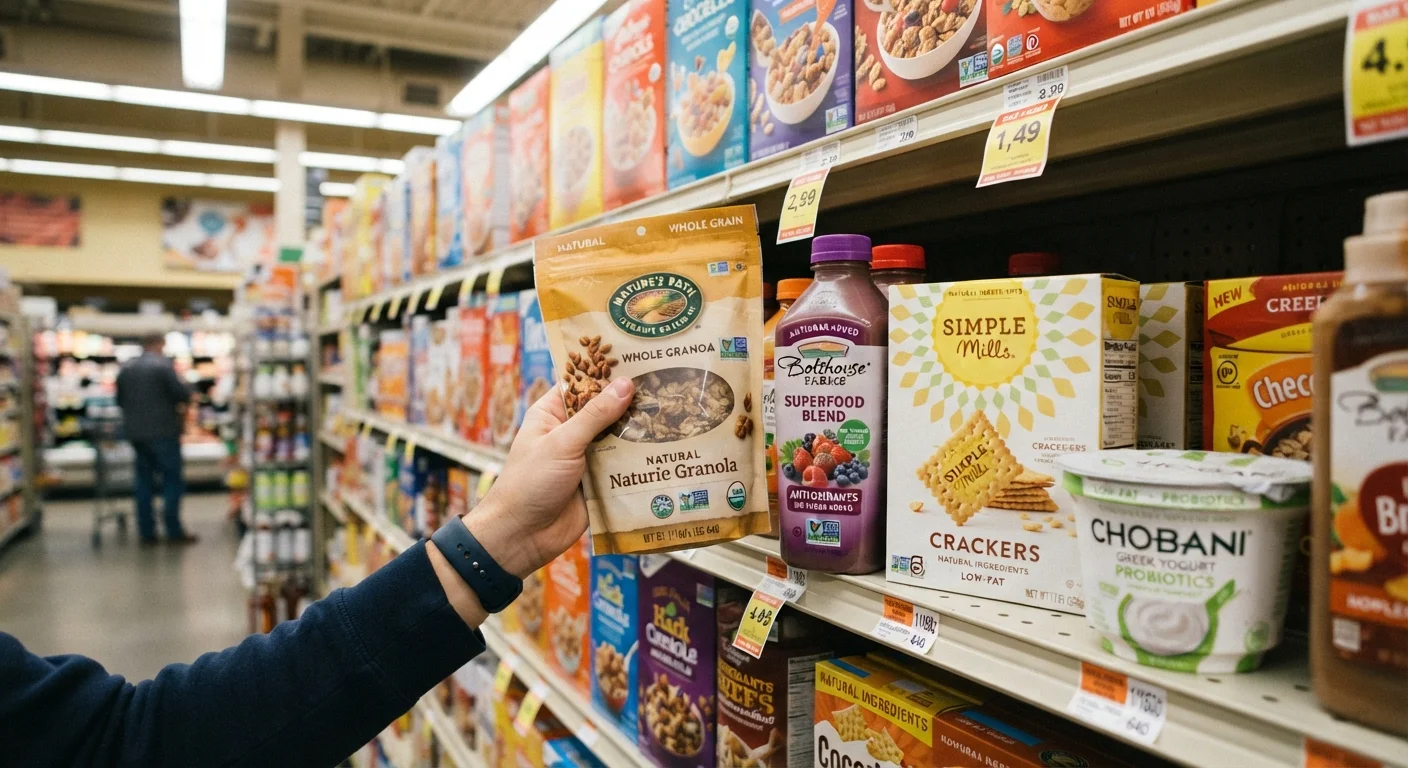
Photo credit: TrendingExperts.net
Terms like "natural," "low-fat," and "superfood" aren't always what they seem. Learn what these labels mean — and don't mean.
Key Takeaways
- Terms like 'natural' and 'superfood' have no standardized legal definition in food labeling.
- Low-fat products often compensate with added sugar, sodium, or starch to maintain flavor.
- Ingredient lists and nutrition facts panels are more reliable guides than front-of-package claims.
- Regulatory oversight of food marketing language is limited, placing the burden on informed consumers.
- A single nutrient or ingredient rarely determines a food's overall health value.
Why Food Marketing Language Can Mislead
Walk down any grocery aisle and you'll encounter a wall of confident health claims: "all-natural," "guilt-free," "superfood-powered," "made with whole grains." These phrases are carefully chosen to appeal to health-conscious shoppers - but they aren't always grounded in nutritional science, and many aren't regulated the way you might expect.
Understanding what these terms actually mean (and what they're permitted to leave unsaid) can help you make genuinely informed choices at the store. For a deeper look at decoding the numbers behind the label, see what nutrition labels are actually telling you.
Myth
If a food is labeled 'natural,' it must be minimally processed and free of artificial ingredients.
Fact
The FDA has no formal regulatory definition for 'natural' on food labels, meaning almost any product can use the term.
The FDA has acknowledged that "natural" lacks a clear, enforceable standard in food labeling. While the agency has informally suggested it means nothing artificial or synthetic has been added, this is not a strict rule. A product made with high-fructose corn syrup, refined flour, or heavily processed oils can still legally bear the word "natural" on its packaging. When you see this term, look past it and go straight to the ingredient list.
Myth
Low-fat or fat-free foods are automatically healthier choices.
Fact
Removing fat often means adding sugar, sodium, or starch to preserve taste and texture - sometimes making the product less nutritious overall.
Fat contributes to flavor and satiety. When manufacturers reduce it, they typically compensate with other ingredients. A low-fat flavored yogurt, for instance, may contain significantly more added sugar than its full-fat counterpart. Research has also found that certain dietary fats - particularly unsaturated fats found in nuts, fish, and olive oil - are associated with positive cardiovascular outcomes. The reflexive assumption that less fat = healthier doesn't hold across all food categories. Check the nutrition facts panel for added sugars and total calorie count, not just fat grams.
Myth
The word 'superfood' signals a food with proven, exceptional health benefits.
Fact
'Superfood' is a marketing term with no scientific or regulatory definition - it appears on labels at a manufacturer's discretion.
No government agency defines or certifies a food as a "superfood." The term is used freely in marketing to highlight one or more beneficial nutrients a food contains, while the broader nutritional profile may be unremarkable - or even problematic. A highly processed snack bar can be marketed as a superfood if it contains, say, a small amount of chia seeds or acai powder. Nutritional value comes from overall diet patterns, not from individual ingredients singled out for branding purposes. Our practical reference for vitamins and minerals offers a grounded look at where key nutrients actually come from.
Myth
A product labeled 'made with whole grains' is a whole grain food.
Fact
This phrase only requires some whole grain content - refined grains may still dominate the ingredient list.
Labeling regulations don't require a minimum percentage of whole grain content for this claim. A product with refined white flour as its primary ingredient and a token amount of oat flour can still say "made with whole grains." To find genuinely whole grain products, look for a whole grain listed as the first ingredient - such as "whole wheat flour" or "whole oats" - not tucked near the end of a long list. For more context on why this distinction matters nutritionally, see what changes when wheat gets processed.
Myth
Plant-based products are inherently healthier than conventional alternatives.
Fact
Plant-based does not automatically mean nutritious - many plant-based packaged foods are highly processed with elevated sodium and saturated fat.
"Plant-based" describes the source of ingredients, not the level of processing or the overall nutritional quality. A plant-based burger patty or snack can contain coconut oil (high in saturated fat), substantial sodium, and a long list of additives. Whole plant foods - vegetables, legumes, whole grains, fruit - are well-supported by nutrition research, but the same cannot be automatically assumed for all plant-derived packaged products. Plant-based eating: what the evidence actually says unpacks this distinction in detail.
The Fine Print Behind Common Health Claims
Even terms with some regulatory backing can be applied in ways that obscure the full picture. The FDA defines "low-fat" as fewer than 3 grams of fat per serving - but serving sizes are often smaller than what people actually eat, and fat removal frequently comes with trade-offs. Similarly, "made with whole grains" only requires that some whole grain be present; a product could list refined flour first and still carry that phrase.
57%
Of U.S. food products carry front-of-pack health claims
Research published in the Journal of the Academy of Nutrition and Dietetics found that a majority of packaged products in U.S. grocery stores feature at least one health-related marketing claim.
60+
Names for added sugar on ingredient labels
Nutrition researchers have identified more than 60 different names under which added sugars may be listed, making them difficult for consumers to recognize and tally.
~90%
Of Americans fall short of daily fiber recommendations
Dietary survey data consistently shows that most U.S. adults consume well below the daily fiber targets set by the Dietary Guidelines for Americans.
Added sugars are a particularly common blind spot. Manufacturers use dozens of alternate names - from maltose to evaporated cane juice - that can make a sugar-heavy product look cleaner than it is. Our guide on how added sugars hide on ingredient lists walks through the most common aliases to watch for.
It also helps to understand what's at stake when grains are processed. Whole grains vs. refined grains explains what nutrients are lost during milling and how to identify genuinely whole grain options on a label.
Front-of-Pack Claims Are Not Regulated Like Drug Labels
Unlike pharmaceutical labeling, most front-of-package food marketing language - including terms like 'natural,' 'superfood,' and 'wholesome' - is not subject to pre-approval or strict definition by the FDA. Manufacturers have broad latitude to use persuasive health language. Your most reliable tools are the Nutrition Facts panel and the ingredient list, both of which have standardized formats established by federal regulation. When in doubt, consult a registered dietitian for personalized guidance.
This article is for informational purposes only and is not a substitute for personalized dietary advice from a qualified healthcare professional or registered dietitian.

Author
Health Editorial Team
Health Editorial Team is the collective byline for our editorial team and contributor network. Articles published under this byline or an editorial pen name are researched, written, and reviewed according to our editorial standards for clarity, consistency, and independence before publication.
View all articles →