
Whole Grains vs. Refined Grains: What Changes When Wheat Gets Processed
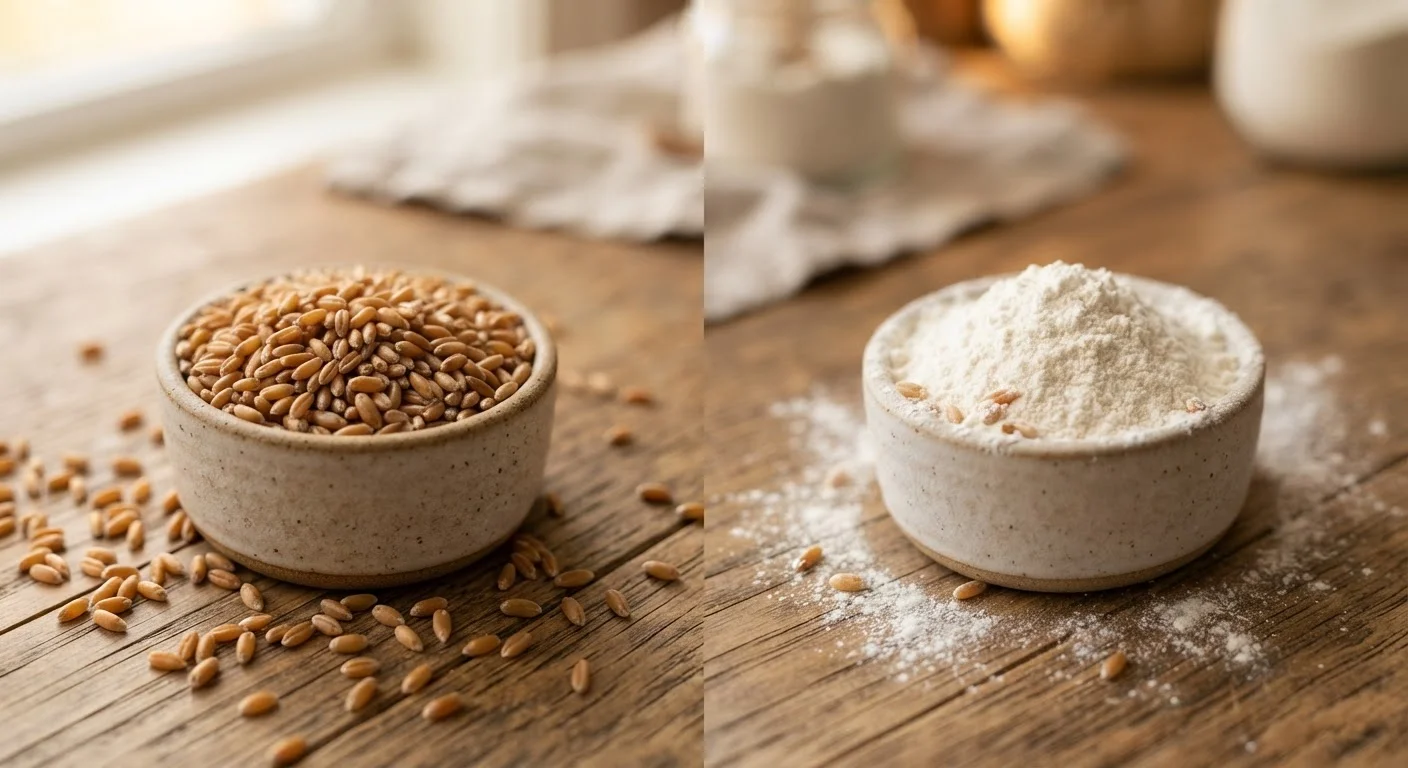
Photo credit: TrendingExperts.net
In this article
Find out what's lost during grain refining, why it matters nutritionally, and how to spot whole grain options on a label.
Key Takeaways
- Refining removes the bran and germ from a grain, stripping away fiber, B vitamins, iron, and healthy fats.
- Whole grains contain all three kernel parts - bran, germ, and endosperm - preserving their full nutritional profile.
- Enriched refined grains have some B vitamins and iron added back, but fiber and many phytonutrients are not restored.
- Dietary guidelines generally recommend making at least half of your grain servings whole grains.
- Label terms like 'wheat bread' or 'multigrain' do not guarantee a product is made with whole grains.
- Looking for 'whole grain' or 'whole wheat' as the first ingredient is the most reliable label check.
What Happens Inside the Mill
A grain kernel has three layers, each playing a distinct nutritional role. The bran is the outer shell, rich in dietary fiber, B vitamins, and trace minerals. The germ is the embryo of the seed, containing healthy fats, vitamin E, and additional B vitamins. The endosperm - the largest layer - provides starchy carbohydrates and some protein.
When grain is refined, milling strips away the bran and germ entirely, leaving only the endosperm. This produces the smooth, pale flour used in white bread, standard pasta, and most commercial baked goods. The result is a product with a longer shelf life and a milder texture - but significantly fewer nutrients than the original kernel.
Manufacturers often enrich refined grains by adding back certain B vitamins (thiamin, riboflavin, niacin, folic acid) and iron. However, enrichment does not restore fiber, vitamin E, potassium, magnesium, or the dozens of phytonutrients and antioxidants that were removed with the bran and germ.
| Criterion | Whole Grains | Refined Grains |
|---|---|---|
| Kernel parts retained | Bran, germ, and endosperm | Endosperm only |
| Dietary fiber | High (naturally occurring) | Very low (not restored by enrichment) |
| B vitamins | Naturally present | Partially added back (enriched) |
| Vitamin E | Present (from germ) | Largely absent |
| Phytonutrients & antioxidants | Present | Largely removed |
| Blood sugar response | More gradual | More rapid |
| Shelf life | Shorter (germ fats can oxidize) | Longer |
| Texture and palatability | Denser, heartier | Lighter, softer |
The Nutritional Gap - and Why It Matters
Fiber is arguably the most consequential nutrient lost in refining. Dietary fiber supports digestive regularity, helps moderate blood sugar responses after meals, and plays a role in cardiovascular health by influencing cholesterol metabolism. Most Americans consume well below the daily fiber targets recommended by federal dietary guidelines, and choosing refined over whole grains contributes to that shortfall.
Beyond fiber, the phytonutrients and antioxidants naturally present in bran and germ - compounds like lignans, phenolic acids, and ferulic acid - have been the subject of ongoing nutritional research. While the science is still developing, established dietary guidance from organizations such as the USDA and the American Heart Association consistently points toward whole grain consumption as a component of a health-supporting diet.
~5%
Of Americans meet daily whole grain recommendations
Research published in nutritional epidemiology literature suggests a large majority of U.S. adults consume far fewer whole grains than federal dietary guidelines advise.
25-28g
Daily fiber recommended for most adult women
The Dietary Guidelines for Americans specify fiber targets that most people fall short of, partly due to high refined grain intake.
~25%
Reduction in type 2 diabetes risk
A meta-analysis in public health nutrition research found regular whole grain consumption associated with meaningful reductions in type 2 diabetes risk compared to low intake.
Blood sugar response is another meaningful difference. Because refined grains are digested quickly, they tend to produce a more rapid rise in blood glucose compared to whole grains, which digest more slowly due to their fiber content. This distinction is relevant for general metabolic wellness, though individuals with diabetes or prediabetes should work directly with a healthcare provider to determine what grain choices fit their specific needs.
Decoding the Label
Food packaging can be genuinely confusing when it comes to grains. Terms like multigrain, stone-ground, wheat bread, and made with whole grain do not guarantee that a product is predominantly made from whole grains. A multigrain product may contain several types of refined grain. "Wheat bread" simply means it contains wheat - which all bread does.
The most reliable approach is to check the ingredient list. If the first ingredient reads whole wheat flour, whole oats, whole grain corn, or another whole grain by name, the product is primarily made with whole grains. If it reads enriched flour or bleached flour first, it is primarily refined - regardless of any marketing language on the front of the package.
Color alone is not a reliable indicator either. Brown bread can be colored with molasses rather than containing meaningful amounts of whole grain. For a deeper look at how to interpret the full nutrition panel, see what nutrition labels are actually telling you. And if front-of-package health claims feel confusing or contradictory, reading between the lines on healthy food marketing breaks down what those terms do - and don't - mean.
This article is for general informational and educational purposes only and is not a substitute for professional medical or dietary advice. Consult a qualified healthcare provider or registered dietitian before making significant changes to your diet, especially if you have a chronic health condition.

Author
Health Editorial Team
Health Editorial Team is the collective byline for our editorial team and contributor network. Articles published under this byline or an editorial pen name are researched, written, and reviewed according to our editorial standards for clarity, consistency, and independence before publication.
View all articles →