
Bodyweight Training: A Complete Look at Movement Without Equipment
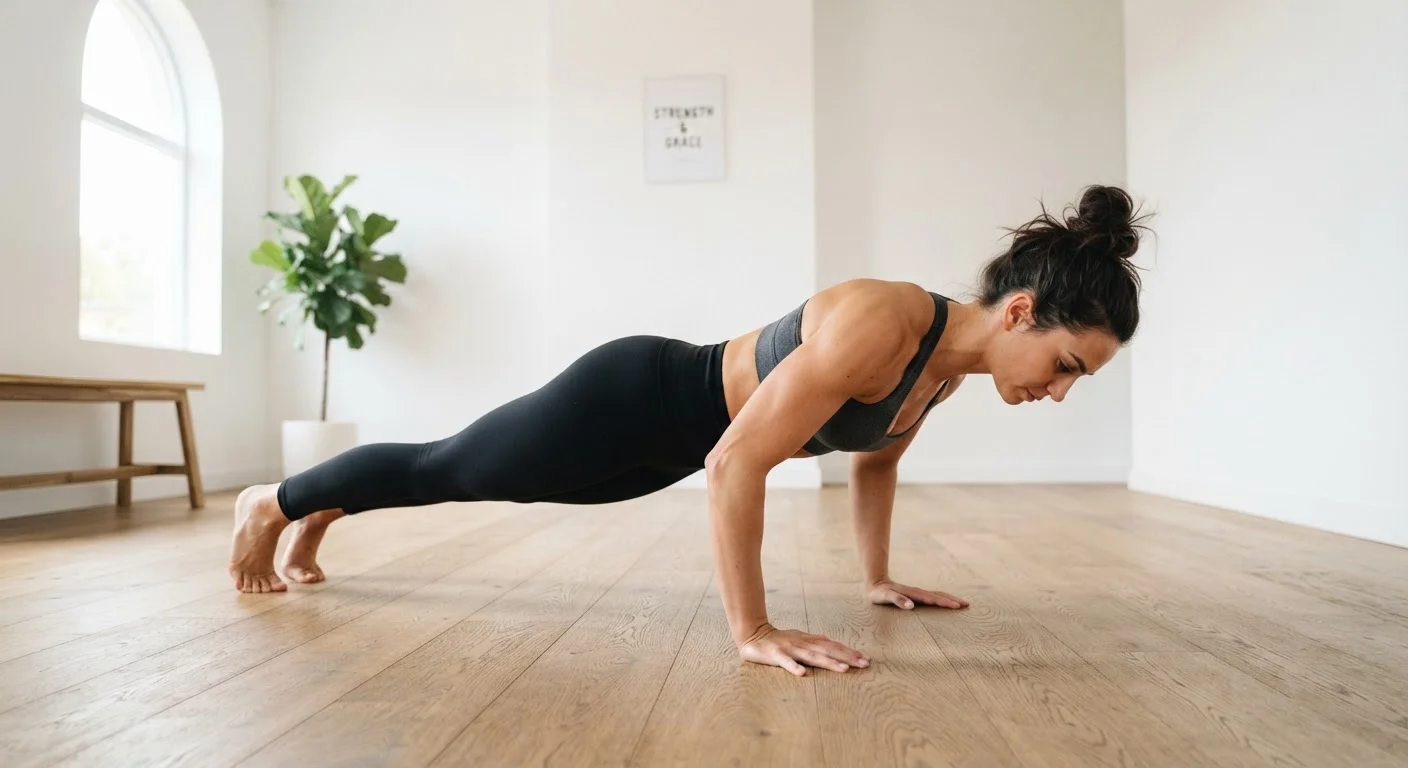
Photo credit: TrendingExperts.net
In this article
Bodyweight exercise spans push-ups to handstands. This guide covers the principles, progressions, and realistic expectations for equipment-free training.
Key Takeaways
- Bodyweight training covers a wide spectrum - from beginner push-ups to advanced handstands.
- Progression relies on leverage, range of motion, and tempo rather than added load.
- Most fundamental movement patterns can be trained effectively without any equipment.
- Bodyweight work has real limits for maximum strength, but is highly effective for general fitness.
- Consistency and structured progression matter more than the specific exercises chosen.
What Is Bodyweight Training?
Bodyweight training is any form of exercise that uses your own body mass as the primary resistance. It ranges from floor-based fundamentals like push-ups and squats to highly skilled movements like muscle-ups and freestanding handstands. No gym membership, barbell, or machine is required.
The appeal is practical: you can train in a living room, a park, or a hotel room. But bodyweight exercise is far more than a fallback option. Many gymnasts, military fitness programs, and martial arts traditions have built extraordinary physical capacity almost exclusively through bodyweight methods. If you're newer to structured exercise, our complete introduction for beginners covers how to get started with realistic goals.
Start With What You Can Control
If you can't complete a standard push-up with full range of motion, begin with an incline variation - hands elevated on a counter or step. Controlling your start point is smarter than grinding through poor reps. Progress the angle over weeks as strength builds.
Core Movement Patterns and Why They Matter
Effective bodyweight training is organized around fundamental movement patterns rather than isolated muscles. Understanding these patterns helps you build a complete routine and avoid blind spots.
- Push: Movements that press away from the body - push-ups, pike push-ups, dips.
- Pull: Movements that draw the body toward a surface - rows using a table edge, pull-ups, inverted rows.
- Hinge: Hip-dominant movements like single-leg deadlifts or Nordic curls.
- Squat: Knee-dominant lower-body movements - bodyweight squats, split squats, pistol squats.
- Core: Spinal stabilization and anti-rotation - planks, hollow body holds, side planks.
- Locomotion: Movement through space - bear crawls, lunges, jumping variations.
Training each pattern across a week creates balanced stimulus for the whole body. Neglecting pull movements, for example, is a common gap in home routines and can contribute to postural imbalances over time.
~64%
Adults who don't meet aerobic activity guidelines
According to CDC physical activity data, the majority of U.S. adults fall short of recommended weekly movement minimums.
2-3x
Weekly frequency for meaningful strength adaptation
Exercise science literature generally supports training each movement pattern at least twice per week for consistent strength and fitness gains.
How Progression Works Without Added Weight
The most common misconception about bodyweight training is that it gets easy once you can perform the basics. In reality, progression is nearly limitless - it just works differently than adding plates to a bar.
Three primary levers drive difficulty:
- Leverage: Shifting your center of gravity changes how hard your muscles must work. An archer push-up is harder than a standard push-up because more load shifts to one arm.
- Range of motion: Deeper squats, deficit push-ups, and full-range movements increase muscular demand beyond the standard version.
- Tempo and stability: Slowing the lowering phase (eccentric control) or removing a point of contact (single-leg work) substantially increases difficulty without any equipment.
This principle - manipulating mechanical disadvantage - is why a one-arm push-up or pistol squat can challenge even experienced athletes. For a broader look at how to know your training is working, see our guide on tracking fitness progress without fixating on the scale.
Before increasing reps, master the full range of motion at a slow tempo. A deliberate three-second lowering phase builds more strength and body control than rushing through high-rep sets.
Eccentric (lowering) strength is foundational for injury resilience and is often undertrained when people focus only on completing reps quickly.
Treat skill work like handstands or L-sits as a separate block at the start of a session, not as a finisher. Neuromuscular learning suffers when you're already fatigued.
Skill acquisition depends heavily on fresh neuromuscular resources; practising complex movement patterns when tired produces poor motor patterns and slow progress.
What Bodyweight Training Can and Cannot Do
Bodyweight exercise is genuinely effective for building muscular endurance, relative strength, mobility, coordination, and cardiovascular fitness. Research consistently shows that resistance training using bodyweight loads can produce meaningful muscle and strength gains, particularly for people who are newer to training or returning after a break.
That said, there are real limits. Producing maximum absolute strength - the kind measured in a one-rep deadlift - typically requires external load beyond what bodyweight alone can provide for most people. Advanced athletes often find bodyweight work insufficient for continued lower-body hypertrophy once they can perform high-rep pistol squats with ease. For a balanced look at the tradeoffs, see the case for and against ditching the weights.
The practical takeaway: bodyweight training is a legitimate, effective system - not a lesser substitute - but combining it with resistance tools over time may serve certain goals better.
Building a Sustainable Practice
Sustainability comes from structure and recovery, not volume. A well-designed bodyweight routine typically trains each movement pattern two to three times per week with at least one rest day between sessions targeting the same muscles.
Beginners often benefit from full-body sessions three days per week, focusing on mastering form before increasing difficulty. More experienced practitioners may use upper/lower splits or skill-focused days for advanced movements like handstands or planche progressions.
Recovery matters as much as training. Sleep, nutrition, and stress management all affect how the body adapts - no training method bypasses those fundamentals. If you're specifically interested in ready-to-use sessions, our home workout routines that require no equipment offer structured options for different goals and experience levels.
Finally, choose movements you can perform with good technique. Rushed reps with poor form increase injury risk and reduce training benefit regardless of the exercise type.
This article is for general informational and educational purposes only and is not a substitute for professional medical or fitness advice. Consult a qualified healthcare provider or certified fitness professional before starting any new exercise program, especially if you have existing health conditions or injuries.

Author
Health Editorial Team
Health Editorial Team is the collective byline for our editorial team and contributor network. Articles published under this byline or an editorial pen name are researched, written, and reviewed according to our editorial standards for clarity, consistency, and independence before publication.
View all articles →