
Music Festivals as Cultural Events: What Makes Them More Than a Concert
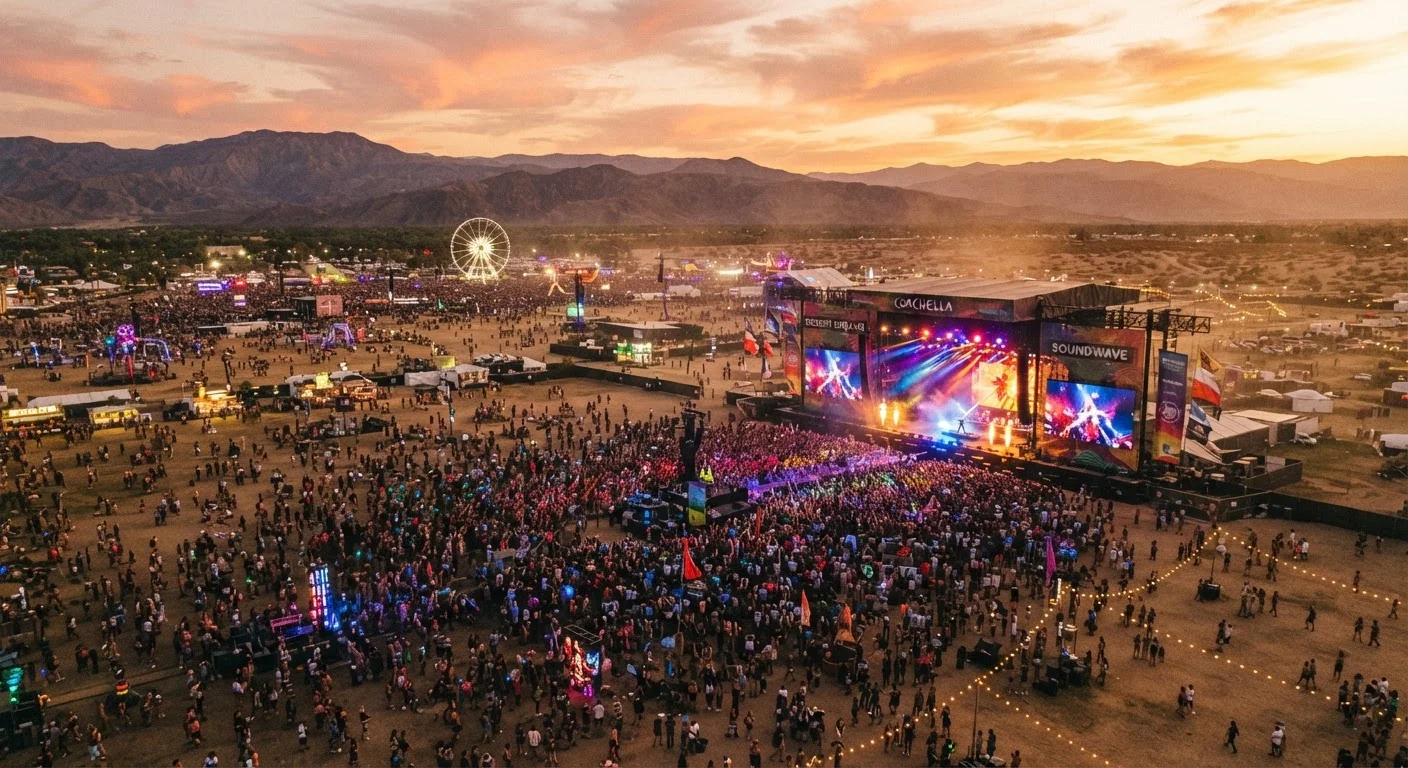
Photo credit: TrendingExperts.net
In this article
From Woodstock to Coachella, music festivals have always been about more than the lineup. Unpack what makes them cultural landmarks.
Key Takeaways
- Music festivals create temporary communities that exist nowhere else in everyday life.
- From Woodstock to Coachella, festivals have always been tied to broader social movements.
- The lineup is only one layer - fashion, food, art, and commerce all define the experience.
- Festivals function as cultural mirrors, reflecting who society values and what it celebrates.
- Digital streaming has made festivals more important as one of live music's last irreplaceable experiences.
The Crowd Is the Point
There's a reason people don't just listen to a music festival - they go to one. The core appeal isn't simply the artists on the bill. It's the experience of being physically present among tens of thousands of people who chose the same field, the same weekend, the same sounds. That shared choice is itself a form of cultural declaration.
Sociologists have long observed that large-scale communal gatherings create what anthropologist Victor Turner called communitas - a temporary suspension of ordinary social hierarchies where strangers become a unified collective. At a festival, the VP and the college student might stand in the same mud watching the same headliner. That leveling effect, however temporary, is part of what makes the experience feel significant and memorable in a way a streaming playlist cannot.
This is why streaming reshaped music consumption but couldn't replace the live festival. When nearly any song is one tap away, the scarcity of a live moment becomes its own cultural currency.
32M+
Americans attending music festivals annually
According to research compiled by Eventbrite and Nielsen Music, tens of millions of American adults attend at least one music festival per year, with millennials representing the largest demographic segment.
$1.8B+
Estimated annual U.S. festival industry revenue
Industry analysts have estimated the U.S. music festival market generates well over a billion dollars annually when ticket sales, sponsorships, and ancillary spending are combined.
400,000
Estimated Woodstock 1969 attendance
Historians estimate that roughly 400,000 people attended Woodstock across its four days in August 1969, far exceeding the originally expected crowd of 50,000.
Festivals as Mirrors of Their Moment
Every major festival reflects the social and political temperature of its era. Woodstock in 1969 wasn't just a concert - it was a demonstration that an anti-war, countercultural generation existed in massive, visible numbers. The Newport Folk Festival's 1965 season crystallized tensions between folk tradition and rock evolution when Bob Dylan famously went electric. Live Aid in 1985 transformed the idea of what a concert could accomplish politically and humanitarianly.
Contemporary festivals carry their own cultural freight. Coachella has become as much a fashion and brand activation event as a music one - a shift that tells us something real about how entertainment, commerce, and social media have merged. Glastonbury maintains a tradition of political programming alongside its music, from refugee advocacy to environmental campaigns, reflecting a European festival culture that sees art and activism as inseparable.
Understanding a festival means understanding its context. As explored in why cultural timing matters as much as talent, the social environment surrounding music often determines which artists and ideas resonate most powerfully.
“Festivals are one of the few remaining spaces where culture happens collectively, in real time, with no algorithm deciding what you encounter next. That unpredictability is the whole point.”
— Simon Reynolds, Music critic and author of 'Retromania: Pop Culture's Addiction to Its Own Past'
Beyond the Lineup: Fashion, Food, Art, and Identity
Walk any major festival and you quickly realize the music is one layer of a much richer cultural experience. Festival fashion has evolved into a serious industry force - the looks worn at Coachella or Glastonbury reliably influence mainstream retail the following season. This isn't superficial: clothing at a festival is identity performance, a way of visually signaling which tribe you belong to and what you value.
Art installations, culinary programming, and independent vendor markets have transformed festivals into temporary cities with their own economies and aesthetics. Burning Man, technically an art and community event with music as one component, represents perhaps the furthest evolution of this idea - a constructed society that exists for one week in the Nevada desert before disappearing entirely.
Music at a festival also serves as a marker of personal and community identity in ways that go beyond simple taste. Choosing to attend a hip-hop-centered festival versus a country or EDM event signals values, community memberships, and cultural affiliations. The lineup is a roster - but it's also a portrait of the audience.
The Economics and Accessibility Question
None of this cultural richness exists in a vacuum separate from economics. Ticket prices for major festivals have climbed significantly over the past two decades, with premium passes to flagship events regularly exceeding several hundred dollars before travel, accommodation, and food. This has real consequences for who gets to participate in these cultural moments in person - and who experiences them only through social media or livestreams.
The tension is real: festivals that style themselves as expressions of community and freedom can become exclusive events accessible mainly to those with disposable income. That contradiction is worth holding honestly. As rising concert ticket prices reshape live music culture, festivals face pressure to balance commercial sustainability with the communal ideals that gave them cultural legitimacy in the first place.
Smaller regional festivals - often more affordable and community-rooted - represent a counter-narrative worth watching. They tend to be less Instagram-optimized and more genuinely local, serving the communities around them rather than drawing global tourism. That distinction matters when evaluating what a festival is really for and whom it truly serves.
Frequently Asked Questions

Author
Entertainment Editorial Team
Entertainment Editorial Team is the collective byline for our editorial team and contributor network. Articles published under this byline or an editorial pen name are researched, written, and reviewed according to our editorial standards for clarity, consistency, and independence before publication.
View all articles →