
Skincare and Grooming: Where One Ends and the Other Begins
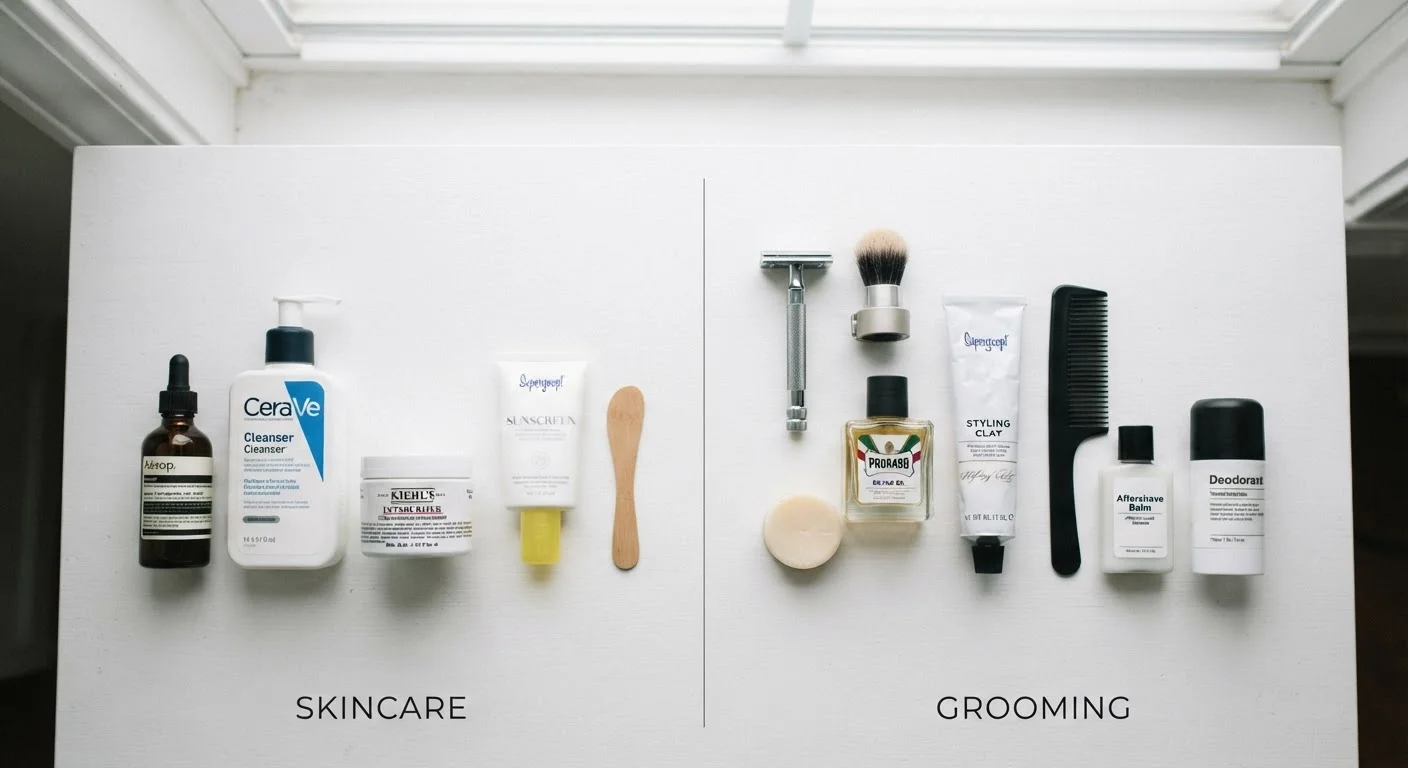
Photo credit: TrendingExperts.net
In this article
Skincare and grooming overlap in confusing ways. Here's a clear breakdown of what each covers and how they work together in a daily routine.
Key Takeaways
- Skincare focuses on skin health at the cellular level; grooming addresses appearance, hygiene, and physical upkeep.
- Many grooming steps - like moisturizing after shaving - are also skincare acts, making the two inseparable in practice.
- Neither discipline is gender-specific; both apply equally to men and women.
- A well-designed daily routine integrates both without requiring a large product collection.
- Understanding the distinction helps you troubleshoot skin problems more effectively and build smarter habits.
Defining Each Discipline Clearly
Skincare refers to practices that maintain, protect, or improve the health of the skin as an organ. It includes cleansing, moisturizing, applying sunscreen, and using active ingredients - substances like retinol or chemical exfoliants that influence how skin cells behave at a deeper level. The goal is biological: support the skin barrier, regulate cell turnover, and prevent or address damage. For a deeper look at why the skin barrier matters, see what the skin barrier actually does.
Grooming, by contrast, refers to the physical management of your appearance and hygiene. Shaving, trimming, cleaning nails, styling hair, and basic dental hygiene are all grooming acts. The focus is largely mechanical and presentational - keeping the body clean, orderly, and well-maintained. For a practical overview of what a grooming kit actually needs, see the essentials every grooming kit should contain.
The confusion between the two arises because many grooming steps have direct skincare consequences. Shaving without proper prep can compromise the skin barrier. Skipping moisturizer after a shower is a grooming shortcut with a skincare cost.
| Criterion | Skincare | Grooming |
|---|---|---|
| Primary goal | Skin health and function | Hygiene and appearance |
| Focus area | Cellular and barrier health | Hair, nails, shaving, hygiene |
| Key tools | Cleansers, serums, SPF, actives | Razors, trimmers, combs, nail clippers |
| Time horizon | Long-term skin condition and aging | Day-to-day presentation |
| Applies to | All genders equally | All genders equally |
| Overlap zone | Post-shave care, beard skin, exfoliation | Post-shave care, beard skin, exfoliation |
| Consequence of skipping | Skin barrier damage, aging, breakouts | Poor hygiene, unkempt appearance |
Where the Two Overlap - and Why It Matters
The overlap zone is where most people make routine mistakes. Consider shaving: it's a grooming act that physically removes hair using a blade. But the moment that blade contacts skin, skincare principles take over. A dull razor, no pre-shave hydration, and skipping post-shave moisturizer creates micro-abrasions, inflammation, and barrier disruption - all skin-health concerns. For those dealing with this regularly, grooming for sensitive skin offers a structured approach to reducing irritation.
Similarly, beard care sits squarely at the intersection of both disciplines. Keeping facial hair trimmed and shaped is grooming. But the skin beneath a beard needs moisture, exfoliation, and barrier support - that's skincare. A thorough breakdown is available in our guide on beard care across every length.
54%
Men who use facial moisturizer regularly
According to Mintel's grooming consumer research, moisturizer adoption among male consumers has grown substantially over the past decade.
3-5 steps
Steps in an effective minimal skincare routine
Dermatologists generally agree that a core routine of cleanser, moisturizer, and SPF covers the fundamental needs of most skin types.
Recognizing these overlaps helps you assign the right tools and products to each need, rather than guessing or over-purchasing. Someone with persistent post-shave redness isn't facing a grooming problem - they're facing a skincare one, and the solution requires thinking accordingly.
Building a Routine That Honors Both
An effective daily routine doesn't require choosing one over the other - it sequences both intelligently. The general principle: complete grooming acts first, then apply skincare in order of texture, from thinnest to thickest. Cleanse the skin, shave or manage hair, then apply any active treatments, followed by moisturizer and SPF in the morning.
If you're new to building this kind of routine, building your first grooming routine from scratch walks through each step without assuming prior knowledge. For those who already have some habits in place, the anatomy of a daily grooming routine explains why sequence matters as much as the products themselves.
For skincare specifically, ingredient layering adds another layer of structure. Resources like building a skincare routine from scratch offer a clear starting point for anyone unsure where to begin.
Neither skincare nor grooming is complicated when understood clearly. The difference is mostly one of purpose: grooming manages how you look and maintain hygiene day to day; skincare manages how your skin functions and ages over time. Done well, they reinforce each other - and neither takes as long as most people fear.
This article is for informational purposes only and does not constitute medical or dermatological advice. Consult a qualified healthcare professional for concerns about skin conditions or treatments.

Author
Beauty Editorial Team
Beauty Editorial Team is the collective byline for our editorial team and contributor network. Articles published under this byline or an editorial pen name are researched, written, and reviewed according to our editorial standards for clarity, consistency, and independence before publication.
View all articles →