
Beard Care Across Every Length: Short Stubble to Full Growth
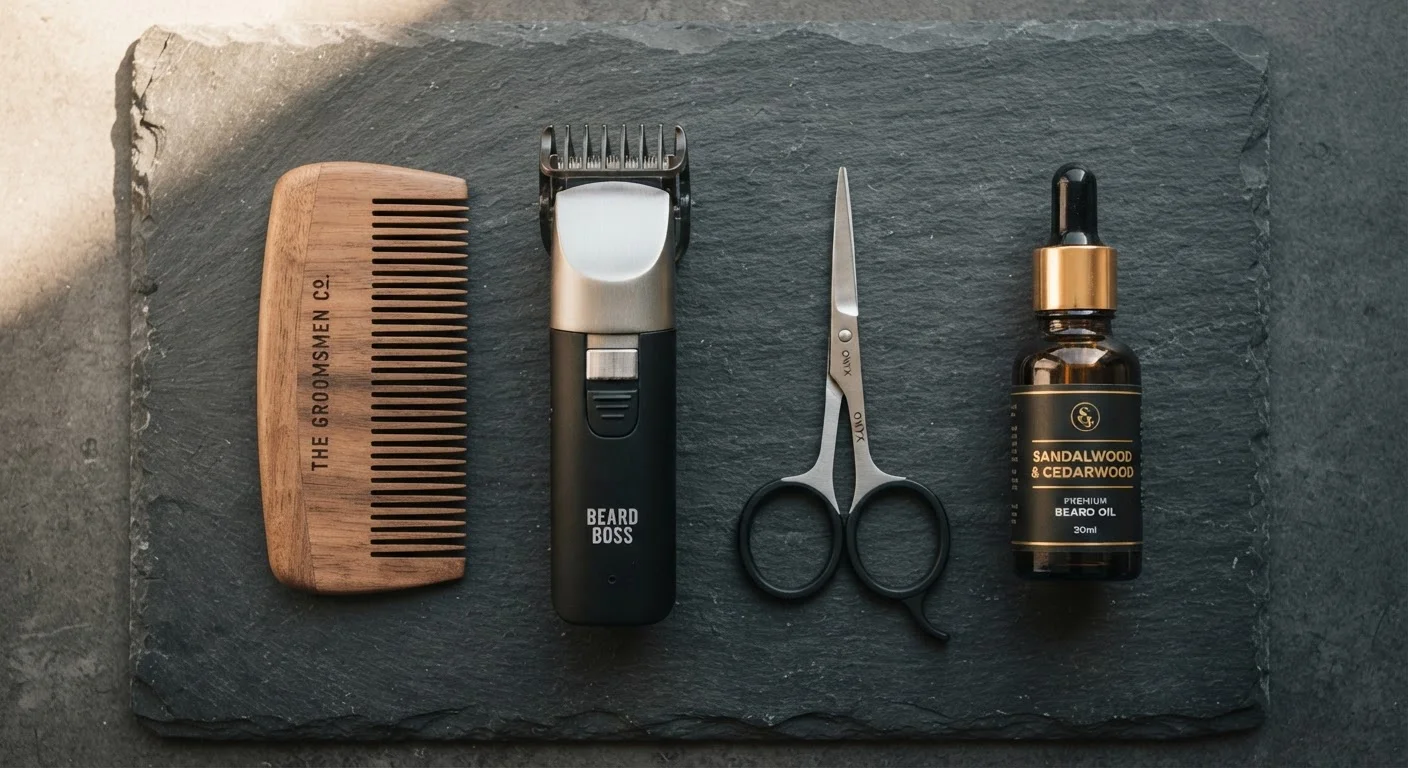
Photo credit: TrendingExperts.net
In this article
Beard maintenance changes as length grows. This guide covers trimming, moisturizing, and shaping practices suited to each stage of beard growth.
Key Takeaways
- Beard care routines must adapt significantly as length increases from stubble to full growth.
- Even short stubble needs moisturizer - the skin beneath is just as vulnerable as bare skin.
- Beard oil becomes more essential, not less, as length and coarseness increase.
- Defining a clean neckline is the single most impactful grooming step at any beard length.
- Washing a full beard requires a dedicated cleanser to avoid stripping natural oils.
Why Beard Care Isn't One-Size-Fits-All
A beard at two weeks looks nothing like a beard at six months - and caring for one as if it were the other is one of the most common grooming mistakes men make. As facial hair grows, it changes in texture, weight, and how it interacts with the skin beneath. The tools, products, and frequency of maintenance all shift accordingly.
Understanding beard care by length stage removes the guesswork. Rather than following generic advice, knowing what your beard actually needs at its current length makes routines faster, cheaper, and more effective. This guide covers each major stage - from fresh stubble to a full, long beard - with the specific practices that matter most at each point. For a broader view of how beard care fits into daily hygiene, see our complete daily grooming routine breakdown.
Short Stubble (0-5mm): The Deceptively High-Maintenance Stage
Stubble looks effortless but requires consistent attention. At this length, the focus is almost entirely on the skin beneath, not the hair itself. Sharp, newly cut hair ends can irritate surrounding skin, and the face is transitioning from a clean-shaved state into something new.
Beard Itch Is a Skin Problem, Not a Hair Problem
The itching many men experience in the first two to four weeks of beard growth is caused by dry skin beneath the hair, not the hair itself. Moisturizing the skin under even the shortest stubble addresses the root cause. Ignoring it often leads men to shave off growth they would otherwise keep.
Key practices at this stage:
- Moisturize daily. Use a lightweight, non-comedogenic facial moisturizer on the skin under and around the stubble. This prevents dryness and the itch that causes many men to abandon growth early.
- Trim every 2-3 days. A precision trimmer with a short guard keeps stubble looking intentional rather than neglected. Consistency matters more than intensity here.
- Define the neckline. Even at 3-5mm, a defined neckline transforms stubble from lazy to deliberate. Cleaning up the cheek line is optional at this length, but neckline definition is not.
Products at this stage can stay simple. A good facial moisturizer does the heavy lifting. Dedicated beard products aren't yet necessary, though a light beard oil won't cause harm. For an overview of what products actually belong in a grooming kit, see what to include in your grooming kit.
Medium Beard (1-3cm): Building the Foundation
Once beard hair passes roughly a centimeter, it begins to take on a life of its own. Individual hairs are long enough to curl, tangle, and grow in multiple directions. This is where a proper beard care routine becomes genuinely necessary rather than optional.
Comb Before You Trim, Always
Combing your beard in the direction of growth before picking up a trimmer detangles hairs and ensures an even cut. Trimming uncombed beard hair almost always produces an uneven result that's only visible after the fact. This single habit saves most men from their most common trimming mistakes.
Key practices at this stage:
- Introduce beard oil. The skin beneath a medium beard receives less air circulation and often less moisture from skincare products that can't penetrate the hair. Beard oil - applied after washing - addresses both the skin and conditions the hair shaft to reduce coarseness.
- Wash 2-3 times per week with a cleanser suited to facial hair. Over-washing strips natural sebum; under-washing allows buildup of dead skin cells and product residue.
- Use a beard comb daily. Combing trains hair growth direction, reduces tangles, and distributes any applied oil evenly. A wide-tooth comb works well at this length.
- Shape with scissors for precision. A trimmer handles bulk length, but small scissors allow for spot trimming of rogue hairs that grow faster or in the wrong direction.
Apply beard oil immediately after washing while the hair shaft is still slightly damp - absorption is measurably better than on completely dry hair.
Hair cuticles remain slightly open after washing with warm water, allowing conditioning agents to penetrate more effectively before the cuticle closes as the hair dries.
Set your trimmer one guard size longer than you think you need - you can always take more off, but you cannot put it back.
Trimmer guards often remove more length than users anticipate, and even a single guard size difference can mean weeks of regrowth at the beard's natural growth rate.
At this stage, cheek line definition becomes more relevant. How high or low to set it is a matter of personal preference and face shape, but a consistent line - maintained every one to two weeks - is what separates a groomed medium beard from an untended one.
Full Beard (3cm and Beyond): Conditioning Is Everything
A full beard demands the most from a grooming routine, but the logic simplifies: conditioning and moisture are the dominant concerns. Long beard hair is older hair - it has been exposed to more washing, friction, and environmental stress. The natural oils produced by the skin can no longer travel the full length of longer hairs, which is why dryness and brittleness increase with length.
Don't Use Scalp Shampoo on Your Beard
Standard hair shampoos are formulated for scalp sebum levels, which are much higher than those on facial skin. Using them on your beard strips essential oils from both the hair and the underlying skin, leading to dryness, flaking, and beard itch - especially problematic at longer lengths. Use a cleanser formulated specifically for facial hair if washing regularly.
~½ inch/month
Average beard hair growth rate
According to general dermatological consensus, facial hair grows roughly half an inch per month, though genetics affect this significantly.
3-4 weeks
Time to reach recognizable stubble length
Most men reach a defined stubble look within three to four weeks of not shaving, depending on hair density and growth pattern.
Key practices at this stage:
- Beard balm or butter, in addition to oil. Balms provide a light hold that keeps longer hair in place while also delivering conditioning. They're applied after oil and work particularly well on coarser, longer beards.
- Wash 2-3 times per week maximum with a dedicated beard wash. Daily washing at this length almost always leads to visible dryness and increased frizz.
- Brush, don't just comb. A boar bristle beard brush distributes oils from root to tip more effectively than a comb at longer lengths, and helps train the hair flat.
- Trim monthly, shape weekly. Full-length trimming can happen less frequently, but neckline and cheek line maintenance should remain a weekly or biweekly habit.
The skin and hair care hub covers complementary practices that support a healthy beard environment, including skincare principles that apply to the face regardless of beard length.
Shaping and Neckline: The Universal Rule
Regardless of beard length, neckline definition is the single most impactful grooming action a person can take. A clean neckline signals intention and instantly elevates the appearance of any beard - even a patchy or uneven one.
Patchy Growth Is Largely Genetic
Uneven beard density is primarily determined by genetics and androgen sensitivity in hair follicles - not by grooming habits. While keeping the beard clean and moisturized supports healthy follicle environments, no product reliably changes the number or density of follicles a person has. Managing expectations around patchiness is a more productive approach than chasing solutions.
The general rule for neckline placement: find the point where your head meets your neck (roughly two finger-widths above the Adam's apple) and use that as the lower boundary. The line itself should follow a gentle curve from ear to ear through that point. Anything below it gets removed cleanly with a trimmer or razor.
Cheek lines are more personal. Some men prefer a natural line wherever hair grows; others clean up high-growth areas on the cheeks for a more defined silhouette. Neither approach is objectively better - it comes down to face shape and preference. The key is consistency: whatever line you choose, maintain it on the same schedule as your neckline.
If you're building a grooming routine from scratch, learning to set your own neckline is one of the highest-value skills to develop early.
Common Mistakes at Every Stage
Most beard grooming errors follow predictable patterns. Recognizing them by length stage helps avoid weeks of unnecessary setback.
- At stubble: Skipping moisturizer
- The skin under stubble is just as vulnerable as bare facial skin. Skipping hydration leads to the itching that causes most early beard abandonment.
- At medium length: Over-trimming
- The urge to tidy up constantly leads to net length loss over time. Trimming every two to three weeks - rather than every few days - allows actual growth while maintaining shape.
- At full length: Ignoring the skin beneath
- Long beard hair can mask significant skin dryness, flaking, or buildup. Continuing to care for the skin underneath - through regular washing and oil application - prevents visible and uncomfortable issues.
- At all stages: Neglecting the neckline
- Even a well-conditioned, carefully trimmed beard looks unkempt without a defined neckline. This is the one maintenance step that should never be skipped regardless of how relaxed the overall routine is.
Building sustainable habits - rather than reacting to problems as they appear - is what separates a genuinely good beard from a merely tolerated one. That principle applies to grooming habits broadly: the earlier consistent routines are established, the easier they are to maintain long-term.
And for anyone thinking about how beard care overlaps with broader skin health, where skincare ends and grooming begins offers a useful framework for thinking about both together.
This article is for informational purposes only. For concerns about skin conditions, hair loss, or irritation related to beard growth, consult a qualified dermatologist or healthcare professional.

Author
Beauty Editorial Team
Beauty Editorial Team is the collective byline for our editorial team and contributor network. Articles published under this byline or an editorial pen name are researched, written, and reviewed according to our editorial standards for clarity, consistency, and independence before publication.
View all articles →