
What Your Skin Barrier Actually Does - And Why It Keeps Breaking Down
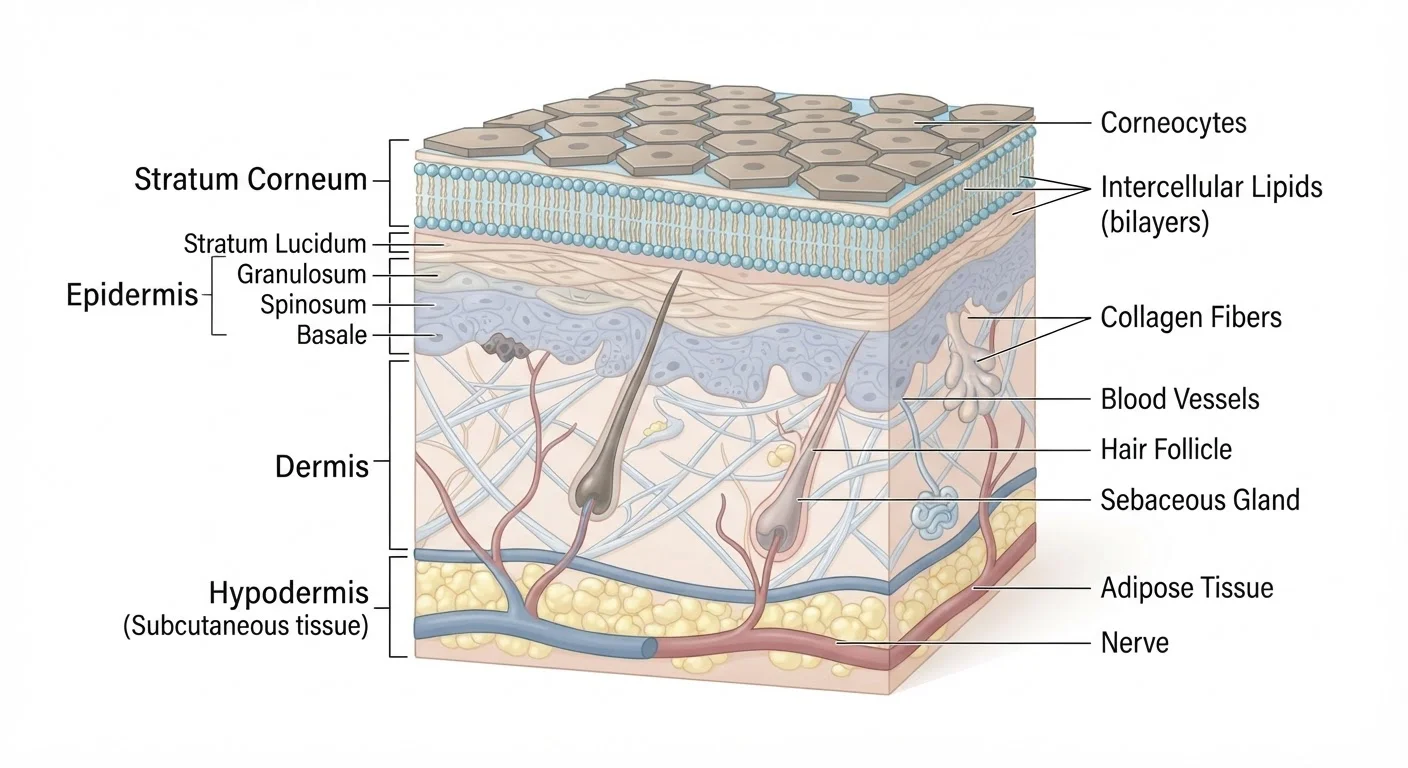
Photo credit: TrendingExperts.net
In this article
The skin barrier is the foundation of every skincare routine. Here's the science of how it works and what damages it over time.
Key Takeaways
- The skin barrier is a lipid-rich layer that regulates moisture and blocks environmental threats.
- Disruption of the barrier leads to water loss, sensitivity, redness, and breakouts.
- Common culprits include over-cleansing, harsh actives, low humidity, and hot water.
- Repair focuses on restoring lipids - especially ceramides, fatty acids, and cholesterol.
- A damaged barrier makes active ingredients like retinol more likely to irritate skin.
- Supporting your barrier is the foundation of any effective skincare routine.
The 'Brick and Mortar' Structure Explained
Dermatologists often describe the skin barrier using a brick-and-mortar analogy, and it's an accurate one. The 'bricks' are corneocytes - flattened, protein-packed dead skin cells stacked in overlapping layers. The 'mortar' is a precisely organized mixture of lipids: ceramides (roughly 50%), cholesterol (25%), and free fatty acids (10-20%). Together, they form a physical seal across the skin's surface.
This structure performs two critical jobs simultaneously. First, it limits transepidermal water loss (TEWL) - the passive evaporation of water through the skin. Second, it acts as a first line of defense against external threats, including bacteria, allergens, environmental pollutants, and UV-related damage. When the lipid mortar is intact and the bricks are properly organized, the barrier handles both jobs with very little effort.
What makes this system genuinely sophisticated is its selectivity. It doesn't block everything - it allows some molecules to pass while restricting others, which is why topical skincare ingredients can penetrate at all. But that selectivity breaks down when the structure is disrupted.
Barrier Health Applies to All Skin Types
It's a common misconception that oily or acne-prone skin has a strong, self-sufficient barrier. In reality, the practices most associated with oily or acne-prone skincare - aggressive cleansing, strong exfoliants, alcohol-based toners - are among the most disruptive to barrier integrity. Barrier health is relevant regardless of skin type. See our overview of skincare basics for broader context.
Why the Barrier Breaks Down
Barrier disruption is more common than most people realize, and the causes are often things people do in the name of better skincare. The most frequent offenders include:
- Over-cleansing: Surfactants in cleansers are designed to dissolve oil - but used too frequently or left on too long, they also strip the lipid mortar. This is one reason washing your face more often doesn't fix breakouts - it often makes the underlying problem worse.
- Overuse of active ingredients: Exfoliating acids (AHAs and BHAs) and retinoids work by accelerating cell turnover, but applied too aggressively or too often, they degrade the barrier before it can regenerate.
- Hot water and dry air: Long hot showers dissolve surface lipids. Low humidity - especially indoors in winter - accelerates TEWL. Neither is dramatic alone, but both compound existing vulnerability.
- Alkaline pH: Healthy skin sits at a slightly acidic pH (around 4.5-5.5). Many traditional bar soaps are alkaline, disrupting the acid mantle that supports barrier enzyme function.
Genetics also play a role. Conditions like atopic dermatitis (eczema) are associated with mutations in the filaggrin gene, which affects the structural proteins that support the lipid layer, making those individuals inherently more prone to barrier dysfunction.
~50%
Ceramide proportion in healthy skin barrier lipids
Research published in dermatology literature consistently identifies ceramides as the dominant lipid class in the stratum corneum, making them a primary target for barrier-repair formulations.
4.5-5.5
Optimal skin surface pH range
Studies in skin physiology show that maintaining slightly acidic pH supports key barrier enzymes and suppresses harmful bacteria; many alkaline cleansers disrupt this balance.
2-4 weeks
Typical barrier recovery timeline
Dermatological research suggests this is a general range for significant barrier repair with appropriate care; individual outcomes vary and are not guaranteed.
What a Damaged Barrier Looks and Feels Like
A compromised skin barrier rarely announces itself with a single obvious symptom. Instead, it tends to produce a cluster of overlapping signals that get misread as skin 'type' rather than a repairable condition. Persistent tightness, flaking, redness, and a sudden increase in sensitivity to products you've used for months are all common indicators. Breakouts can also worsen, since a breached barrier allows bacteria and irritants deeper access to the skin.
One of the more counterintuitive signs is skin that feels both oily and dehydrated at the same time. When the barrier loses water faster than it can retain it, the skin may compensate by increasing oil production - creating that uncomfortable combination of shine and tightness. If your routine is escalating in complexity but your skin is getting worse, a disrupted barrier is often the explanation. The foundation of any good routine is barrier integrity, not product quantity.
How to Support and Restore the Barrier
Barrier recovery is largely about subtraction before addition. Eliminating what's damaging the barrier - harsh cleansers, excessive exfoliation, very hot water - is the most important first step. Once you remove the source of disruption, the skin has a genuine capacity to repair itself.
On the addition side, ingredient science is clear about what helps. Products formulated with the three key lipids - ceramides, cholesterol, and free fatty acids - in a ratio that approximates the skin's own mortar have the strongest evidence behind them. Emollients and occlusives (like petrolatum) slow water loss while repair occurs. Niacinamide supports ceramide synthesis and reduces inflammation. Hyaluronic acid draws water into the surface layers.
What the barrier doesn't need during recovery is more actives. Retinol, vitamin C, and exfoliating acids all penetrate more aggressively through a compromised barrier, increasing the risk of irritation rather than the benefit of the ingredient. It's also worth approaching product marketing claims about 'repairing' the barrier with appropriate skepticism - the term is used loosely across the industry.
The Simplest Barrier Reset Protocol
If you suspect barrier damage, strip your routine back to three steps: a gentle, low-pH cleanser, a ceramide-containing moisturizer, and broad-spectrum SPF in the morning. Pause all actives for at least two weeks. This gives the barrier time to regenerate before you reintroduce anything more aggressive.
This article is for informational purposes only and does not constitute medical or dermatological advice. If you experience persistent skin concerns, consult a qualified dermatologist.
Frequently Asked Questions

Author
Beauty Editorial Team
Beauty Editorial Team is the collective byline for our editorial team and contributor network. Articles published under this byline or an editorial pen name are researched, written, and reviewed according to our editorial standards for clarity, consistency, and independence before publication.
View all articles →