
Teen Drivers and Graduated Licensing: What the Restrictions Are Designed to Do
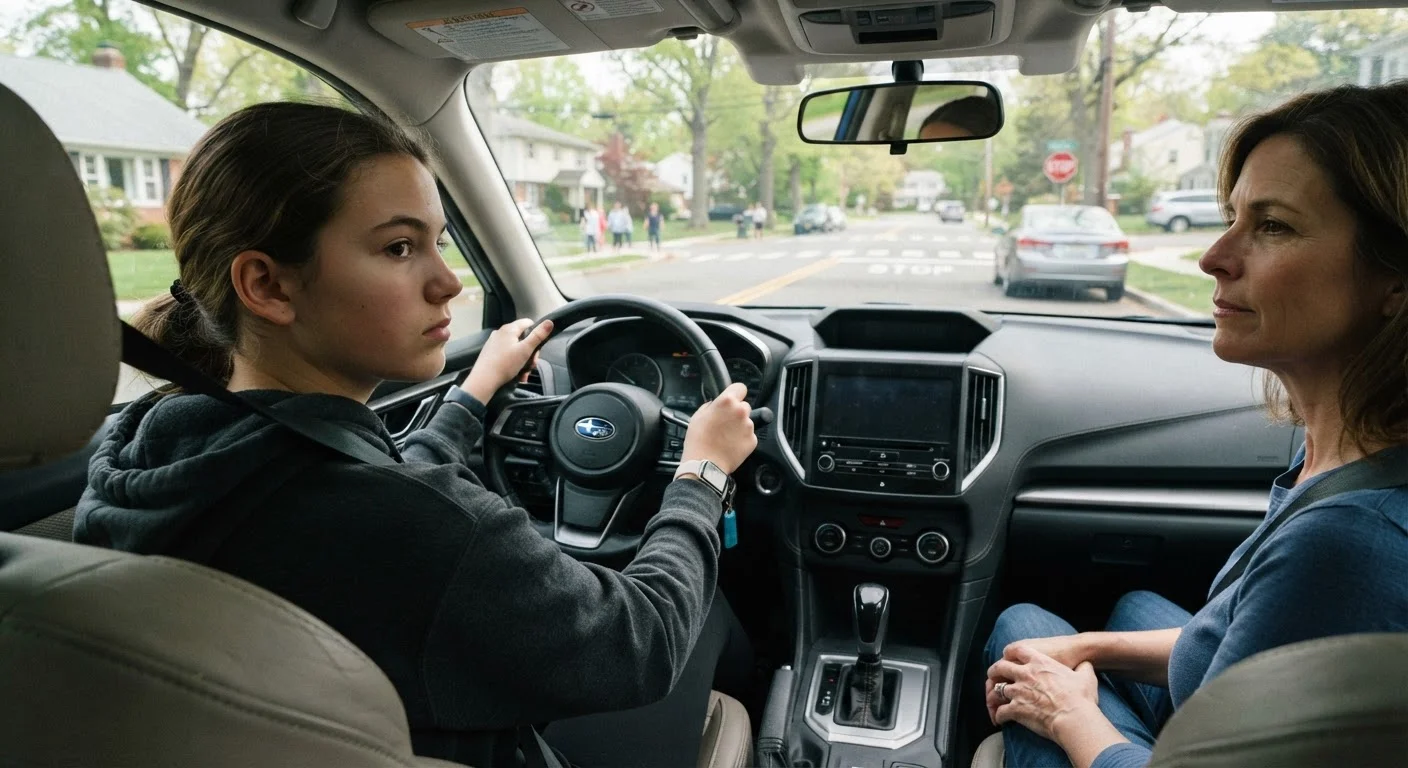
Photo credit: TrendingExperts.net
In this article
Graduated licensing programs phase in driving privileges for a reason. Here's how the tiered system works and the crash data behind its design.
Key Takeaways
- Graduated licensing systems use three stages: learner's permit, restricted license, and full license.
- Crash rates among 16- and 17-year-olds are significantly higher than for older, more experienced drivers.
- Nighttime driving and peer passengers are two of the highest-risk conditions specifically targeted by GDL restrictions.
- Research consistently shows GDL programs reduce teen crash fatalities when states implement them fully.
- Restrictions are designed to build experience incrementally, not to penalize young drivers.
Why Phasing In Privileges Makes Sense
Driving is one of the most complex tasks most people perform routinely - it demands split-second decisions, spatial awareness, anticipation of other drivers' behavior, and the ability to manage distractions, all simultaneously. Adults who already have years of experience doing these things unconsciously tend to forget how demanding the learning curve actually is.
For teenage drivers, that curve is steepest precisely when their crash risk is highest. According to the IIHS, per mile driven, crash rates for 16-year-olds are roughly three times higher than for drivers 20 and older. The first six to twelve months after licensure are especially dangerous.
Graduated Driver Licensing addresses this by structuring the learning process. Instead of handing a new 16-year-old full driving privileges on the day they pass a road test, GDL programs build experience under lower-risk conditions first. Think of it as training wheels that don't show - visible restrictions that quietly prevent a new driver from being placed in situations that exceed their current skill level.
3x
Higher crash rate for 16-year-olds vs. drivers 20+
Per mile driven, 16-year-olds have roughly three times the crash rate of drivers aged 20 and older, according to IIHS data.
44%
Reduction in fatal crashes linked to GDL programs
Studies cited by the IIHS and the Centers for Disease Control and Prevention suggest comprehensive GDL laws are associated with meaningful reductions in teen driver fatalities.
50 states
U.S. states with some form of GDL system
All 50 states and the District of Columbia have enacted graduated licensing laws, though the specific requirements and restrictions differ significantly by jurisdiction.
The Three Stages and What Each Is Designed to Accomplish
While every U.S. state designs its own GDL system, most follow a broadly similar three-stage structure:
- Learner's Permit: The driver must always have a licensed adult supervisor present. This stage is about accumulating supervised hours on real roads - not just parking lots. Many states require a minimum of 30 to 50 supervised hours, sometimes specifying a portion must be in nighttime conditions.
- Provisional (Intermediate) License: The teen can drive unsupervised during certain hours but faces restrictions on late-night driving and the number of peer passengers allowed. These two restrictions address the statistically highest-risk scenarios for this age group.
- Full License: Restrictions are lifted, typically at age 17 or 18, provided the driver has maintained a clean record and met time-in-stage requirements.
Each stage is a deliberate ramp-up. The learner stage builds fundamental car control and judgment with a safety net in place. The provisional stage introduces independent driving while keeping the most dangerous conditions off the table until more experience is gained. For new drivers who want to understand the broader skill set they're building, a foundation for new drivers is a useful companion read.
The Science Behind the Specific Restrictions
The two most common GDL restrictions - nighttime driving limits and passenger caps - are not arbitrary. Both target conditions with documented crash risk elevation for teen drivers specifically.
Nighttime Driving
Darkness reduces visibility for all drivers, and fatigue compounds that risk later in the evening. As explored in depth in our piece on why night driving is more dangerous than most people realize, the hazards are real across age groups - but inexperienced drivers face an added layer of difficulty reading road cues and reacting appropriately. Most state GDL programs prohibit unsupervised driving between roughly 10 p.m. and 5 a.m. during the provisional stage.
Peer Passenger Limits
Research has consistently shown that teen crash risk increases with each additional teenage passenger in the vehicle. Peer presence affects risk-taking behavior and introduces powerful social distractions. A driver who would make a measured decision alone may behave differently when trying to impress or interact with friends. Limiting passengers during the provisional stage reduces this social pressure while driving habits solidify.
Other common restrictions - such as cell phone prohibitions and seatbelt requirements applying to all occupants - reinforce behaviors that should persist for life, not just the provisional stage.
Talk Through Restrictions With Your Teen
GDL rules are more effective when teens understand the reasoning behind them, not just the penalty for breaking them. Explaining why nighttime driving and peer passengers increase crash risk - rather than framing restrictions as arbitrary rules - helps young drivers internalize safer habits. That mindset is more durable than compliance driven by fear of losing a license.
What GDL Programs Don't Replace
Graduated licensing sets a legal minimum, not a complete driver education. Passing each stage means a driver has met regulatory thresholds - it doesn't mean they've mastered every condition they'll encounter. Real-world driving involves weather, aggressive drivers, highway merges, and dozens of other variables that a structured licensing program can only partially simulate.
This is why the habits built during the GDL period matter beyond just avoiding a ticket. Defensive driving principles - scanning ahead, managing following distance, anticipating hazards - are skills that take years to fully internalize, and they don't stop being relevant once restrictions are lifted.
For teens and parents alike, it helps to understand that GDL restrictions are a floor, not a ceiling. A provisional license holder can legally drive with one passenger at noon - but choosing lower-risk routes, avoiding high-traffic periods, and building experience incrementally beyond what the law requires will produce a safer driver faster than treating every permitted situation as a challenge to attempt immediately.
This article provides general educational information about driver licensing systems. For the specific rules that apply in your state, consult your state's Department of Motor Vehicles or equivalent licensing authority.
Frequently Asked Questions

Author
Automotive Editorial Team
Automotive Editorial Team is the collective byline for our editorial team and contributor network. Articles published under this byline or an editorial pen name are researched, written, and reviewed according to our editorial standards for clarity, consistency, and independence before publication.
View all articles →