
Reading Your Tire Tread: When Worn Is Actually Dangerous
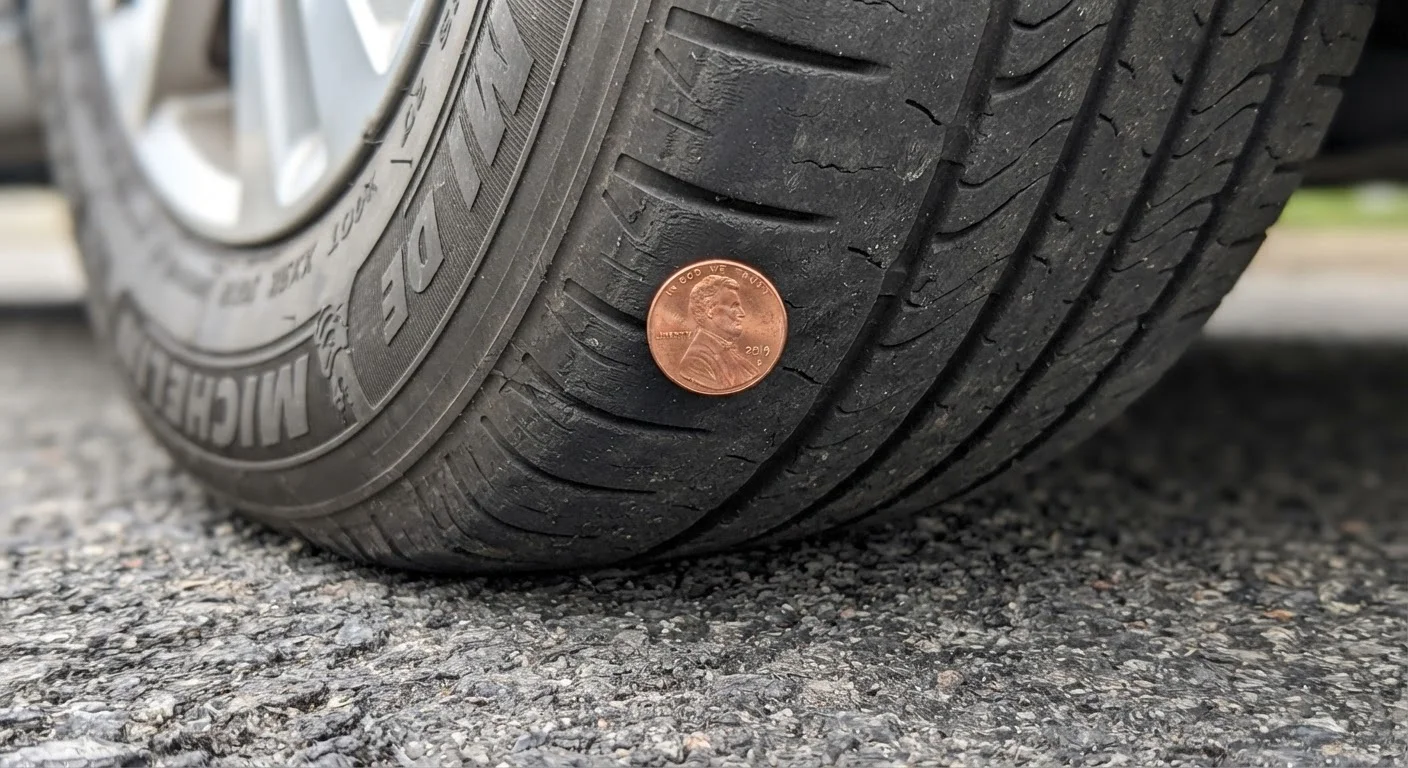
Photo credit: TrendingExperts.net
In this article
The penny test is just the start. Understand tread depth measurements, wear patterns that signal alignment issues, and when tires genuinely need replacing.
Key Takeaways
- Tires become genuinely dangerous at or below 2/32 of an inch of tread depth.
- Uneven wear patterns reveal alignment, inflation, or suspension problems - not just age.
- The penny test is a starting check, but a tread depth gauge gives more reliable measurement.
- Replacing tires in pairs or sets helps preserve vehicle stability and braking balance.
- Regular visual inspection takes only minutes and can catch problems before they become emergencies.
Why Tread Depth Is a Safety Threshold, Not Just a Wear Indicator
Tire tread does one critical job in wet conditions: channeling water away from the contact patch so rubber can grip the road. As tread wears down, that channeling capacity shrinks. Below a certain depth, water has nowhere to go - and the tire begins to ride on a thin film of water rather than the pavement itself, a phenomenon called hydroplaning.
The federally mandated minimum tread depth in the U.S. is 2/32 of an inch, marked on most tires by built-in wear indicator bars. But many safety researchers and tire engineers consider 4/32 of an inch the more meaningful action threshold in rainy or wet conditions. Understanding both numbers - and knowing how to measure them - is what separates a reactive tire check from a genuinely preventive one.
Tire condition also connects directly to other vehicle systems. Worn tires compound the effect of worn brake pads, since grip and stopping force work together. For a broader picture of braking health, see what brake wear sounds and sensations are telling you.
What you will need
What You'll Need
Checking tire tread requires minimal equipment and no mechanical training. The tools below cover a basic inspection that any driver can perform at home in a parking lot or driveway.
Tread Depth Gauge
Measures remaining tread depth in 32nds of an inch, giving a precise reading you can act on.
Penny or Quarter
A quick visual check using Lincoln's head or Washington's head as a depth reference.
Flashlight or Work Light
Illuminates tire sidewalls and inner tread grooves to reveal wear patterns and damage.
How to Check Your Tires Step by Step
Perform the coin test as a quick baseline
Insert a penny into a tread groove with Lincoln's head pointing down into the tire. If you can see the top of Lincoln's head, the tread is at or below 2/32 of an inch - the legal minimum in most U.S. states and a threshold where wet-road braking distance increases significantly. For a slightly earlier warning, use a quarter: if Washington's head is fully visible, you're at about 4/32 of an inch and should start planning for replacement.
Confirm depth with a tread gauge
Press the probe of a tread depth gauge into the center of the main tread grooves and read the measurement. Most new tires start at 10/32 or 11/32 of an inch. At 4/32 inch: wet-weather grip is noticeably reduced and replacement should be on your near-term schedule. At 2/32 inch: the tire is at or past the federal wear indicator - replace immediately. Check at least three positions across each tire: center, driver's side shoulder, and passenger's side shoulder.
Identify the wear pattern on each tire
The location of wear tells you what's causing it:
- Center wear (middle of tire worn, edges still have tread): Tire has been consistently over-inflated, forcing the center to carry more contact load.
- Edge wear (both outer edges worn, center fine): Chronic under-inflation, which causes the tire to bow and ride on its shoulders.
- One-sided shoulder wear: A wheel alignment problem - the tire is running at an angle to the road. This also accelerates wear on the other tires.
- Cupping or scalloping (wavy, uneven dips): Usually points to worn shock absorbers or struts causing the tire to bounce rather than roll smoothly.
Inspect the sidewalls and overall condition
Tread depth isn't the only reason a tire fails. Run your eye along the sidewall of each tire and look for:
- Bulges or bubbles: Indicate internal structural damage, often from a hard impact. A bulging sidewall is a blowout risk and the tire should be replaced without delay.
- Cracking or dry rot: Fine surface cracks, especially in the sidewall grooves, signal rubber degradation. Tires can crack with age even if tread depth looks acceptable - most manufacturers suggest evaluating tires older than six years regardless of mileage.
- Embedded objects: Screws or nails in the tread may be holding air temporarily but should be evaluated by a tire technician.
Decide on a replacement strategy
If one or more tires need replacement, consider how many to replace at once. Replacing tires in axle pairs (both fronts or both rears together) keeps braking and handling balanced. On all-wheel-drive vehicles, tire manufacturers and many automakers recommend replacing all four at once to avoid damaging the drivetrain - consult your owner's manual for your specific vehicle's guidance. After new tires are mounted, schedule a four-wheel alignment check if any uneven wear pattern was present.
If you find uneven wear patterns during your inspection, this can also be a clue about broader vehicle condition - particularly on a used vehicle. What the odometer doesn't tell you about a used car's condition explains why tire wear patterns are one of the things inspectors look at when evaluating a pre-owned vehicle's true history.
Check Tires Monthly, Not Just Annually
Tread depth and inflation are two sides of the same coin. A tire that loses pressure gradually will wear its edges faster, shortening its usable life. Building a quick monthly check into your routine - tread depth, inflation, and a sidewall scan - catches problems long before they become urgent. See how tire pressure affects more than fuel economy for guidance on checking and setting correct PSI.
When to Act - and What Not to Delay
Worn Tires Dramatically Extend Stopping Distance
Independent testing has consistently shown that tires at 2/32 of an inch can take significantly longer to stop on wet roads compared to tires with full tread - sometimes dozens of additional feet at highway speeds. That difference is the margin between a near-miss and a collision. Do not delay replacement once a tire reaches the minimum threshold.
Tires are part of a broader maintenance rhythm. If you're unsure where tire checks fit into your overall vehicle care schedule, routine maintenance schedules lays out what your vehicle typically needs and when. Your dashboard's TPMS (Tire Pressure Monitoring System) light can also alert you to significant pressure loss, though it won't detect gradual tread wear - for a full explanation of dashboard warnings, see the plain-English dashboard warning light guide.
Sidewall Damage Is Never a Minor Issue
A bulge, bubble, or deep cut in a tire's sidewall cannot be patched or repaired. The structural integrity of the tire is compromised, and continued driving risks a sudden blowout. If you spot sidewall damage, treat it as an immediate safety concern and have the tire inspected by a qualified technician before driving further.
This article provides general educational information about tire maintenance. For guidance specific to your vehicle, consult your owner's manual or a qualified tire or automotive technician.

Author
Automotive Editorial Team
Automotive Editorial Team is the collective byline for our editorial team and contributor network. Articles published under this byline or an editorial pen name are researched, written, and reviewed according to our editorial standards for clarity, consistency, and independence before publication.
View all articles →