
New Car vs. Used Car: A Framework for Thinking Through the Decision
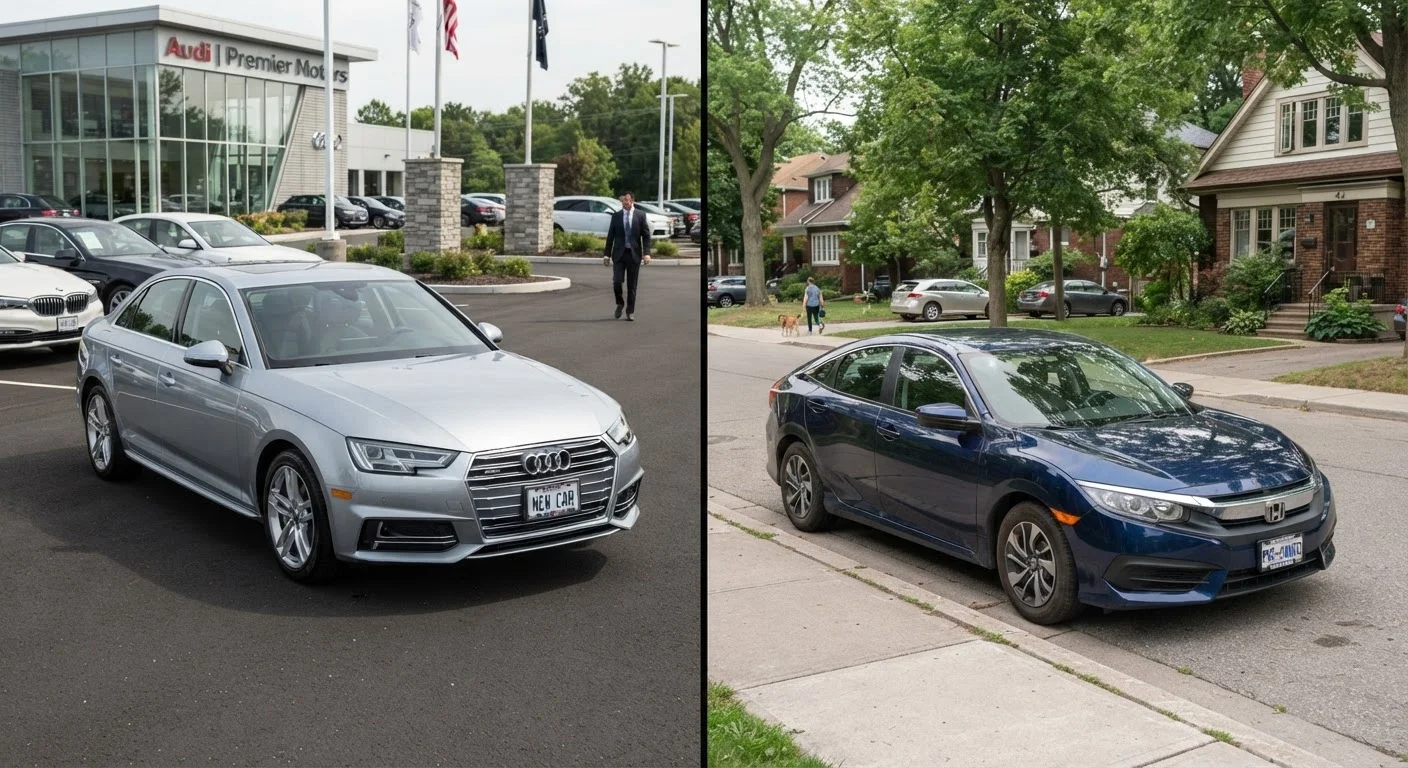
Photo credit: TrendingExperts.net
In this article
Compare the real financial and practical differences between buying new and buying used so you can weigh what matters most to you.
Key Takeaways
- New cars cost more upfront but come with warranties, latest safety tech, and predictable maintenance costs.
- Used cars typically offer lower purchase prices but require closer scrutiny of condition and history.
- Depreciation hits hardest in the first two to three years, which benefits used-car buyers.
- Your credit profile, driving habits, and risk tolerance all shape which option makes more sense.
- Neither choice is universally better - the right answer depends on your specific financial situation.
The Core Trade-Off: Price vs. Predictability
The most straightforward difference between a new and used car is the sticker price - but that number tells only part of the story. A new vehicle comes with a manufacturer's warranty (typically three years or 36,000 miles for basic coverage, often longer for the powertrain), meaning unexpected repair costs are largely buffered for the early ownership period. A used car shifts that financial risk to the buyer from day one.
Predictability has real monetary value. When you buy new, you have a clearer picture of what the next few years of ownership will cost - scheduled maintenance intervals are known, parts are under warranty, and you're less likely to face a surprise $2,000 repair six months in. With a used vehicle, condition varies enormously, and even a thorough inspection can't catch every future problem. That uncertainty is the trade-off for paying less upfront.
For a fuller picture of how ownership costs accumulate over time, see the complete financial roadmap to car ownership.
Depreciation: Why the Used Buyer Often Wins on Value
New vehicles depreciate rapidly. Industry data has long shown that a car can lose a significant portion of its value within the first few years of ownership - often the steepest drop occurs in years one through three. When you buy used, someone else has absorbed that initial depreciation hit, meaning you're paying closer to the vehicle's stabilized market value.
This is one of the strongest financial arguments for used cars. A three-year-old vehicle in good condition may cost substantially less than its new equivalent while retaining most of its practical usefulness - similar reliability, similar features, and often the same core technology. The gap narrows if you're comparing a new base trim to a well-equipped used version of a comparable model.
| New Car | Used Car | |
|---|---|---|
| Purchase Price | Higher - full retail market value | Lower - depreciation absorbed by prior owner |
| Depreciation Risk | Buyer absorbs initial steep drop | Most depreciation already occurred |
| Warranty Coverage | Full manufacturer warranty included | Limited or none (CPO adds some coverage) |
| Maintenance Predictability | High - known service schedule, warranty buffer | Variable - depends on vehicle condition and history |
| Insurance Cost | Typically higher; lender may require full coverage | Often lower; more coverage flexibility |
| Financing Rates | Generally lower interest rates available | Rates tend to be somewhat higher |
| Pre-Purchase Due Diligence | Simpler - no history to verify | More complex - history, inspection, title check required |
| Safety Technology | Latest driver-assist and safety features | May lack current technology on older models |
Certified Pre-Owned (CPO) programs offered through manufacturer-authorized dealers occupy a middle ground: used vehicles that have passed inspection standards and carry some form of extended warranty coverage. CPO pricing sits above typical used-market prices, but below new, and the added assurance can meaningfully reduce the uncertainty that comes with a standard used purchase.
Financing, Insurance, and the Hidden Cost Picture
Monthly payment comparisons can be misleading without accounting for the full cost structure. New cars generally attract lower interest rates on auto loans - lenders view new vehicles as lower collateral risk. However, because new cars carry higher purchase prices, total loan amounts are larger, and monthly payments are often higher even at a better rate.
Insurance premiums also differ. New vehicles typically cost more to insure because replacement cost is higher and lenders usually require comprehensive and collision coverage. A used car - especially one owned outright - may allow more flexibility in coverage levels, potentially reducing monthly insurance expenses. See how your financing approach affects these calculations: financing vs. paying cash for a car.
Factor in Total Cost of Ownership
Don't compare just the sticker prices. Add up estimated loan interest, insurance premiums, anticipated maintenance, and likely resale value over the period you plan to own the vehicle. A used car with a lower purchase price but higher repair frequency may cost more over three years than a slightly pricier new model with warranty coverage. Running these numbers - even roughly - gives you a much clearer basis for comparison.
If you're weighing leasing as a third path, that comparison has its own financial logic. Buying vs. leasing over the long term breaks down how the numbers stack up across different ownership timelines.
Due Diligence: What Used-Car Buyers Must Do
Buying used requires more homework than buying new. A vehicle history report (checking for accident records, title issues, and odometer readings), a pre-purchase inspection by an independent mechanic, and a title verification are all essential steps - not optional ones. Skipping any of these increases the risk of buying a vehicle with hidden problems that won't surface until after the sale is final.
State lemon laws and consumer protections generally apply more robustly to new vehicles; used-car purchases, particularly private-party sales, carry fewer automatic legal protections. Understanding what you're agreeing to before you sign matters significantly. The pre-purchase checklist for used car buyers walks through each of these steps in detail.
New-car buyers have less pre-purchase complexity - the vehicle has no history to investigate - but they face different due diligence tasks: understanding financing terms, evaluating dealer add-ons, and knowing which features are genuinely useful versus upsells. Neither transaction is simple, but the risks are different in kind.

Author
Automotive Editorial Team
Automotive Editorial Team is the collective byline for our editorial team and contributor network. Articles published under this byline or an editorial pen name are researched, written, and reviewed according to our editorial standards for clarity, consistency, and independence before publication.
View all articles →