
What Is a Music Genre, Really?
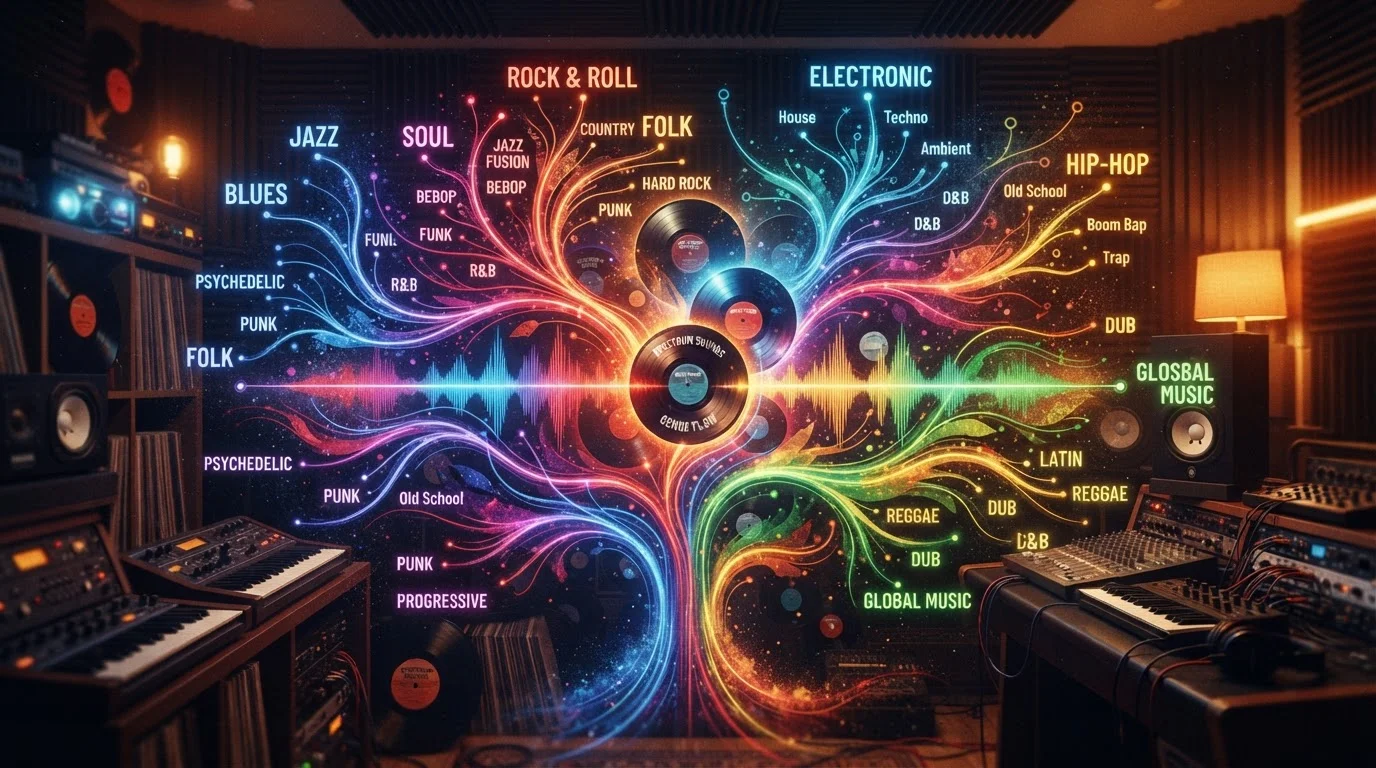
Photo credit: TrendingExperts.net
In this article
Genre labels shape how we discover and talk about music — but where do they come from, and why do they keep splintering?
Key Takeaways
- Music genres are social and cultural constructs as much as they are sonic categories.
- Genres emerge from communities, record labels, critics, and increasingly, streaming algorithms.
- Most genres are fluid - artists regularly blend and transcend their supposed genre boundaries.
- Subgenres and microgenres keep multiplying as audiences become more specialized.
- Genre labels can open doors for discovery but can also limit how artists are perceived.
More Than a Label on a Shelf
Walk into any record store - or scroll through any streaming app - and genre labels are everywhere. Jazz. Hip-hop. Classical. Country. K-pop. They feel like tidy organizing principles, but the reality is considerably messier and far more interesting.
A music genre isn't discovered like a new element on the periodic table. It's constructed - built over time by artists experimenting with sound, communities adopting those sounds as their own, and the music industry figuring out how to market what's happening. Genres are simultaneously sonic, cultural, and commercial phenomena.
That's why understanding what a genre really is matters. It shapes which artists get radio play, which playlists you land on, and even how critics review your work. As our related piece on indie vs. mainstream music explores, the categories we use to talk about music carry real power.
1,300+
Music genres tracked by Spotify
According to research by data analyst Glenn McDonald and the Every Noise at Once project, Spotify's internal genre taxonomy spans over 1,300 distinct genre and microgenre tags.
Top 10
Non-English songs on Billboard Hot 100 (2023)
Billboard reported a record number of non-English language songs charting in the Hot 100's top 10 during 2023, reflecting genre-crossing global music trends.
~50%
Music listening driven by algorithm-curated playlists
Industry analyses from MIDiA Research suggest roughly half of all streaming listening now happens through algorithmically generated or curated playlists, amplifying genre classification's commercial impact.
Where Genres Actually Come From
Most genres don't arrive with a naming ceremony. They coalesce. Blues grew from African American musical traditions in the Deep South and was being played for decades before anyone uniformly called it that. Punk emerged from a collision of frustration, DIY ethos, and stripped-back rock before critics crystallized it as a movement in the mid-1970s.
The forces that solidify a genre tend to include:
- Geographic clusters - scenes in specific cities (Chicago blues, Detroit techno, Nashville country) that develop a distinctive sound
- Record label identity - labels signing artists with similar aesthetics and marketing them as a coherent sound
- Critical writing - journalists naming and theorizing what they're hearing, making the invisible visible
- Fan communities - listeners who form identity around a sound and push it forward
Today, streaming algorithms have joined this list as a major force. Platforms categorize, playlist, and surface music in ways that can cement or even create genre identities. The result is an explosion of microgenres - hyper-specific labels like "vapor soul" or "dark clubbing" - that would have seemed absurd in the era of the record store.
In the 1940s and 1950s, what radio stations called 'race records' - music marketed to Black audiences - eventually became recognized as rhythm and blues, and then fed directly into rock and roll.
In the early 2000s, a wave of artists like Norah Jones defied easy categorization - blending jazz, country, folk, and pop into something the industry eventually filed under 'adult contemporary' for radio purposes.
On streaming platforms, mood-based playlists like 'Chill Vibes' or 'Late Night Drives' often bundle artists from completely different traditional genres - indie folk, lo-fi hip-hop, and ambient electronic - into the same listening experience.
Why Genres Keep Splintering - and Blurring
Genre fragmentation isn't new, but it has dramatically accelerated. The internet gave every niche a megaphone, and streaming gave every niche a playlist. What this means in practice is that the broad umbrellas of the past - rock, pop, country - now shelter dozens of distinct subcultures that may share little beyond a distant ancestor.
At the same time, genres are blurring at the edges like never before. Artists like Bad Bunny move fluidly between reggaeton, trap, and experimental pop. Beyoncé's Cowboy Carter interrogated country's cultural boundaries with precision and intention. The genre lines that once organized radio formats feel increasingly provisional.
This is partly why global sounds are reshaping what American audiences think of as mainstream. As explored in our piece on K-pop, Afrobeats, and Latin music, genre itself is now a cross-cultural conversation, not a one-way broadcast.
The experience of listening - whether on vinyl or a streaming app - also colors how we perceive genre. Our feature on the vinyl revival digs into how the format shapes the feeling.
Genre as Identity - and Its Limits
For many listeners, genre affiliation is deeply personal. Being a metalhead, a hip-hop head, or a country music loyalist isn't just about sonic preference - it's about community, values, and often heritage. Genre can be a powerful marker of who you are and where you come from, a theme we explore further in our article on music and identity.
But genre labels also carry limitations. They can pigeonhole artists into boxes that constrain their reach. They can carry racial and cultural baggage - rock and roll's roots in Black American music were obscured for decades by how the genre was marketed and credited. And they can create gatekeeping dynamics where fans police authenticity in ways that exclude as much as they include.
The healthiest way to think about genre may be as a starting point rather than a destination. Use it to find music you might love. Then let the music take you somewhere the label never predicted.
“Genre is a useful fiction. It helps the music industry organize itself and helps listeners navigate an ocean of sound - but the best music always lives at the edges of whatever box you try to put it in.”
— Ted Gioia, Music historian and author of 'The History of Jazz' and 'Music: A Subversive History'
Frequently Asked Questions

Author
Entertainment Editorial Team
Entertainment Editorial Team is the collective byline for our editorial team and contributor network. Articles published under this byline or an editorial pen name are researched, written, and reviewed according to our editorial standards for clarity, consistency, and independence before publication.
View all articles →