
Regional Sounds: How Geography Still Shapes American Music
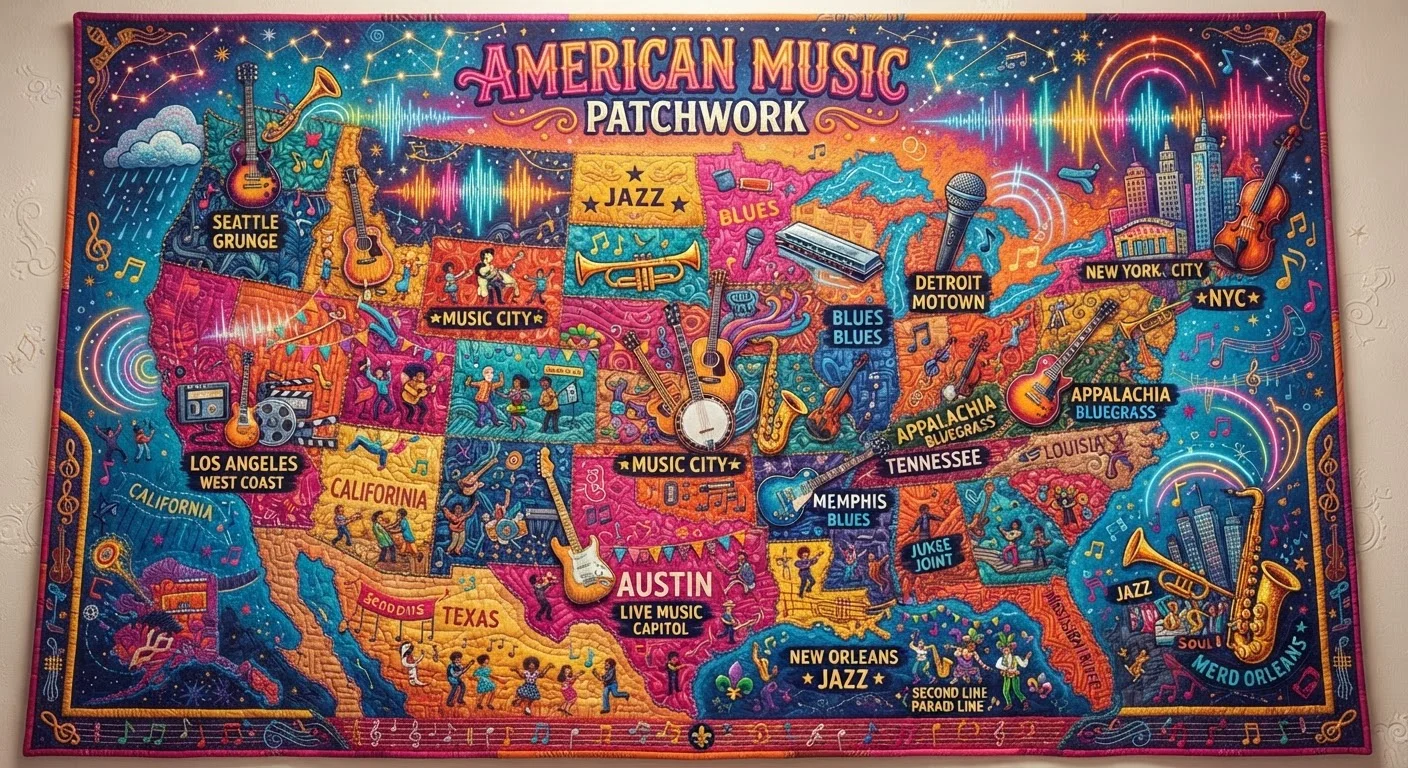
Photo credit: TrendingExperts.net
In this article
Nashville, New Orleans, Detroit, and Compton each gave the world distinct sounds. Explore how place continues to shape American musical identity.
Why Place Still Matters in an Age of Streaming
In an era when any song on Earth is one tap away, it might seem like geography would have lost its grip on music. Yet the sounds that define American popular music - country, blues, jazz, hip-hop, soul, Tejano - were all born in specific places, shaped by local economies, migrant communities, and the particular texture of daily life in those spots. That rootedness hasn't disappeared; it's evolved.
Streaming has made regional music globally accessible, but it hasn't erased the creative ecosystems that generate it. Musicians in Atlanta, Houston, and Chicago still draw on distinctly local studio cultures, slang, production styles, and social histories. As explored in our look at what streaming didn't change, some cultural fundamentals prove remarkably durable - and regional identity is one of them.
| Birthplace of Jazz | New Orleans, Louisiana (early 1900s) (Smithsonian National Museum of American History) |
| Nashville's Music Row established | Early 1950s (Country Music Hall of Fame) |
| Motown Records founded | Detroit, 1959 (Motown Museum) |
| Chopped-and-screwed style originated | Houston, Texas - DJ Screw, early 1990s (Houston Press music archives) |
| Atlanta trap music emerged | Early 2000s (Rolling Stone, genre history coverage) |
Landmark Sounds and the Cities Behind Them
Certain American cities have effectively trademarked a genre. Nashville became synonymous with country music through a combination of the Grand Ole Opry, Music Row's publishing infrastructure, and a pipeline of songwriting talent stretching back decades. Even as country's audience has shifted - urban listeners are tuning in in growing numbers - Nashville remains the genre's creative and commercial center.
New Orleans gave the world jazz in the early 20th century, a fusion of African rhythms, French Creole culture, and brass band traditions that transformed global music. The city's second-line parade culture and Mardi Gras Indian traditions continue to nourish contemporary musicians rooted in that lineage.
Detroit's Motown sound of the 1960s was inseparable from the city's Black working-class ambition during the auto-industry boom - polished, aspirational, and built on an almost factory-like system of songwriting and production. Later, Detroit birthed techno, a genre born directly from the city's post-industrial landscape.
Compton and South Central Los Angeles gave rise to West Coast gangsta rap in the late 1980s, a genre that narrated the realities of urban poverty, policing, and survival with visceral directness. That tradition connects to the broader story examined in the long road from blues to hip-hop.
Second Line
A New Orleans parade tradition in which a brass band leads mourners or celebrants through the streets. The 'second line' refers to the community members who follow, dancing and waving handkerchiefs. It remains a living cultural institution.
Chopped and Screwed
A remixing technique pioneered in Houston that slows down music and skips or repeats beats to create a syrupy, hypnotic effect. DJ Screw popularized it in the early 1990s.
Trap
A subgenre of hip-hop originating in Atlanta characterized by hi-hats, heavy 808 kick drums, and lyrics often referencing street life. It became globally dominant in the 2010s.
Drill
A hard-edged hip-hop style that emerged from Chicago's South Side in the early 2010s, known for dark, menacing production and unflinching lyrical content about urban violence.
Motown Sound
A polished, pop-oriented R&B style developed at Motown Records in Detroit during the 1960s, characterized by sophisticated arrangements, gospel-rooted vocal harmonies, and crossover commercial appeal.
Tejano
A music style rooted in the Texas-Mexico border region blending Mexican folk traditions with accordion-driven conjunto, country, and pop influences. It reflects the bicultural identity of Tejano communities.
Regional Identity as a Living Force
Regional sounds aren't museum pieces. Atlanta's trap music redefined hip-hop's rhythmic vocabulary in the 2010s and continues to influence producers worldwide. Chicago's drill scene sparked a global movement. Houston's chopped-and-screwed aesthetic - created by DJ Screw in the 1990s - remains a living influence on hip-hop production aesthetics years after his passing.
What makes these sounds distinctly regional is often a combination of factors: local producers who share techniques, venues that cultivate specific communities, radio stations that champion homegrown artists, and cultural experiences unique to that geography. Music and identity are deeply intertwined - a theme worth exploring further in how music becomes a marker of who we are.
It's also worth noting that American regional sounds now travel outward and mix with global influences flowing in. K-pop, Afrobeats, and Latin music have reshaped the American mainstream even as Nashville and Atlanta assert their own global reach. Geography shapes music, but music also reshapes geography - drawing migration, tourism, and cultural investment back into the places that created it.

Author
Entertainment Editorial Team
Entertainment Editorial Team is the collective byline for our editorial team and contributor network. Articles published under this byline or an editorial pen name are researched, written, and reviewed according to our editorial standards for clarity, consistency, and independence before publication.
View all articles →