
Film Festival Favorites That Actually Made It to Mainstream Audiences
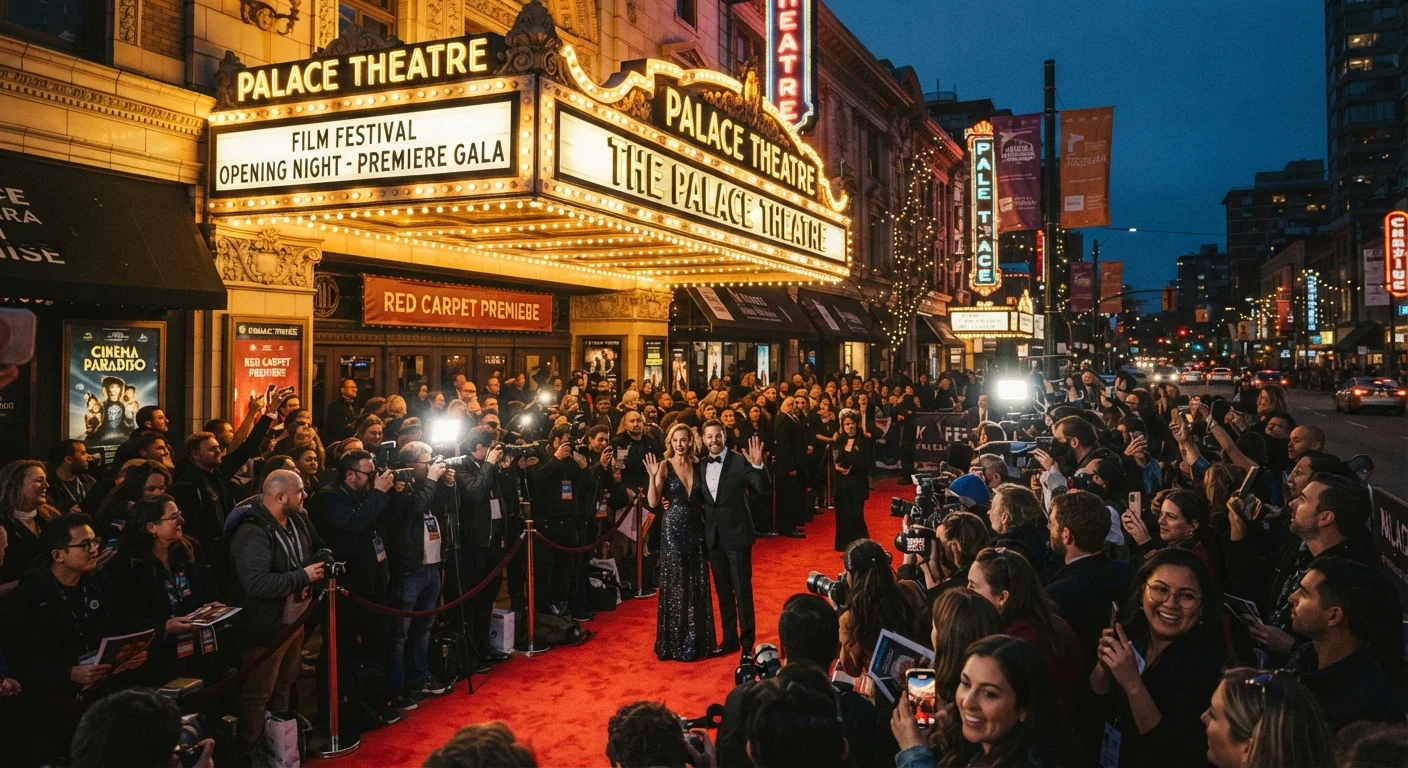
Photo credit: TrendingExperts.net
In this article
Sundance, Cannes, and TIFF shape cinema well before wide release. Explore how festival buzz turns into the titles everyone ends up talking about.
Key Takeaways
- Film festivals function as proving grounds where distributors identify which independent films deserve wide release.
- Strong festival buzz - awards, critical acclaim, audience prizes - is one of the most reliable signals a film will reach mainstream audiences.
- Many Oscar winners and cultural touchstones began their journeys as festival discoveries years before mainstream recognition.
- Not every festival hit translates to box office success, but word-of-mouth from festivals can sustain a film's reputation for years.
- Understanding the festival-to-mainstream pipeline helps viewers find rewarding films before they dominate the conversation.
How the Festival Circuit Shapes What We Watch
Every January, a small Utah ski town becomes the center of the film world. Sundance Film Festival, alongside Cannes in May and the Toronto International Film Festival (TIFF) each September, form the backbone of a global pipeline that decides which independent and foreign-language films eventually land in your local multiplex - or on the streaming platform you opened last night.
The process is less mysterious than it sounds. Distributors, critics, and studio acquisition teams attend these festivals specifically to scout titles. A standing ovation at a TIFF premiere or a Grand Jury Prize at Sundance sends a clear market signal: audiences respond to this. Bidding wars erupt in hotel lobbies. Distribution deals are signed before a film has played its final festival screening. It's equal parts art world and stock market.
For everyday viewers, understanding this pipeline is genuinely useful. The films generating the loudest festival conversation today are very likely the ones critics and friends will be discussing six months from now. Knowing the vocabulary critics use can help you engage more deeply with that conversation when it arrives.
Festivals Are Gatekeepers, Not Guarantees
A film winning at Cannes or generating Sundance buzz doesn't guarantee mainstream success or box office performance. Distribution deals, marketing budgets, and timing all play significant roles in whether a festival darling reaches broad audiences. Some critically celebrated festival films remain beloved cult titles seen by relatively few - which, for certain films, is entirely part of their appeal.
Films That Traveled From Festivals to the Cultural Mainstream
Little Miss Sunshine (Sundance 2006)
Little Miss Sunshine is perhaps the defining example of the Sundance-to-mainstream pipeline working exactly as intended. The film premiered at Sundance in January 2006, where Fox Searchlight purchased it for a then-record $10.5 million. By summer, it had become a genuine theatrical phenomenon, earning over $100 million worldwide on a $8 million budget. Its ensemble cast, road-trip structure, and bittersweet humor made it accessible without sacrificing the indie sensibility that won over festival crowds first.
Fox Searchlight's $10.5 million Sundance acquisition turned a modest indie into a $100 million cultural moment.
Parasite (Cannes 2019)
Bong Joon-ho's Parasite arrived at Cannes 2019 and walked away with the Palme d'Or - the festival's highest honor - by unanimous jury decision. What followed was a textbook crossover: a slow international rollout amplified by relentless critical praise, culminating in four Academy Awards including Best Picture, the first non-English-language film to win that prize. Parasite demonstrated that a foreign-language film with sharp class commentary could genuinely capture mainstream American attention when the conditions aligned.
Parasite's unanimous Palme d'Or win signaled a crossover trajectory that ended with a historic Best Picture Oscar.
Whiplash (Sundance 2014)
Damien Chazelle's ferocious music-school drama Whiplash began as a 19-minute short before expanding into a feature that premiered at Sundance 2014, winning both the Grand Jury Prize and Audience Award - a rare double. Sony Pictures Classics acquired it, and the film went on to earn three Academy Awards, including Best Supporting Actor for J.K. Simmons. Its propulsive energy and contained scope made it the kind of film that festival audiences champion loudly and general audiences discover with equal enthusiasm.
Whiplash's Sundance double-prize win - Grand Jury and Audience Award - predicted its rapid Oscar ascent.
12 Years a Slave (TIFF 2013)
Steve McQueen's devastating historical drama premiered at TIFF 2013 and won the People's Choice Award - historically one of the festival's strongest predictors of awards-season momentum. That momentum was validated fully when the film won Best Picture at the Academy Awards. TIFF's People's Choice Award has since become closely watched by industry insiders as a reliable bellwether: previous winners include American Beauty, Slumdog Millionaire, and Green Book, all of which went on to Best Picture wins.
TIFF's People's Choice Award has become one of the most reliable early predictors of Oscar Best Picture success.
Get Out (Sundance 2017)
Jordan Peele's debut feature arrived at Sundance 2017 already carrying significant anticipation, and it delivered spectacularly. A social horror film that blended genuine scares with pointed racial commentary, Get Out generated the kind of urgent, talk-about-it-immediately reaction that distributors dream of. Universal released it wide in February 2017, and it earned over $255 million globally against a $4.5 million budget. Peele won the Academy Award for Best Original Screenplay - the first Black writer to win solo in that category.
Get Out turned a $4.5 million festival premiere into $255 million worldwide, redefining what social horror could achieve.
Moonlight (TIFF 2016)
Barry Jenkins's intimate portrait of a young Black man's identity and self-discovery premiered at TIFF 2016 to rapturous reviews. A24's careful rollout - limited screens, expanding over weeks - allowed word-of-mouth to build organically. The strategy paid off: Moonlight won Best Picture at the Academy Awards in one of the ceremony's most memorable moments. The film exemplifies how a festival pedigree, combined with patient distribution, can carry a small, quietly radical film to the center of mainstream cultural conversation.
A24's slow-burn distribution strategy let Moonlight's festival reputation build into a Best Picture victory.
What Makes a Festival Film Cross Over?
Not every Palme d'Or winner fills seats at the local AMC, and not every Sundance breakout becomes a household title. Crossover success tends to cluster around a few factors: a universally resonant story, accessible emotional stakes, and a marketing campaign that reframes a challenging film for wider audiences. Star power helps, too - many festival films gain traction precisely because a recognizable name attached post-acquisition lends them legitimacy.
Distribution strategy matters enormously. A limited platform release that expands city by city, building word-of-mouth, has historically outperformed a wide drop for smaller independent films. Streaming has added another dimension to this equation - some festivals now premiere films that will bypass theaters entirely, something explored in depth in our look at why films increasingly skip the theatrical window.
If you're curious about diving into the kinds of foreign-language and unconventional films the festival circuit champions, getting into world cinema doesn't have to feel intimidating. The festival-to-mainstream path has never been more navigable for curious viewers willing to follow the buzz early.
Track Festival Awards to Spot Future Hits
Following the major prize announcements from Sundance (January), Cannes (May), and TIFF (September) is one of the most reliable ways to identify films worth your time well before they hit wide release. Many are available through arthouse cinemas or streaming platforms within months of their festival debut. Setting a simple reminder when award lists drop can put you ahead of the curve.

Author
Entertainment Editorial Team
Entertainment Editorial Team is the collective byline for our editorial team and contributor network. Articles published under this byline or an editorial pen name are researched, written, and reviewed according to our editorial standards for clarity, consistency, and independence before publication.
View all articles →