
The Quiet Red Flags Hidden in Product Listings
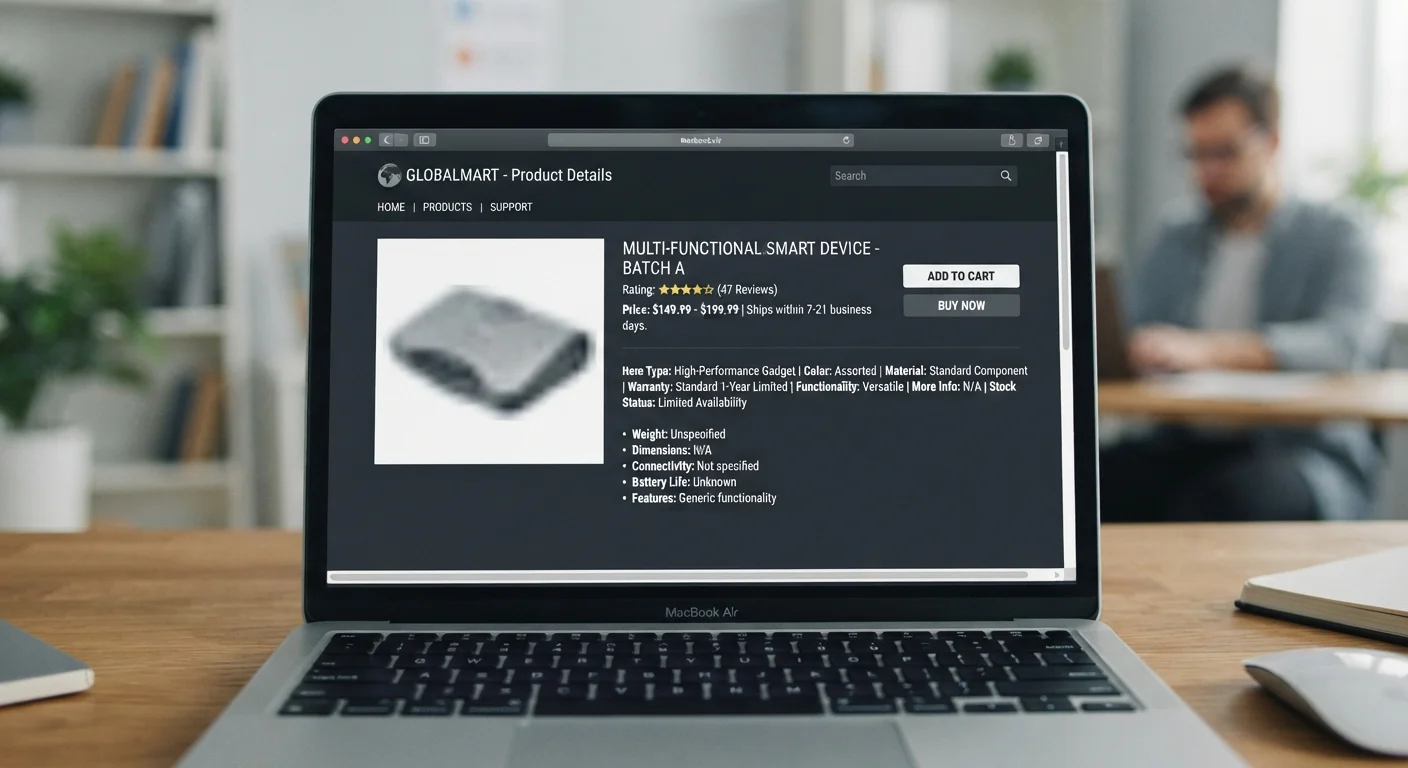
Photo credit: TrendingExperts.net
Vague materials, stock photography, missing dimensions—some warning signs in online listings are easy to miss. Learn what patterns signal a product worth skipping.
Key Takeaways
- Vague material descriptions like 'premium quality' signal a seller avoiding accountability for specific claims.
- Stock photography in place of actual product photos makes it impossible to verify what you'll receive.
- Missing dimensions, weight, or compatibility data are reliable indicators of an incomplete or rushed listing.
- Overly generic product titles often indicate copy-paste listings from wholesale catalogs without seller verification.
- Return policy language buried in fine print or absent entirely shifts all post-purchase risk onto the buyer.
- Unusually high review counts paired with suspiciously uniform praise warrants deeper scrutiny before purchasing.
What Bad Listings Have in Common
Online shopping puts the burden of evaluation almost entirely on the buyer. Unlike an in-store experience where you can handle an item, a product listing is the seller's sole pitch - and how that pitch is constructed tells you a great deal about what's behind it.
The clearest red flags aren't dramatic. They're quiet omissions, deliberate vagueness, and patterns that, once you know to look for them, become difficult to unsee. Understanding what quality actually signals in a product listing can give you a sharper lens before you even read the reviews.
The list below covers the warning signs most shoppers scroll past - and explains exactly what each one might be hiding.
Material descriptions that say nothing
Phrases like "premium quality," "durable material," or "high-grade construction" appear in thousands of listings across every product category. They sound reassuring but carry no actual information. A specific listing should name the material: stainless steel grade, fabric thread count, plastic polymer type, or wood species.
When a seller avoids naming the material, it's often because the actual material wouldn't sell the product. "High-grade plastic" is the claim; "ABS plastic with a 2mm wall thickness" is the fact. The difference matters for durability, safety, and value.
Vague material language is a seller avoiding accountability for a specific, checkable claim.
Stock photos instead of real product images
A listing that uses only manufacturer renders or generic stock photography gives you no way to verify what will actually arrive. Real product photos - ideally showing the item from multiple angles, in use, and next to a reference object for scale - indicate a seller who has handled the product and stands behind what they're shipping.
This matters especially for items where color accuracy, finish quality, or assembly complexity affects satisfaction. Stock imagery can mask manufacturing inconsistencies, color variance, and quality-control issues that real photos would reveal.
Stock photos tell you what the product is supposed to look like - not what you'll actually receive.
Missing or incomplete dimensions
For almost any physical product, dimensions are non-negotiable information. A furniture listing without height, width, and depth measurements. A bag without interior volume or strap drop length. A cable without stated length and connector compatibility. These omissions force buyers to guess - and guessing leads to returns.
Sellers who know their product well include dimensions without being asked. When that information is absent, it can mean the seller hasn't verified the specs themselves, is reselling without firsthand knowledge of the item, or knows the dimensions would disappoint. All three scenarios are reasons for caution. See our guide to reading specification sheets for how to extract what matters from technical data when it is provided.
Missing dimensions force buyers to guess - a risk that falls entirely on the purchaser, not the seller.
Generic, copy-paste product titles
Titles like "Multi-Function Portable Device for Home and Office" or "Premium Kitchen Tool - Great Gift" are generated from wholesale catalog templates, not written by someone who tested or curates the product. These titles are optimized for keyword stuffing rather than accurate description.
A well-written title includes the product category, key specifications, and any relevant compatibility information. It does not contain phrases like "Great Gift," "Hot Sale," or strings of unrelated keywords. The title is often the first signal of how seriously a seller has engaged with what they're actually selling.
A keyword-stuffed title is usually a sign the seller copied a catalog entry without verifying the product.
Vague or buried return policies
A listing that makes return conditions difficult to find - or that uses language like "contact us before returning" without specifying timelines, conditions, or who pays return shipping - puts the buyer in a structurally weak position. Clear return policies protect both parties, and sellers confident in their product generally state them plainly.
Watch for policies that are time-limited in ways that benefit the seller (e.g., a 7-day window on a product that takes two weeks to arrive), that exclude "opened" items without qualification, or that require original packaging in mint condition. These aren't necessarily dealbreakers, but they should factor into your risk assessment.
A vague return policy shifts post-purchase risk entirely onto the buyer before a single item ships.
Review patterns that feel manufactured
A product with hundreds of five-star reviews and an average rating above 4.9 deserves skepticism, not confidence. Authentic review distributions almost always include some critical feedback - because real-world use surfaces real-world problems. Uniform praise, especially when the language across reviews is similar or oddly formal, is a pattern worth questioning.
Look for review recency (a sudden spike of positive reviews), verified-purchase indicators, and the ratio of detailed reviews to one-liners. Star ratings alone are a poor measure of product quality - the distribution and the content of reviews carry far more signal than the aggregate number.
A 4.9-star average with uniform praise is often more suspicious than a 4.3 with honest mixed feedback.
How to Use These Signals Together
No single red flag should automatically disqualify a product, but the more of these patterns appear in one listing, the higher the cumulative risk. A missing dimension paired with stock photos and a hollow return policy is a meaningfully different situation than one vague material claim in an otherwise thorough listing.
Build a Quick Pre-Purchase Checklist
Before completing any online purchase, run through these questions: Does the listing name specific materials? Are the photos clearly of the actual product? Are dimensions listed? Is the return policy easy to find and specific? These four checks take under two minutes and eliminate a large share of risky listings.
When you're unsure whether a listing's claims hold up, cross-referencing the product specification sheet - if one is available - can surface the discrepancies sellers hope buyers won't notice. And before any purchase, it's worth checking whether the reviews themselves are genuine, since inflated or manufactured feedback can make a poor product look credible on the surface.
Developing a habit of reading listings critically - not just for what's present, but for what's conspicuously absent - is one of the most transferable skills a shopper can build.

Author
Shopping Editorial Team
Shopping Editorial Team is the collective byline for our editorial team and contributor network. Articles published under this byline or an editorial pen name are researched, written, and reviewed according to our editorial standards for clarity, consistency, and independence before publication.
View all articles →