
Hydration and Diet: The Overlooked Connection Between Water and What You Eat
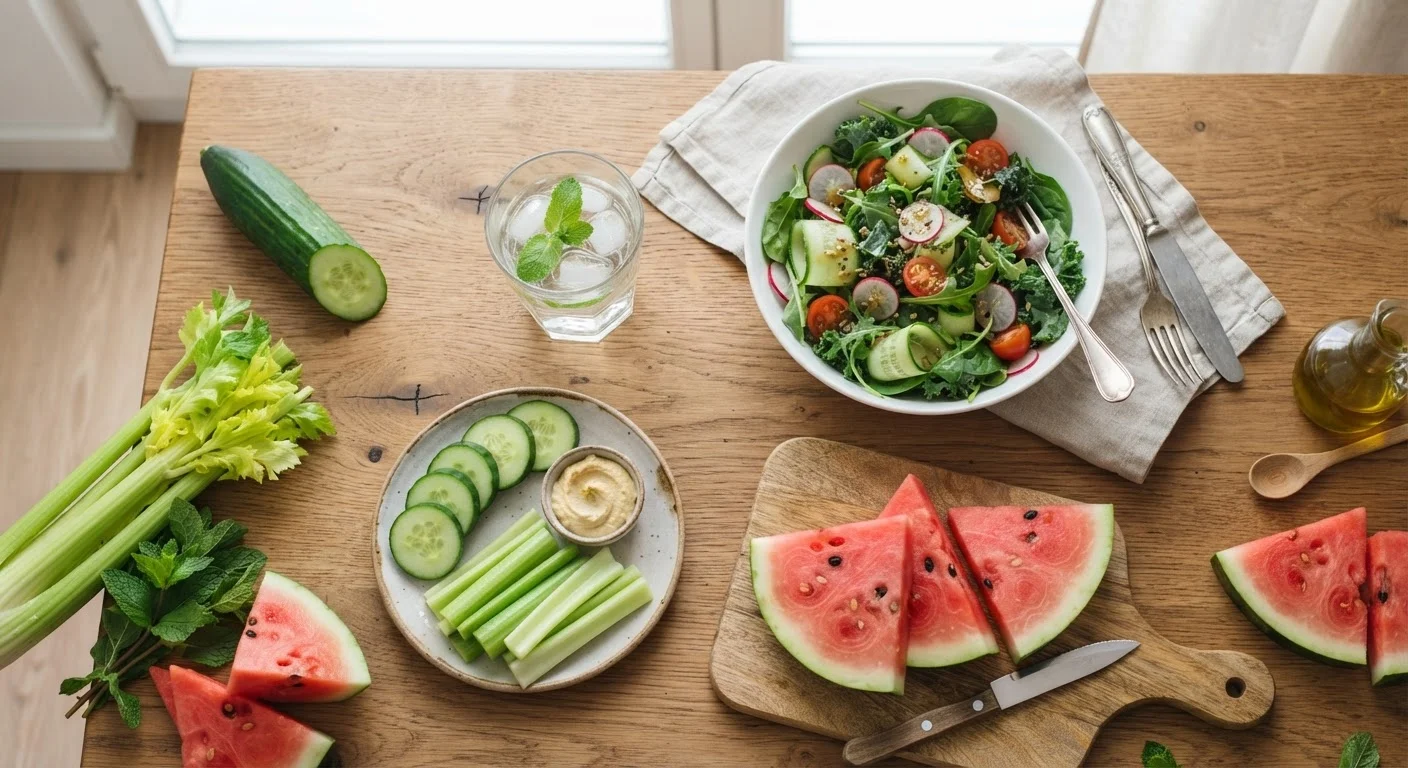
Photo credit: TrendingExperts.net
In this article
How much water you need isn't just about how much you drink. Your food choices play a larger role than most people realize.
Key Takeaways
- Food can account for roughly 20-30% of your total daily fluid intake.
- Fruits and vegetables have the highest water content of any food group.
- High-sodium and high-sugar diets can increase your body's water needs.
- Thirst is not always a reliable early indicator of dehydration.
- Dietary patterns and activity level both influence how much water your body requires.
- Eating more whole, minimally processed foods naturally supports hydration.
Why Water Needs Are About More Than Your Water Bottle
Most hydration advice focuses on how many glasses of water to drink each day. That framing, while well-intentioned, misses an important piece of the picture: a meaningful share of your body's daily fluid comes from the food you eat, not just what you drink.
The National Academies of Sciences, Engineering, and Medicine estimates that food accounts for approximately 20-30% of total daily water intake for most adults. That means what's on your plate - not just in your glass - directly shapes how well-hydrated you are. For people eating diets rich in whole fruits and vegetables, that contribution is even higher.
Understanding this connection gives you a more complete picture of hydration and helps explain why two people can drink similar amounts of water yet experience very different levels of hydration, depending entirely on what they eat. For a broader look at how dietary patterns interact with overall health, see eating patterns that nutrition research consistently supports.
20-30%
Daily water intake from food
The National Academies of Sciences, Engineering, and Medicine estimates that food accounts for approximately 20-30% of total daily water intake for most adults.
>90%
Water content in cucumbers and lettuce
Many common fruits and vegetables - including cucumbers, lettuce, and watermelon - contain more than 90% water by weight, making them significant contributors to hydration.
3,400+ mg
Average daily sodium intake for U.S. adults
According to the CDC, the average American consumes more than 3,400 mg of sodium per day - well above the recommended 2,300 mg limit - which may increase daily fluid needs.
How Food Contributes Water to Your Body
Water doesn't only exist in liquid form - it's locked inside the cellular structure of many foods. When you chew and digest these foods, that moisture is released and absorbed into your bloodstream just as drinking water would be.
Water-rich foods tend to cluster in the produce aisle. Cucumbers, lettuce, celery, tomatoes, zucchini, watermelon, strawberries, and oranges all contain more than 90% water by weight. Even foods that don't taste particularly 'watery' - like cooked oatmeal or soups - deliver substantial fluid because of how they're prepared.
On the other side of the spectrum, highly processed foods, crackers, chips, and dried snacks contain very little water. A diet centered on these foods provides almost no hydration through eating, placing the entire burden on beverages alone.
A person eats a large salad with cucumber, tomatoes, and leafy greens for lunch every day, along with fruit as a snack.
Someone regularly eats meals centered on processed meats, crackers, chips, and packaged convenience foods.
An older adult notices persistent fatigue and dry mouth despite drinking what they think is enough water.
An athlete increases their protein intake significantly during a training season.
Dietary Factors That Increase Your Water Needs
Certain eating patterns don't just fail to contribute water - they actually increase how much your body requires. Sodium is the primary culprit. When sodium intake is high, your body works to dilute it by retaining or drawing in water, often triggering thirst. Diets heavy in processed foods, fast food, and cured meats tend to be high in sodium, subtly raising daily fluid requirements without people realizing why they feel so thirsty.
High protein diets also tend to require more water for proper kidney function, as the body needs additional fluid to process and excrete the nitrogen waste products that result from protein metabolism. Similarly, fiber - while highly beneficial for digestive health - requires adequate fluid to move effectively through the gut. Without sufficient water intake, a high-fiber diet can paradoxically contribute to constipation. You can learn more about fiber's broader role in health in our article on why most Americans fall short on fiber.
Alcohol and high-sugar beverages can displace plain water in the diet and may contribute to fluid imbalance, particularly when consumed in large amounts.
A Simple Habit: Eat Your Water
Starting meals with a broth-based soup or a salad is an easy way to add dietary water before the main course. This strategy, used in some well-studied dietary patterns, can support hydration while also helping you feel more satisfied. It requires no tracking or measuring - just a shift in how you build your plate.
Practical Implications for Everyday Eating
You don't need to track the water content of every food you eat. A simpler approach: prioritize whole, minimally processed foods as the foundation of your diet. This naturally increases your dietary water intake without any deliberate effort.
Building meals around vegetables and fruits - whether fresh, cooked, or in soups and stews - provides hydration alongside nutrients, fiber, and other compounds that support overall health. The produce-forward approach championed by many well-studied dietary patterns isn't just good for vitamins and minerals; it quietly improves hydration too.
Beverages still matter, and plain water remains the most straightforward source of daily fluids. But viewing hydration as a function of your entire diet - rather than a standalone daily water-drinking goal - is a more accurate and useful frame. If you're uncertain whether food labels on packaged items are telling you the full story, our guide on reading between the lines on healthy food marketing can help.
Individual fluid needs vary based on body size, physical activity, climate, and health status. Hydration requirements also shift across the lifespan; for more on how nutritional needs evolve, see how nutrition needs shift from childhood to older adulthood. If you have specific concerns about hydration or a health condition that affects fluid balance, speak with a qualified healthcare provider.
This article is for general informational and educational purposes only and is not a substitute for professional medical advice, diagnosis, or treatment. Always consult a qualified healthcare provider with questions about your health or specific dietary needs.
Frequently Asked Questions

Author
Health Editorial Team
Health Editorial Team is the collective byline for our editorial team and contributor network. Articles published under this byline or an editorial pen name are researched, written, and reviewed according to our editorial standards for clarity, consistency, and independence before publication.
View all articles →