
Finding Your Next Watch When Streaming Libraries Feel Overwhelming
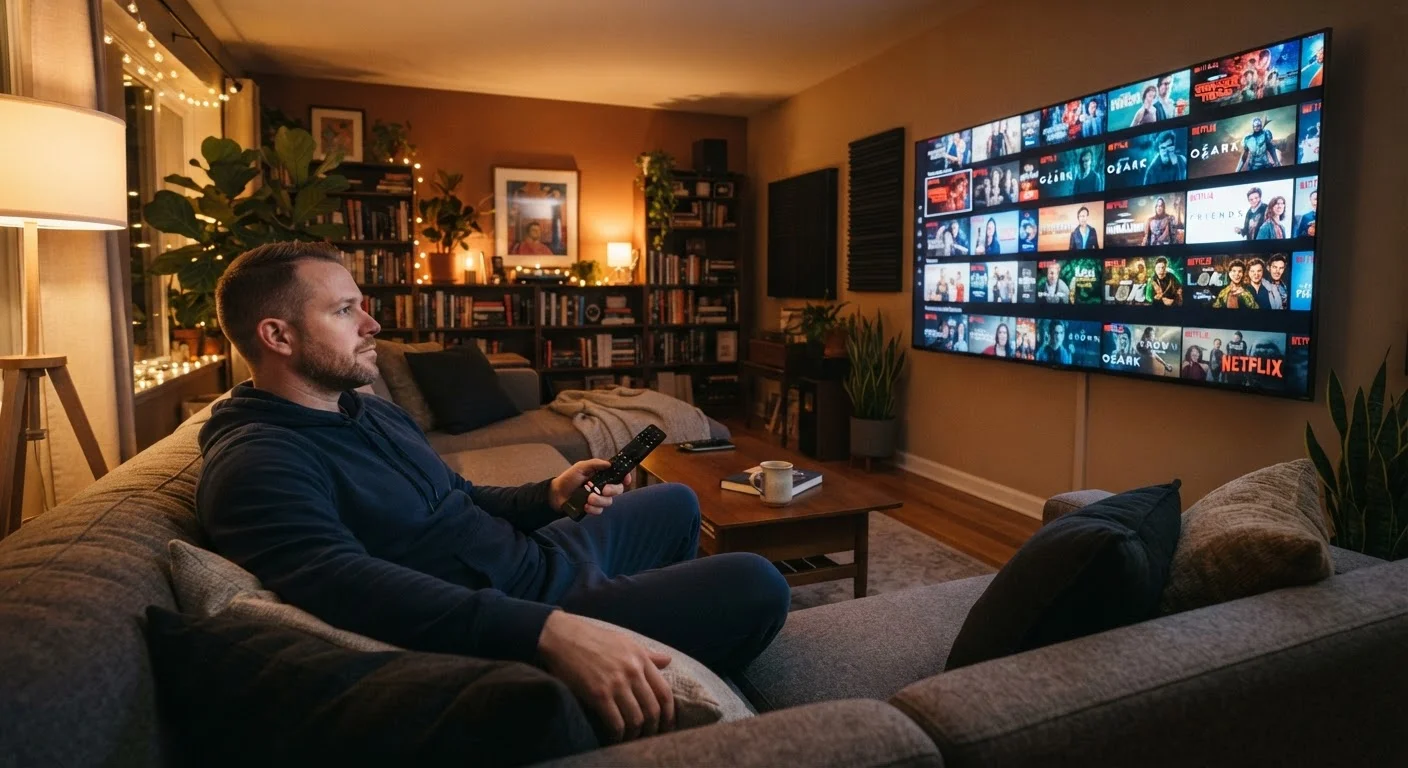
Photo credit: TrendingExperts.net
In this article
Too many choices, not enough time. Practical ways to cut through streaming fatigue and actually land on something you'll enjoy watching.
Key Takeaways
- Streaming paralysis is real - too many options can genuinely make it harder to decide what to watch.
- Knowing your current mood and available time before browsing dramatically narrows the field.
- Trusted outside sources like critic aggregators and friends cut through algorithmic noise effectively.
- A short, curated watchlist prevents the endless scroll and makes decisions faster.
- Genre anchoring - picking a category first - is one of the fastest paths to a satisfying pick.
Why Streaming Libraries Feel Paralyzing (Even When They're Full of Good Stuff)
The phenomenon has a name researchers and psychologists often call "choice overload" - the well-documented tendency for too many options to produce worse decisions and lower satisfaction than fewer, better-curated ones. Streaming platforms have leaned hard into volume as a competitive advantage, and the result for viewers is a library that can feel more like a chore to navigate than a source of enjoyment.
On top of sheer volume, the recommendation algorithms most platforms deploy are built to optimize engagement for the platform - not necessarily satisfaction for you. As one industry observer framed it, the goal is keeping you on the service, which isn't always the same as helping you find what you'd love most. Titles that are heavily promoted tend to be new exclusives or content whose licensing is expiring - factors that have nothing to do with whether they're a great match for your taste tonight.
Understanding this dynamic doesn't require cynicism about streaming services - it just means using them more deliberately. The steps below give you a repeatable system for cutting the field down quickly and landing on something you'll actually be glad you watched. And if you're curious why so many films never make it to a theater at all before landing in these libraries, our explainer on why movies skip theaters and go straight to streaming is worth a read.
The Algorithm Works For Platforms, Not Always For You
Streaming recommendation engines are designed to maximize time spent on a platform, not necessarily to surface the content you'll enjoy most. They heavily favor titles the service wants to promote - new exclusives, licensed hits, or shows with expiring contracts. Treating algorithm suggestions as a starting point rather than a final answer gives you more control over what actually ends up on your screen.
Tools and Habits That Make the Process Faster
The right combination of external resources and a few ingrained habits can reduce the average decision time from 30-plus minutes of aimless scrolling to under ten minutes of purposeful browsing. Here's what you'll want in your corner:
What you will need
Rotten Tomatoes or Metacritic
Check aggregated critic and audience scores to quickly assess whether a title is worth your time.
JustWatch
Search for a specific title and instantly see which streaming services in your region carry it.
A trusted friend or online community (e.g. Reddit's r/televisionsuggestions)
Get human-curated recommendations from people with taste preferences similar to yours.
Try the Two-Minute Rule Before You Scroll
Before opening any streaming app, spend two minutes deciding on two things: your genre and your approximate watch time. Knowing you want a 90-minute thriller versus a 30-minute comedy episode eliminates the vast majority of the library before you even start browsing. It sounds simple, but it consistently shortens decision time.
Once you have your picks shortlisted, keep your watchlist short and intentional. If it starts growing beyond about ten titles, trim it. Most items added in a moment of vague interest never get watched anyway. A tight list creates a real sense of anticipation rather than another wall of thumbnails to scroll past.
One more dimension worth exploring as you dive into international content - which now makes up a significant share of what's recommended on major platforms: if you're new to watching foreign-language titles, our piece on subtitles vs. dubbed audio addresses common misconceptions that might be holding you back from an enormous pool of great storytelling.
Watchlists Can Become Overwhelm in Disguise
Adding every mildly interesting title to a watchlist recreates the same problem you started with - just in a smaller, personal library. Aim to keep your active watchlist under ten titles, removing anything that no longer feels appealing. A smaller, intentional list is far more useful than a sprawling one you never consult.
How to Actually Decide: Step by Step
The following steps work as a repeatable system. Run through them in order the next time you sit down to watch, and notice how much faster - and more satisfying - the process becomes compared to aimless browsing.
Check your mood and time before opening any app
The biggest mistake most people make is opening a streaming app before deciding anything about what they want. Start offline. Ask yourself: Am I in the mood for something light or heavy? Do I want to laugh, be thrilled, or feel something deeper? How much time do I actually have - 30 minutes, 90 minutes, or a full evening?
These two factors - mood and time - immediately eliminate the majority of any streaming library before you browse a single thumbnail.
Pick a genre category, not a title
Rather than searching for a specific film or show, navigate to a single genre category - thrillers, comedies, documentaries, etc. - that matches your mood. Most platforms let you filter by genre from their browse or search menus. This cuts the visible library down dramatically and keeps your choices relevant to how you're actually feeling right now.
Check a critic aggregator for shortlisted titles
Once you have two or three candidates from your genre browse, spend 60 seconds on a site like Rotten Tomatoes or Metacritic. Look at both the critic score and the audience score - they often diverge, and knowing which direction they differ can tell you a lot. A film with strong critic scores but modest audience scores may be slower or more art-house in style; the reverse often signals crowd-pleasing entertainment that critics found formulaic.
You don't need to read full reviews at this stage - scores plus a one-line summary are usually enough to confirm or rule out a pick.
Ask one person - or one trusted community - for a nudge
If you're still undecided between two options, text a friend whose taste you respect or post a quick question in a community like Reddit's r/televisionsuggestions or r/MovieSuggestions. Frame your ask specifically: "I'm in the mood for a tense thriller under two hours - is [Title A] or [Title B] the better pick?" Specific questions get far more useful answers than open-ended ones.
Human recommendations cut through algorithmic noise because they come from real viewing experiences, not engagement data.
Set a five-minute trial rule and commit
Choose your pick and give it five minutes of genuine attention before deciding it's not for you. Many strong films and series have slow or unconventional openings. Five minutes isn't a full commitment - but it's enough to move past the reflexive itch to keep scrolling. If it genuinely isn't working after that window, it's fine to move on. But most of the time, five minutes of patience is all it takes to get hooked.
Add one or two future picks to a tight watchlist
If during your browsing you spotted titles that looked interesting but didn't fit tonight's mood, add only the most compelling one or two to a watchlist. Resist the urge to save everything that looks vaguely good. A concise watchlist is a decision-making tool; an overstuffed one is just another library to feel overwhelmed by. Revisit and trim your list regularly so it stays useful.
For more on making this habit stick, see our guide on building a watchlist you'll actually finish.
If a show you've been following gets canceled mid-run and you want to understand why, it's worth knowing that these decisions are rarely as sudden as they seem. Our overview of how TV show cancellations are decided explains the factors streamers and networks actually weigh - which can also inform which currently-airing shows are safer bets to invest your time in.

Author
Entertainment Editorial Team
Entertainment Editorial Team is the collective byline for our editorial team and contributor network. Articles published under this byline or an editorial pen name are researched, written, and reviewed according to our editorial standards for clarity, consistency, and independence before publication.
View all articles →