
The Hidden Architecture of a Good Sketchbook Practice
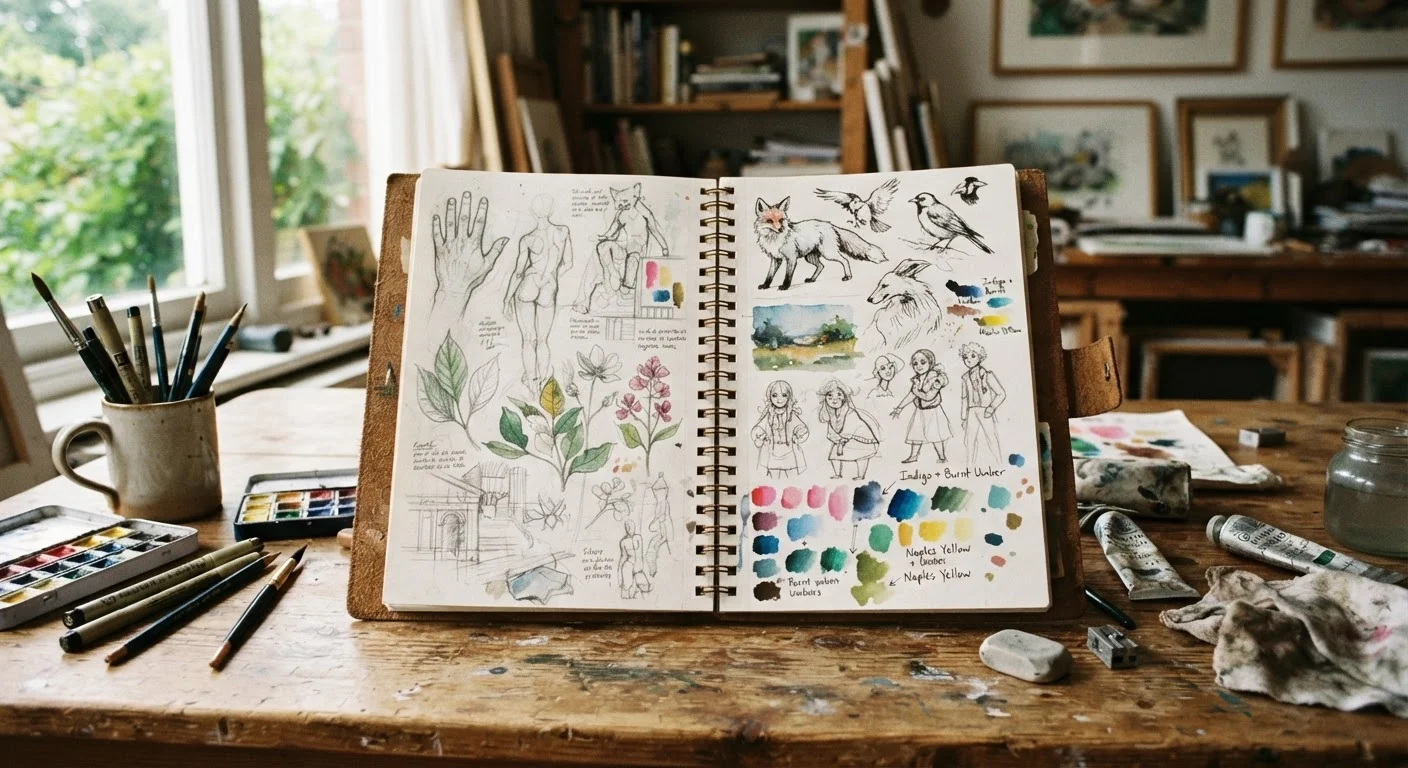
Photo credit: TrendingExperts.net
In this article
A sketchbook is more than a notebook. Explore the habits and approaches that help artists use theirs intentionally over time.
Key Takeaways
- Consistency matters more than quality - showing up regularly builds skill faster than occasional perfect sessions.
- Treating your sketchbook as a private laboratory, not a portfolio, frees you to experiment without pressure.
- Varying your prompts and subjects prevents creative stagnation and sharpens observational skills.
- Reviewing old pages helps you spot genuine growth and identify patterns worth developing further.
- A sketchbook practice is most sustainable when it fits naturally into your existing daily rhythm.
Why a Sketchbook Is Not Just a Notebook
Most people think of a sketchbook as a place to store drawings. But artists who develop strong, lasting practices tend to see it differently - as a thinking tool, a visual diary, and a low-stakes space where ideas can be half-finished, weird, or plain wrong without consequence.
That shift in mindset is the foundation of everything else. When the sketchbook stops being a stage for polished work and becomes a workshop, something important changes: you draw more, experiment more, and - almost paradoxically - improve faster. Understanding what you're actually looking at when you open someone else's pages can help too. The way artists observe and record the world connects directly to how they learn to read visual information in the first place.
The Habits That Build a Real Practice
Structure doesn't stifle creativity - it protects it. Without a little intentional architecture, sketchbooks tend to gather dust after the first week. These practices help prevent that.
If your drawings have felt stiff or awkward lately, it's worth investigating the mechanics. Issues like proportion errors and flat shading have concrete causes that are easier to fix than you'd think, and your sketchbook is the ideal place to work through them.
Growing With Your Sketchbook Over Time
A sketchbook practice compounds. The drawings you make in month three will look noticeably different from the ones you made in week one - but only if you've actually been showing up. Reviewing past pages isn't nostalgia; it's data. You'll see where your line confidence has grown, which subjects you've avoided, and which visual problems keep recurring.
Build in occasional review sessions - even just flipping through a completed book before starting a new one. Treat patterns you notice as information rather than judgment. If your figure drawings always feel stiff, that's not a character flaw; it's your next focus area. The sketchbook, used this way, becomes something genuinely rare: an honest record of how you see the world changing over time.

Author
Entertainment Editorial Team
Entertainment Editorial Team is the collective byline for our editorial team and contributor network. Articles published under this byline or an editorial pen name are researched, written, and reviewed according to our editorial standards for clarity, consistency, and independence before publication.
View all articles →