
Chemical Exfoliants: A Plain-Language Guide to AHAs, BHAs, and PHAs
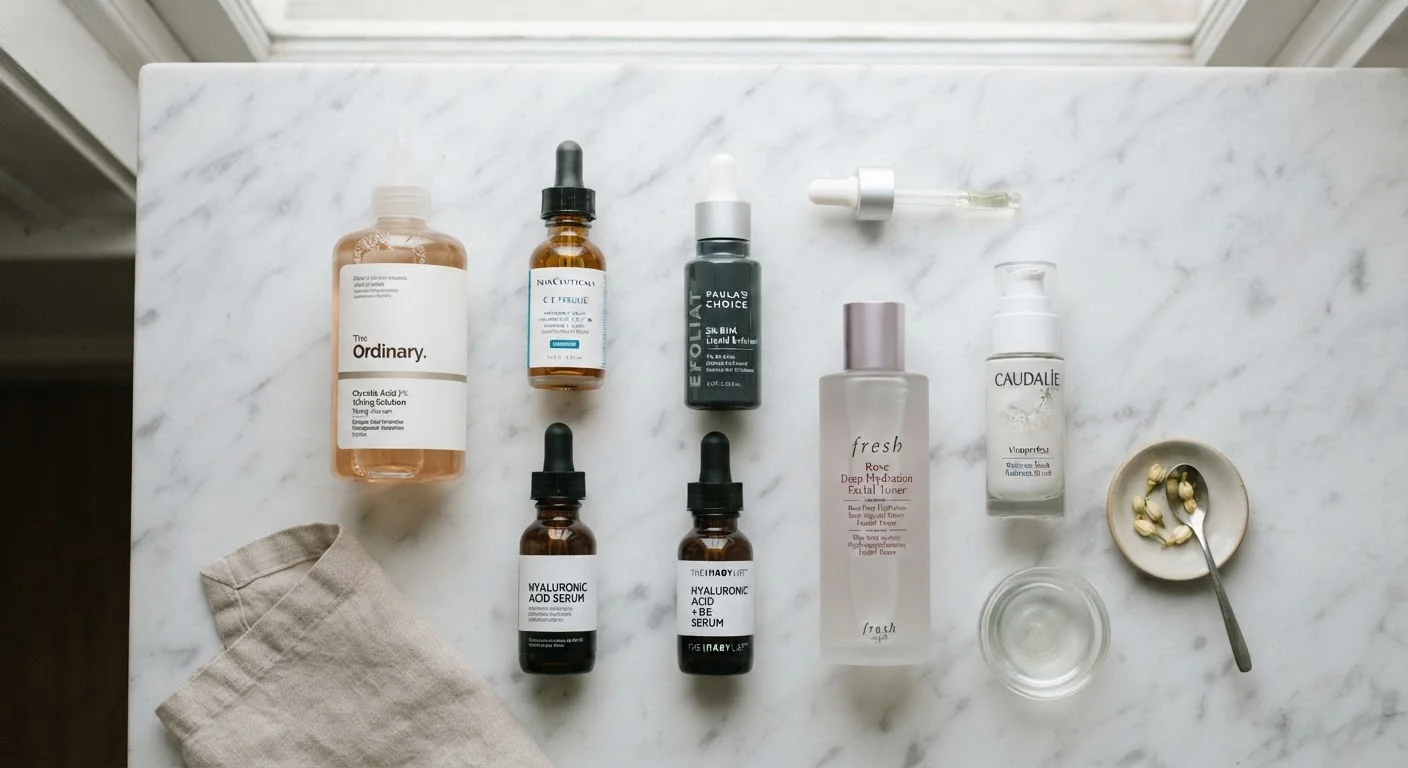
Photo credit: TrendingExperts.net
In this article
AHAs, BHAs, and PHAs each exfoliate differently. This breakdown explains what each type does, who it suits, and how often to use them.
Key Takeaways
- AHAs work on the skin's surface and suit dry or dull skin best.
- BHAs are oil-soluble, making them well-suited for oily, acne-prone, or congested skin.
- PHAs exfoliate gently and are generally better tolerated by sensitive skin.
- Most people need to use chemical exfoliants only two to three times per week.
- Sunscreen becomes especially important when using any chemical exfoliant regularly.
- Layering multiple exfoliant types simultaneously increases irritation risk without adding proportional benefit.
What AHAs, BHAs, and PHAs Actually Do
All three categories share one goal: accelerating cell turnover by breaking down the chemical bonds that hold dead skin cells in place. But how each achieves that - and how deeply - differs significantly.
AHAs (alpha hydroxy acids) are water-soluble acids derived mostly from natural sources like fruit, milk, and sugarcane. Common examples include glycolic acid, lactic acid, and mandelic acid. Because they work on the skin's outer surface, AHAs are effective for addressing uneven skin tone, dullness, fine lines, and textural irregularities. Glycolic acid, with its small molecule size, penetrates most readily; lactic acid is milder and also acts as a humectant, meaning it draws moisture into skin.
BHAs (beta hydroxy acids) are oil-soluble. Salicylic acid is the most widely used BHA in skincare. Because it dissolves in oil, salicylic acid can travel through sebum into the hair follicle, making it capable of clearing congestion inside pores rather than just on the surface. This is why BHAs appear so frequently in formulations aimed at oily or acne-prone skin.
PHAs (polyhydroxy acids) include ingredients like gluconolactone and lactobionic acid. Their larger molecular size means they absorb more slowly, resulting in gentler exfoliation and less likelihood of irritation. Research also suggests some PHAs have antioxidant and humectant properties alongside their exfoliating action.
pH Matters More Than You Might Think
Chemical exfoliants require a sufficiently low pH to be effective. Most AHAs work optimally in a pH range of roughly 3 to 4. If a product's pH is too high, the acid remains largely inactive. This is one reason why formulation quality affects whether a product performs as expected - and why very affordable acid products sometimes deliver inconsistent results. You don't need to test every product yourself, but understanding that pH is a functional variable helps you interpret why concentration alone doesn't tell the full story.
Matching the Right Acid to Your Skin Type
Choosing between AHAs, BHAs, and PHAs isn't about picking whichever ingredient sounds most advanced - it's about matching the mechanism to what your skin actually needs.
- Dry or dull skin: AHAs - particularly lactic acid - tend to suit this profile well. They resurface the outer layer while lactic acid contributes some hydration alongside exfoliation.
- Oily or acne-prone skin: BHAs are generally the more targeted option here. Salicylic acid's ability to enter the pore makes it directly relevant to blackheads, whiteheads, and mild inflammatory breakouts.
- Sensitive, reactive, or rosacea-prone skin: PHAs are typically the gentlest entry point. Their slower absorption rate reduces the risk of stinging, redness, or barrier disruption.
- Combination skin: Some people use a BHA in oilier zones and an AHA elsewhere, though this requires careful attention to how the skin responds.
Concentration matters as much as ingredient choice. A 5% glycolic acid product behaves very differently from a 20% professional-grade peel. Over-the-counter products are formulated for regular home use; higher concentrations used in clinical settings require professional oversight.
Start With a Patch Test Every Time
Before applying any new chemical exfoliant to your full face, apply a small amount to a discreet area - such as behind the ear or along the jawline - and wait 24 hours. This simple step can catch unexpected sensitivities before they affect a larger area of skin. Even if you've used AHAs before, a new formulation or concentration can behave differently.
How to Use Chemical Exfoliants Without Overdoing It
One of the most consistent patterns in skincare problems is over-exfoliation. Applying chemical exfoliants too frequently - or stacking multiple types at once - can damage the skin barrier, leading to redness, tightness, increased sensitivity, and even breakouts. The skin needs time between exfoliation sessions to repair and renew properly.
A reasonable starting approach for most people is two to three times per week, applied after cleansing and before moisturizer. Some formulations are designed as rinse-off treatments; others are leave-on toners or serums. Follow the product's instructions rather than assuming more frequent use produces faster results.
Sunscreen use is not optional when chemical exfoliants are part of your routine. AHAs are particularly well-documented to increase UV sensitivity. Broad-spectrum SPF 30 or higher, applied daily, is standard practice alongside regular acid use.
If you're building a broader routine and wondering where exfoliants fit within a full product lineup, building a skincare routine from scratch is a useful starting point. And if you've encountered product labels making strong scientific-sounding claims about their acid formulations, skincare claims that sound scientific but rarely are provides helpful context for reading them critically.
This article is for informational purposes only and does not constitute medical or dermatological advice. Consult a qualified dermatologist or healthcare professional for personalized guidance about your skin.
Frequently Asked Questions

Author
Beauty Editorial Team
Beauty Editorial Team is the collective byline for our editorial team and contributor network. Articles published under this byline or an editorial pen name are researched, written, and reviewed according to our editorial standards for clarity, consistency, and independence before publication.
View all articles →