
Wet Shaving vs. Electric Shaving: What the Difference Really Means for Your Skin
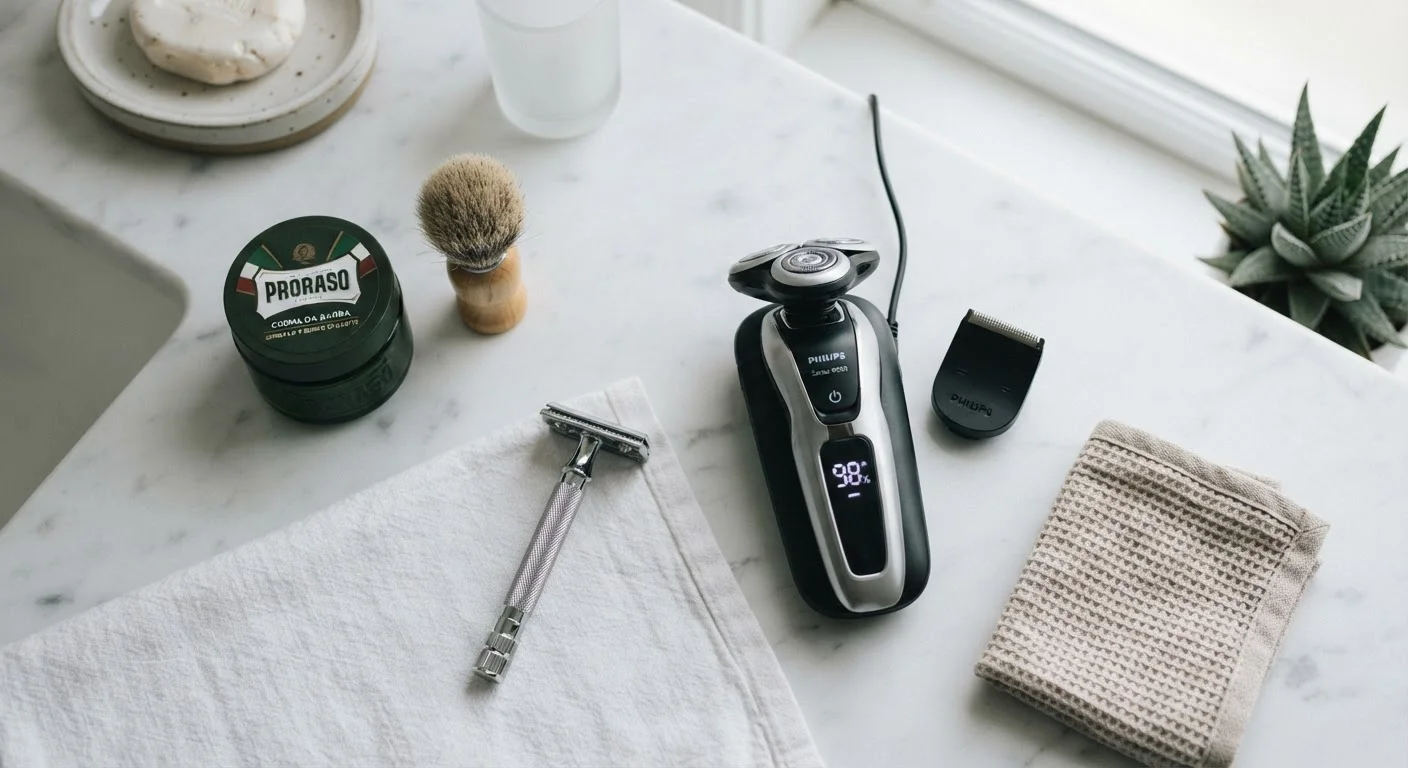
Photo credit: TrendingExperts.net
In this article
Wet and electric shaving suit different skin types and lifestyles. Here's an honest comparison of how each method works and what to consider.
Key Takeaways
- Wet shaving typically delivers a closer shave but requires more preparation and carries a higher risk of skin irritation.
- Electric shaving is faster and generally gentler, making it a practical choice for sensitive or reactive skin.
- Neither method is universally superior - skin type, hair texture, and lifestyle are the deciding factors.
- Proper technique matters more than the tool itself when it comes to minimizing post-shave skin issues.
- Shaving cream, prep, and aftercare routines significantly influence the outcome regardless of which method you use.
How Each Method Actually Works
Understanding the mechanics behind each approach explains why they produce such different results on skin.
Wet shaving uses a blade - whether a cartridge razor, safety razor, or straight razor - drawn directly across lubricated skin. A shaving cream, gel, or foam softens the hair shaft and creates a protective layer between the blade and dermis. The blade slices hair at or just below the skin's surface, which is why the result feels so smooth immediately afterward. The trade-off is that this direct contact also removes a thin layer of skin cells with each pass, which can cause redness, dryness, or irritation if technique or lubrication is inadequate.
Electric shaving works differently. Foil shavers use a thin metal screen with small perforations; hair pokes through the foil and is cut by an oscillating blade underneath. Rotary shavers use spinning circular heads that catch and cut hair. In both cases, the cutting blade never touches the skin directly. Hair is cut slightly above the skin's surface rather than flush with it, which is why the result isn't quite as close - but also why skin tends to tolerate it better over time.
If you've ever dealt with post-shave redness or tightness, our guide on why skin feels worse after shaving breaks down the most common mechanical causes.
Skin Impact: Irritation, Closeness, and Long-Term Effects
The skin's response to shaving depends heavily on three variables: the mechanical stress of the blade or head, the lubrication and prep involved, and how often you shave.
| Criterion | Wet Shaving | Electric Shaving |
|---|---|---|
| Closeness of shave | Very close, at skin level | Moderate, slightly above skin |
| Skin irritation risk | Higher with poor technique | Generally lower |
| Ingrown hair risk | Higher, especially with multi-blade razors | Lower |
| Prep time required | 5-10 minutes with proper prep | 2-4 minutes, often dry |
| Technique learning curve | Moderate to steep | Minimal |
| Works on sensitive skin | Possible with care | Better suited |
| Water required | Yes | Usually not |
Wet shaving, done correctly with sharp blades and adequate lubrication, is not inherently more damaging than electric shaving. The problem is that many people shave with dull blades, skip prep, or apply too much pressure - all of which increase friction and epidermal disruption. People with dry or dehydrated skin are particularly vulnerable; you can read more about the difference between dry and dehydrated skin to understand why baseline skin condition affects shaving outcomes.
Electric shaving, while gentler on average, is not without drawbacks. Some people experience follicle irritation from rotary heads, particularly on the neck or jawline where hair grows in multiple directions. Foil shavers tend to perform more predictably on flat surfaces like the cheeks and chin.
~30%
Men who experience regular razor burn
Dermatology literature consistently notes razor bump and razor burn as among the most common shaving-related skin complaints, particularly in men with curly or coarse hair.
3-5 passes
Average passes per wet shave session
Each additional pass over the same area increases cumulative friction on the skin's surface, which is a primary driver of post-shave sensitivity and redness.
The bottom line: if your skin tolerates both methods, closeness favors wet shaving. If your skin frequently reacts - with bumps, redness, or tightness - electric shaving is generally the lower-risk daily option.
Practical Considerations: Time, Technique, and Skin Prep
Beyond skin type, everyday practicality shapes which method works best for most people.
Wet shaving has a learning curve, particularly with safety or straight razors. Blade angle, pressure, and direction all matter. It also requires water access and a few minutes of prep - washing the face, applying a lubricant, and rinsing carefully. For those who enjoy the ritual, this is part of the appeal. For others, it's a friction point in a rushed morning.
Electric shaving is comparatively low-effort. Most electric shavers work on dry skin and take two to four minutes with no prep required. They're also more portable and don't require water access, making them practical for travel. The ongoing cost consideration shifts from replacement blades to replacement foil heads or rotary heads, which typically need changing every 12 to 18 months.
Aftercare is equally important for both methods. A gentle, alcohol-free moisturizer or aftershave balm helps restore the skin barrier regardless of which tool you use. The same principles apply here as they do with other grooming routines - just as bar soap and body wash differ in how they affect skin barrier function, your post-shave product choices directly influence how your skin recovers.
This article is for general informational purposes only and does not constitute medical or dermatological advice. If you experience persistent skin irritation, consult a qualified healthcare or skincare professional.

Author
Beauty Editorial Team
Beauty Editorial Team is the collective byline for our editorial team and contributor network. Articles published under this byline or an editorial pen name are researched, written, and reviewed according to our editorial standards for clarity, consistency, and independence before publication.
View all articles →