
State vs. Federal Consumer Protections: Key Differences Worth Knowing
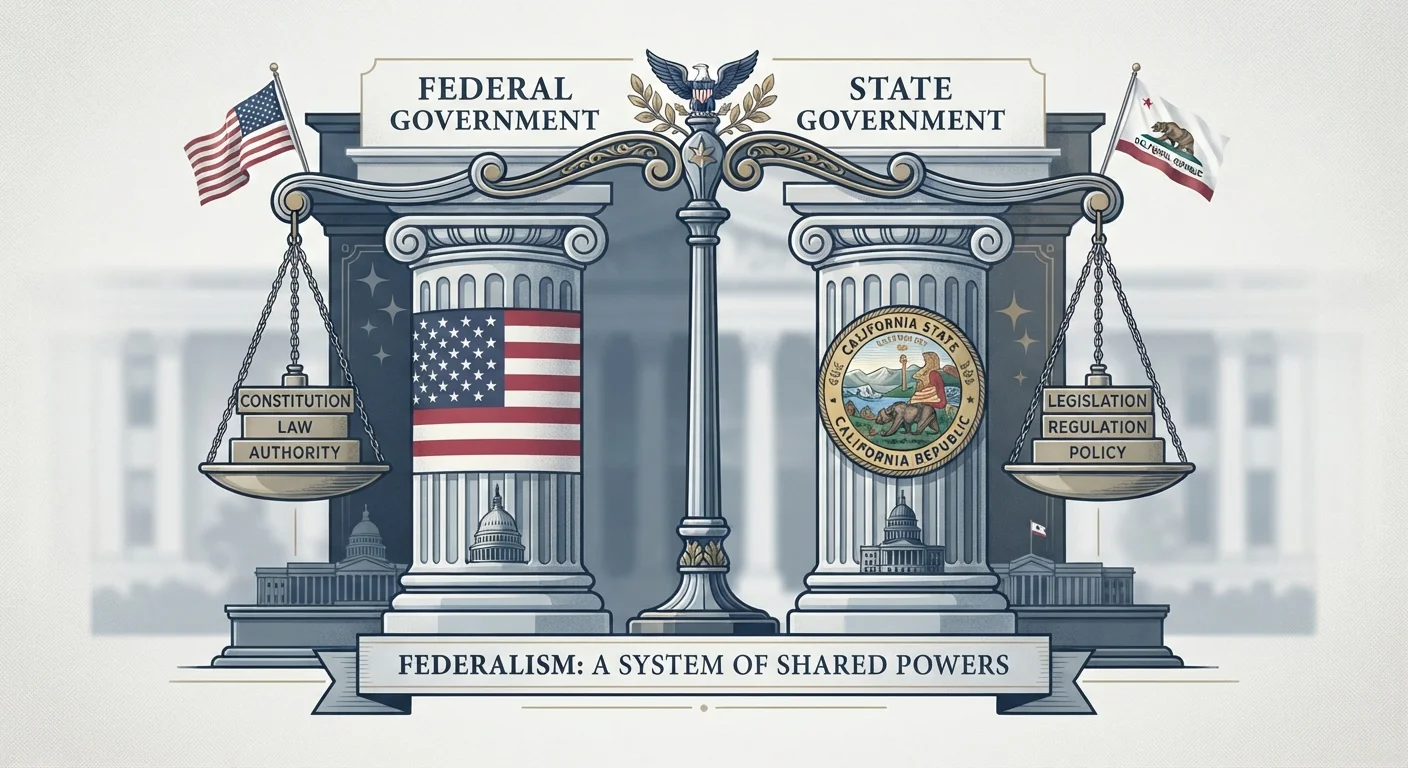
Photo credit: TrendingExperts.net
In this article
Federal law sets a baseline, but your state may offer stronger protections. Here's how state and federal consumer rights laws interact and where they diverge.
Key Takeaways
- Federal consumer laws establish a national baseline that applies in every state.
- States can - and often do - pass stronger protections than federal law requires.
- When state and federal laws conflict, federal law typically preempts state law, with important exceptions.
- Knowing which agency to contact (state AG vs. federal FTC or CFPB) can affect your outcome.
- Some industries, like banking and telecoms, are heavily federally regulated, limiting state reach.
How the Two-Layer System Works
Consumer protection in the United States operates on two levels simultaneously. Federal law - enforced by agencies such as the Federal Trade Commission (FTC) and the Consumer Financial Protection Bureau (CFPB) - establishes a nationwide floor of rights. State laws, enforced by state attorneys general and state-level agencies, sit on top of that floor and can raise it considerably.
This layered structure means that as a consumer, you may have overlapping rights from two separate sources. The critical concept is preemption: when a federal law explicitly states it overrides state law, states cannot offer conflicting protections in that area. However, federal law often permits states to go further - it merely prohibits states from going lower. For a grounded overview of what federal law covers, see our overview of federal consumer laws.
Where Federal Law Takes the Lead
Certain industries and issues are so heavily federally regulated that state law has limited room to operate. Key areas include:
- Credit reporting: The Fair Credit Reporting Act (FCRA) governs how consumer credit data is collected, shared, and disputed. Federal rules largely set the terms here, though some states - such as California - have enacted supplemental credit protections.
- Debt collection: The Fair Debt Collection Practices Act (FDCPA) is the primary law restricting how third-party collectors may contact consumers. States may add restrictions but cannot remove FDCPA protections.
- Federally chartered banks: National banks supervised by the Office of the Comptroller of the Currency (OCC) are predominantly governed by federal rules. State consumer laws sometimes do not apply to these institutions in the same way they apply to state-chartered banks.
- Telecommunications: The FCC oversees interstate communications. State regulators face preemption in several wireless and broadband matters.
| Federal Protections | State Protections | |
|---|---|---|
| Geographic scope | Applies equally in all 50 states | Varies by state; no uniformity |
| Enforcement authority | FTC, CFPB, FCC, other federal agencies | State attorney general, state agencies |
| Private right to sue | Limited (e.g., FCRA, FDCPA allow it; FTC Act does not) | Often broader; many state UDAP laws allow it |
| Strength of protections | Consistent national baseline | Can exceed federal baseline; varies widely |
| Data privacy coverage | No comprehensive federal consumer privacy law | Several states have comprehensive frameworks |
| Vehicle lemon law remedies | Federal warranty floor (Magnuson-Moss) | State lemon laws often faster and broader |
| Banking regulation overlap | Federally chartered banks primarily federal | State-chartered banks subject to state law too |
Where States Often Go Further
Outside preempted zones, states have significant authority - and many have exercised it aggressively. Notable examples include:
- Unfair and Deceptive Acts and Practices (UDAP) statutes: Every state has one, but they vary widely in scope, remedies, and who can enforce them. Some state UDAP laws allow individual consumers to sue and collect attorney's fees; federal FTC Act enforcement does not give consumers a private right of action.
- Lemon laws: Federal warranty law (the Magnuson-Moss Warranty Act) sets baseline standards, but state lemon laws - which vary substantially - often provide faster remedies and broader vehicle coverage. Understanding lemon laws and warranty rights before a major purchase is worthwhile.
- Data privacy: No comprehensive federal consumer privacy law currently exists. States such as California, Colorado, and Virginia have passed their own privacy frameworks that grant residents rights like data deletion and opt-out of data sales.
- Auto-renewal and subscription disclosures: Several states require explicit notice before a subscription auto-renews, with stricter rules than federal guidelines.
- Return and cancellation rights: Federal law does not mandate a general right to return products. State laws and regulations in some jurisdictions impose cooling-off periods for specific transaction types beyond the FTC's three-day rule for door-to-door sales.
Check Your State's UDAP Law Specifically
State Unfair and Deceptive Acts and Practices (UDAP) statutes are among the most consumer-friendly tools available, but they differ significantly in how broadly they define 'deceptive,' what damages are available, and whether you need an attorney to file. Your state attorney general's office or a local consumer law clinic can explain what your state's version covers - and whether it gives you a direct path to compensation that federal law does not.
Practical Steps: Knowing Which Protection Applies
When something goes wrong, identifying the right legal framework - and the right agency - matters. A few practical guidelines:
- Identify the business type. Is it a federally chartered bank, a national telecom provider, or a local retailer? The answer shapes which laws apply and who enforces them.
- Check your state AG's website. Most state attorneys general publish plain-language summaries of state consumer rights and active enforcement priorities.
- Know your remedies. State UDAP laws sometimes allow consumers to sue directly and recover damages or attorney's fees. Federal law often relies on agency enforcement rather than individual lawsuits.
- Document everything first. Before contacting any agency, gather receipts, contracts, correspondence, and a timeline. This preparation checklist outlines exactly what most agencies will need from you.
For a broader view of how these protections interact across the full shopping lifecycle, the complete consumer rights guide provides end-to-end context. And if your dispute involves an online purchase, the rules may shift again - online vs. in-store protections differ in meaningful ways worth understanding.

Author
Shopping Editorial Team
Shopping Editorial Team is the collective byline for our editorial team and contributor network. Articles published under this byline or an editorial pen name are researched, written, and reviewed according to our editorial standards for clarity, consistency, and independence before publication.
View all articles →