
The Myths Surrounding Hip-Hop's Origins That Most People Still Believe
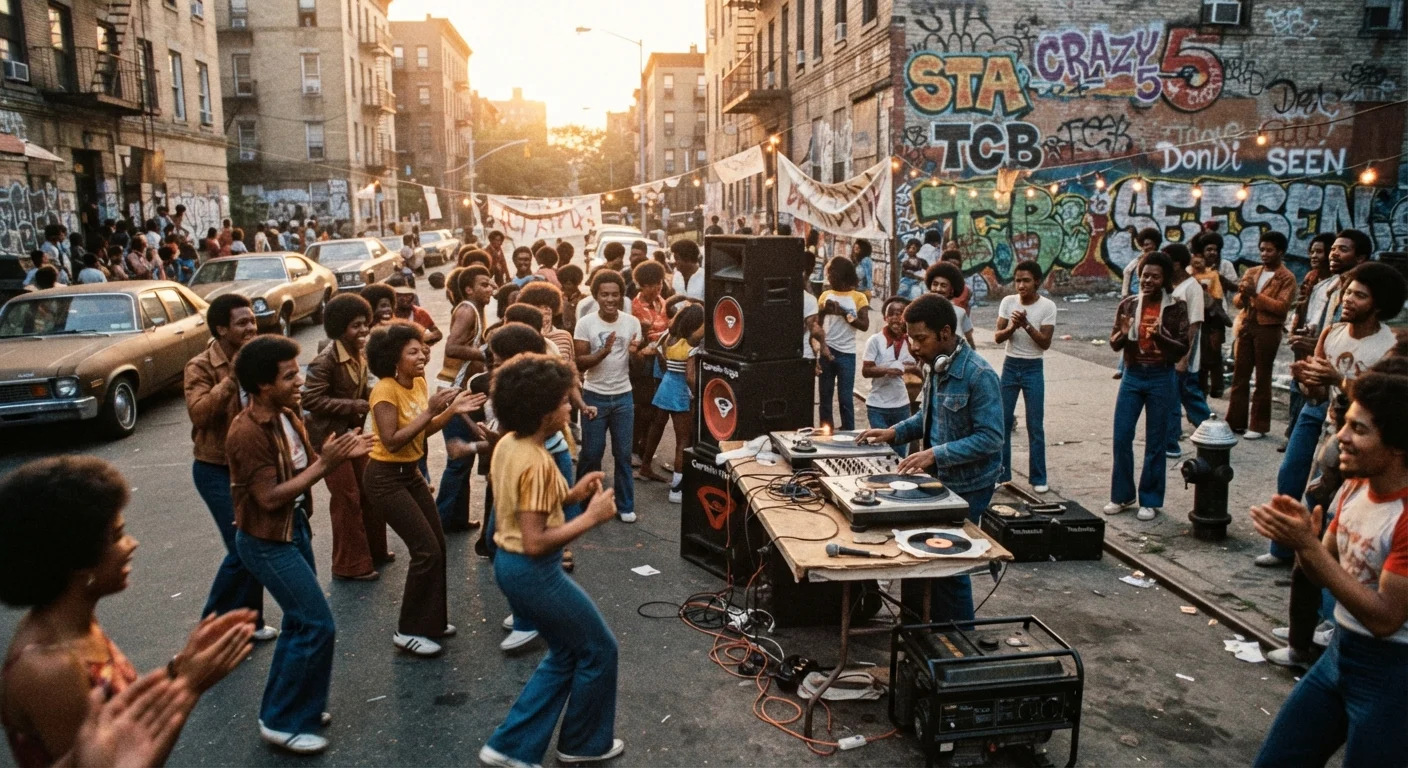
Photo credit: TrendingExperts.net
In this article
Hip-hop's early history is often misrepresented. Here's what the record actually shows about how, where, and why it emerged.
Key Takeaways
- Hip-hop originated in the South Bronx, New York, not in any single record label or studio environment.
- DJ Kool Herc's 1973 block party is widely documented as the genre's foundational moment.
- Hip-hop encompassed four distinct elements from the start: DJing, MCing, breakdancing, and graffiti art.
- The genre was shaped by multiple communities, including Caribbean, African American, and Latino youth.
- Commercial success came years after the culture was already thriving at the street level.
Why Hip-Hop's Origin Story Gets Distorted
Hip-hop is one of the most documented cultural movements of the 20th century - and yet its origin story is constantly mangled in mainstream retellings. The distortions aren't random: they tend to flatten a rich, multi-community creative uprising into something more digestible for mainstream audiences. That flattening erases real history.
Understanding where hip-hop actually came from matters because the myths don't just get the facts wrong - they misrepresent who deserves credit, what the culture stood for, and why it resonated so powerfully. The record, when examined carefully, tells a far more compelling story than any simplified myth ever could.
Myth
Hip-hop started with the release of 'Rapper's Delight' by the Sugarhill Gang in 1979.
Fact
Hip-hop was already a thriving street culture in the South Bronx for several years before 'Rapper's Delight' was recorded.
'Rapper's Delight' introduced hip-hop to a national radio audience, but it was far from the genre's birth. By 1979, block parties, DJ battles, and MC competitions had been happening in the Bronx for roughly six years. The Sugarhill Gang - notably - was not even from the core Bronx scene. The song's commercial success reflected a culture that already existed, not one being invented in a studio.
Myth
Hip-hop was created by one person - DJ Kool Herc - and the rest is history.
Fact
While DJ Kool Herc's 1973 block party on Sedgwick Avenue is a foundational moment, hip-hop was shaped by many pioneers across multiple communities.
Clive Campbell - known as DJ Kool Herc - is rightfully credited with developing the breakbeat technique, isolating the percussion-heavy sections of funk and soul records to keep dancers moving. But Grandmaster Flash refined the technical artistry of DJing, Afrika Bambaataa brought an organizational philosophy through the Universal Zulu Nation, and countless MCs, B-boys, and graffiti writers built the culture alongside them. No single person deserves sole credit.
Myth
Hip-hop is primarily a Black American art form with no significant Caribbean or Latino roots.
Fact
Caribbean and Latino communities were central to hip-hop's formation from the very beginning.
DJ Kool Herc himself immigrated from Jamaica, and his breakbeat technique drew directly from Jamaican sound system culture. Latino youth from Puerto Rican neighborhoods in the Bronx were foundational contributors to breakdancing (B-boying) and graffiti art. Figures like Charlie Chase of the Cold Crush Brothers were prominent Latino hip-hop artists in the genre's earliest years. Hip-hop was always a multicultural creation.
Myth
Hip-hop is just rap music.
Fact
Hip-hop is a cultural movement with four core elements, of which rap (MCing) is only one.
Afrika Bambaataa and early community organizers articulated hip-hop's four pillars: DJing, MCing (rapping), B-boying (breakdancing), and graffiti writing. Some frameworks also include knowledge as a fifth element. Reducing hip-hop to rap alone strips away the visual art, the dance tradition, and the DJ craft that defined the culture from its earliest days - and that continue to thrive globally today.
Myth
Hip-hop emerged as a reaction to gang violence and was created to stop it.
Fact
While peace-building was a real goal for figures like Afrika Bambaataa, hip-hop's origins were rooted in creative expression and community celebration, not solely conflict resolution.
Afrika Bambaataa did channel his Universal Zulu Nation toward redirecting gang energy into creative competition, and that work was genuinely important. But hip-hop also emerged from a broader context of South Bronx community life - the joy of block parties, the competitive spirit of DJ battles, and the desire for self-expression amid severe urban poverty and municipal neglect. Framing it purely as gang intervention oversimplifies a rich, multifaceted origin.
The Bigger Picture: What These Myths Cost the Culture
Each of the myths above does more than get a date or name wrong. Collectively, they reshape hip-hop's legacy in ways that diminish the South Bronx community's ingenuity, erase the contributions of Latino and Caribbean pioneers, and reframe a grassroots survival art form as a product of the music industry. That's a significant distortion.
Music historians including Jeff Chang, whose widely cited book Can't Stop Won't Stop provides exhaustive documentation of the Bronx scene, have spent decades pushing back against these simplifications. The scholarship is clear: hip-hop was a community response to poverty, urban neglect, and social fracture - and it thrived before any label came knocking.
1973
Year of hip-hop's foundational block party
DJ Kool Herc's party at 1520 Sedgwick Avenue in the Bronx on August 11, 1973, is widely cited by historians as a key founding moment of hip-hop culture.
4
Core elements of hip-hop culture
DJing, MCing, B-boying, and graffiti writing were identified as hip-hop's foundational pillars by early cultural organizers including Afrika Bambaataa.
Just like fitness myths can lead people to train less effectively - much like the misconceptions explored in our look at common exercise myths - cultural myths lead us to misunderstand where creative power actually comes from. Getting the history right isn't pedantry. It's respect.

Author
Entertainment Editorial Team
Entertainment Editorial Team is the collective byline for our editorial team and contributor network. Articles published under this byline or an editorial pen name are researched, written, and reviewed according to our editorial standards for clarity, consistency, and independence before publication.
View all articles →