
Porosity, Curl Pattern, and Thickness: Understanding Your Hair Before Buying Anything
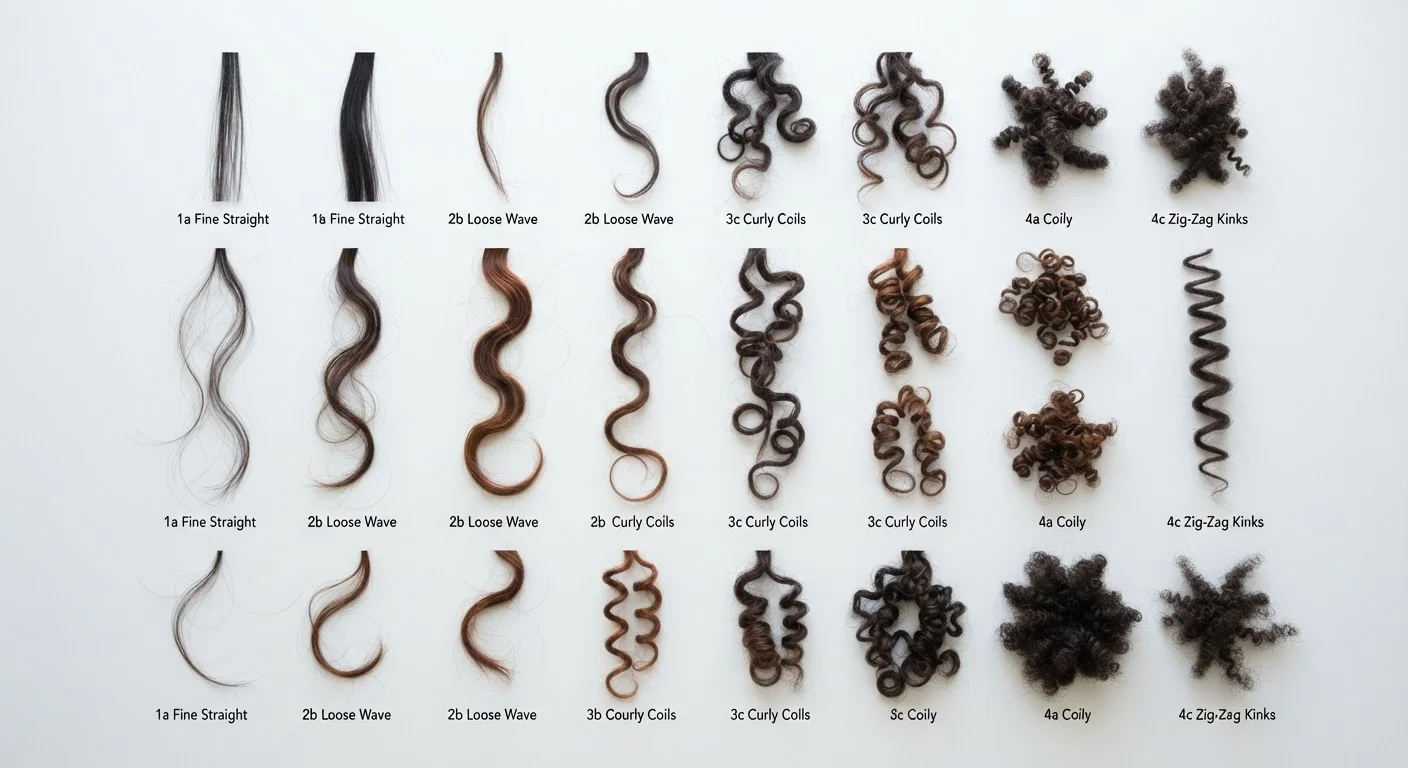
Photo credit: TrendingExperts.net
In this article
Hair type goes deeper than curl shape. Understanding porosity and thickness helps explain why certain products work for some people and not others.
Key Takeaways
- Curl pattern describes shape, but porosity determines how well your hair absorbs and holds moisture.
- Low-porosity hair resists product absorption; high-porosity hair absorbs quickly but loses moisture just as fast.
- Strand thickness and overall density affect how heavy or light your products need to be.
- Most people have more than one characteristic at play - effective haircare addresses the full combination.
- Understanding your hair's biology saves money and prevents product buildup or damage.
Why Hair Typing Alone Isn't Enough
Walk into any beauty aisle and you'll find products sorted by curl type - wavy, curly, coily. It's a useful shorthand, but it leaves out the variables that most directly predict whether a product will actually work for you. Two people can share the same curl number and have completely opposite experiences with the same conditioner. The difference usually comes down to porosity, strand thickness, and density.
Most haircare marketing is built around curl pattern because it's visible and easy to categorize. But hair behavior - how it responds to moisture, protein, and styling - is governed by structural properties you can't see at a glance. Understanding these properties is the foundation of smart, efficient haircare. It's also the reason product recommendations from a friend don't always translate. See our examination of common grooming myths for more examples of why popular haircare wisdom often falls short.
Understanding Hair Porosity
Porosity refers to your hair's ability to absorb and retain moisture. It's determined by the condition of the hair's outermost layer, the cuticle - a scale-like structure that can lie flat, slightly raised, or significantly lifted.
Porosity
How easily your hair absorbs and holds onto water and products, determined by how open or closed the outer cuticle layer is.
Cuticle
The outermost layer of a hair strand, made up of overlapping, scale-like cells that protect the inner structure and regulate moisture exchange.
Curl pattern
The shape your hair takes as it grows - ranging from straight to wavy, curly, or coily - determined primarily by the shape of your hair follicle.
Strand thickness
The physical diameter of a single hair strand, described as fine, medium, or coarse; affects how much product a strand can hold and how easily it breaks.
Hair density
The number of individual hair strands growing per square inch of your scalp, which determines fullness regardless of strand thickness.
Sebum
The natural oil produced by glands in your scalp that lubricates and protects the hair shaft; how easily it travels along the strand depends partly on curl pattern.
- Low porosity: Cuticles lie tightly flat, making it harder for water and products to penetrate. Hair takes longer to get wet and longer to dry. Heavy creams and butters tend to sit on the surface and cause buildup rather than absorbing.
- Medium (normal) porosity: Cuticles are slightly raised, allowing moisture in and out at a balanced rate. This hair type generally accepts a wide range of products and holds styles well.
- High porosity: Cuticles are raised or damaged - often from heat, chemical processing, or environmental exposure - allowing moisture to enter quickly but escape just as fast. Hair may feel dry even after conditioning.
Low-porosity hair benefits from lightweight, water-based products applied with mild heat (such as a warm towel or hooded dryer) to encourage absorption. High-porosity hair often responds well to heavier sealants applied after water-based moisturizers, helping to lock in what it absorbs. Matching your product weight to your porosity is one of the most impactful adjustments you can make.
Curl Pattern: What It Actually Tells You
Curl pattern - commonly described across a spectrum from straight through wavy, curly, and coily - does communicate useful information, just not always the right information for product selection. What curl pattern reliably tells you is how much surface area your strand covers and how tightly oils from the scalp travel down the shaft.
Coilier curl patterns make it harder for scalp sebum (your natural oil) to travel from root to tip, which is why tighter textures often experience dryness at the ends. Wavy hair, by contrast, allows sebum to travel more easily, sometimes making the scalp oily while ends remain adequately moisturized. This is relevant to choosing between shampooing and co-washing, since cleansing frequency and method should reflect how your scalp behaves, not just your curl number.
Don't Over-Rely on Curl Number Systems
Popular curl typing systems (such as 1-4 with letter subcategories) were originally developed as a general communication tool, not a scientific hair-health framework. They're a decent starting point for recognizing your curl shape, but they don't capture porosity or thickness - the factors that most directly determine which products will work. Use curl type as context, not as your sole guide.
Curl pattern also influences shrinkage - the difference between your hair's wet and dry length - and how much manipulation your hair tolerates before breaking. These are real structural considerations, just secondary to porosity when selecting moisturizing products.
Hair Thickness (Strand Diameter) and Density
Strand thickness refers to the diameter of an individual hair. Fine strands have a smaller diameter and tend to be more prone to breakage and weighing down with heavy products. Coarse strands are thicker in diameter, often stronger, and may need richer formulas to feel adequately moisturized. Medium strands fall between the two and are generally the most adaptable.
Density is separate: it's the number of strands per square inch of scalp. You can have fine strands but high density, giving your hair a full appearance while each individual strand remains delicate and vulnerable to product overload. Conversely, coarse strands at low density may look thin despite each strand being structurally robust.
Practically speaking, fine hair usually calls for volumizing or lightweight formulas, while coarse hair may benefit from richer textures - but your porosity still overrides this if, say, you have coarse low-porosity hair that rejects heavy butters regardless of strand strength. For a practical look at how these factors shape your daily routine, see the anatomy of a daily grooming routine.
Putting It All Together Before You Shop
Before selecting any haircare product, take a few minutes to assess your combination of characteristics: What is your porosity? What is your curl pattern and how does sebum travel down your strands? Are your individual strands fine, medium, or coarse - and how dense is your hair overall?
A coily, high-porosity, fine-stranded hair profile calls for lightweight moisturizers layered frequently, with a sealing step but nothing heavy. A wavy, low-porosity, medium-stranded profile calls for infrequent but thorough moisturizing with heat assistance and clarifying shampoo to prevent buildup. The combinations are numerous, but the logic is consistent once you understand the underlying mechanics.
Most people's haircare frustrations trace back to mismatched product weight, not product quality. Understanding your hair's actual structure - not just its shape - is the single most reliable shortcut to effective, affordable haircare. Once you have a clearer picture of your hair, reviewing common hair washing mistakes is a natural next step.
This article is for general informational and educational purposes only. It is not a substitute for professional advice from a licensed cosmetologist, trichologist, or healthcare provider. Individual hair conditions vary; consult a professional for personalized guidance.
Frequently Asked Questions

Author
Beauty Editorial Team
Beauty Editorial Team is the collective byline for our editorial team and contributor network. Articles published under this byline or an editorial pen name are researched, written, and reviewed according to our editorial standards for clarity, consistency, and independence before publication.
View all articles →